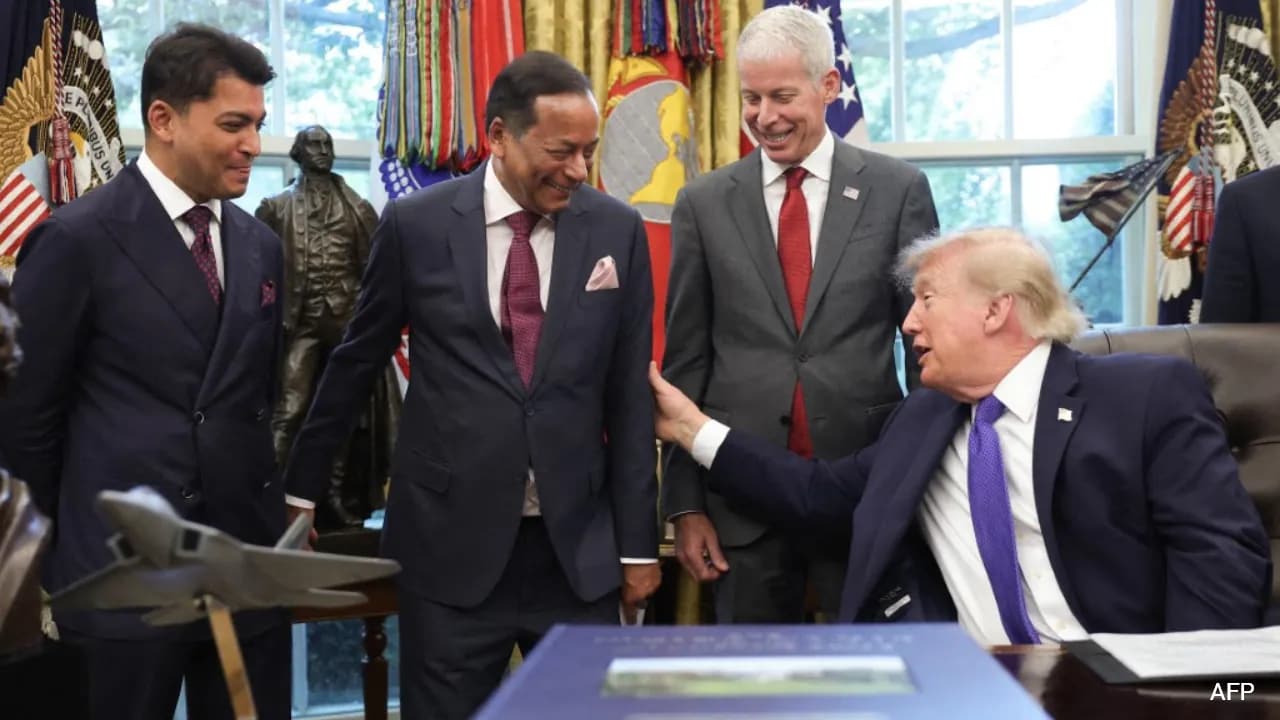
The announcement of an eighteen billion dollar industrial commitment by India's Essar Group, channeled through Mesabi Metallics, marks a structural pivot in heavy manufacturing economics. Labeling this initiative the largest steel plant in American history serves as a political headline, but the underlying mechanics reveal a complex matrix of cross-border capital flows, regional resource integration spanning Minnesota and Iowa, and high-stakes infrastructure deployment. To understand the viability and systemic impact of this project, one must deconstruct the financial architecture, the operational dependencies, and the regulatory friction points that dictate modern mega-scale metallurgy.
The Economic Architecture of Megaprojects
Heavy industrial undertakings of this magnitude are governed by distinct cost functions where capital expenditure (CapEx) timelines stretch across decades. The fifteen billion dollar core allocation for the primary facility requires examining how foreign conglomerates fund domestic heavy assets within the United States.
Capital sourcing for such ventures relies on a layered stack:
- Direct corporate equity derived from global holdings and asset monetizations.
- Structured debt instruments secured by long-term offtake agreements.
- State-level fiscal incentives, tax credits, and bond issuances designed to capture manufacturing employment.
The historical trajectory of Mesabi Metallics highlights the fragility inherent in these capital stacks. Past iterations of the project faced prolonged legal, financial, and operational stalls. The modern resurrection of the initiative under a multi-billion dollar framework depends entirely on liquidity velocity and the stability of supply chains providing direct-reduced iron (DRI) grade pellets.
The Resource Pipeline and Logistics Vector
A steel plant functions as the terminal node of an extensive logistics network. The integration between Minnesota iron ore deposits and Iowa processing hubs establishes a localized supply chain designed to minimize transit cost volatility.
The operational flow operates through specific stages:
- Extraction of taconite ore from the Mesabi Range in Northern Minnesota.
- Beneficiation and conversion into high-grade DR pellets optimized for electric arc furnaces.
- Bulk transport via rail and barge networks southward toward processing and manufacturing infrastructure.
This cross-state pipeline exposes the project to localized infrastructure bottlenecks. Freight rail capacity, energy grid reliability, and industrial water access dictate the true operational capacity of the plant. Without guaranteed throughput across these vectors, nameplate production figures remain theoretical.
Regulatory Compliance and Geopolitical Risk
Mega-scale industrial investments do not occur in a vacuum; they navigate complex geopolitical and regulatory currents. The involvement of an international conglomerate with historic footprints across multiple global jurisdictions introduces intense scrutiny regarding foreign direct investment (FDI), environmental reviews, and cross-border financing structures.
Regulatory hurdles manifest in several operational dimensions:
- Environmental Protection Agency (EPA) permitting for emissions, particularly regarding carbon intensity in primary steelmaking.
- State-level approvals for water usage rights and land zoning.
- Committee on Foreign Investment in the United States (CFIUS) surveillance regarding ownership transparency and national security implications of critical infrastructure control.
The alignment of political backing accelerates initial approvals, but long-term asset security relies on navigating local labor market constraints and enduring potential shifts in trade policy or tariff regimes.
Strategic Execution Playbook
For industrial stakeholders and market analysts observing this development, evaluation must move past nominal investment figures. The success of the Essar-backed venture depends on executing three operational imperatives:
- Secure long-term power purchase agreements (PPAs) locking in predictable energy costs for electric arc furnace operations.
- Establish iron ore extraction redundancy to insulate against regional supply disruptions in Minnesota.
- Maintain strict capital discipline to avoid the historical pitfalls of cost overruns that plagued previous iterations of the site's development.
Monitor the execution velocity of the initial site preparation and the finalization of state bond issuances to gauge the true probability of completion.