The foreign policy commentariat loves a good tightrope metaphor. Every time a Venezuelan official makes a diplomatic gesture toward Havana or Beijing, the think-tank circuit erupts with breathless commentary about a delicate balancing act between Washington and its rivals. Analysts scan every speech for hidden meanings, treating Caracas like a nervous gymnast trying not to tumble off a beam.
It is a comfortable narrative. It fits neatly into the Cold War nostalgia that underpins most international relations departments. It is also completely wrong.
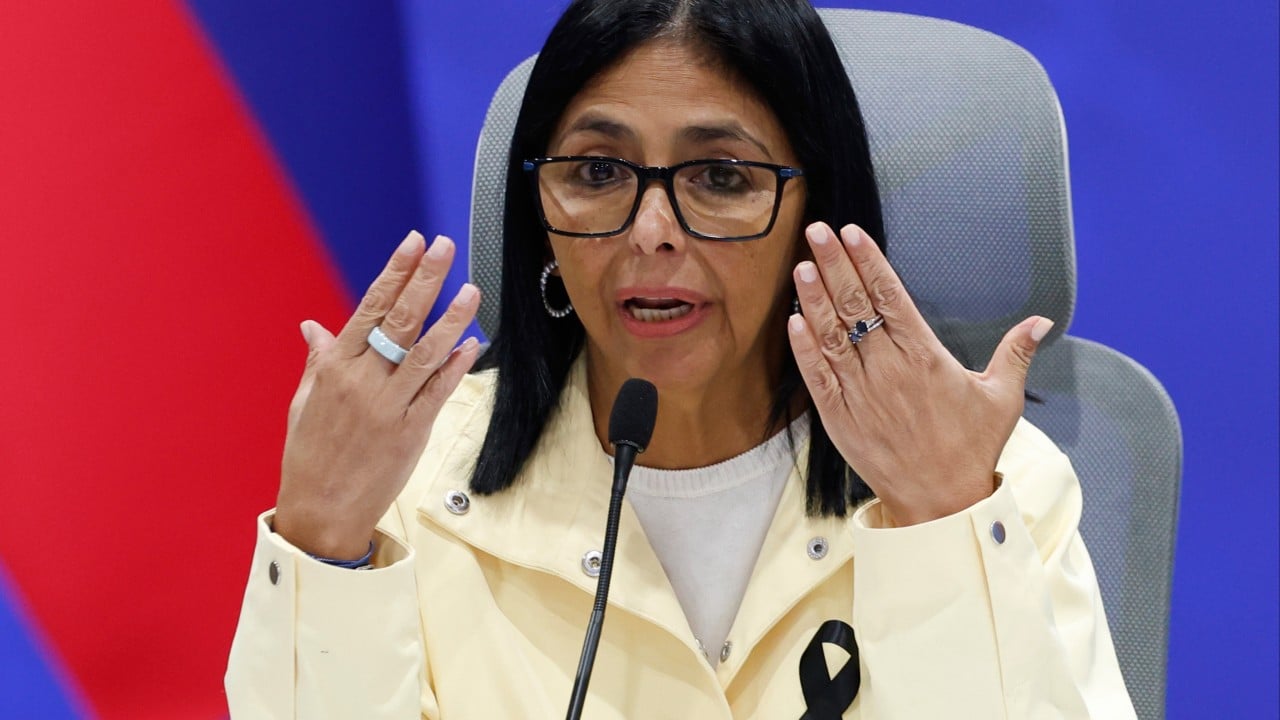
Caracas is not balancing. Balancing implies an ongoing calibration of risk, a constant hedging of bets, and a genuine concern for how superpowers perceive every move. None of that describes the current posture of the Venezuelan administration. What looks like a high-wire act to foreign observers is actually a deeply entrenched survival routine designed for one sole purpose: absolute domestic consolidation. When Delcy Rodriguez steps up to praise historical revolutionary figures or nods to Beijing, she is not sending coded signals to the White House. She is playing to a domestic gallery and securing the literal credit lines and security architecture required to keep the lights on.
The Fallacy of the Strategic Pivot
For years, the standard line in major geopolitical reporting has been that Caracas constantly weighs Western concessions against Eastern patronage. The underlying assumption is that sanctions relief from the United States serves as the ultimate prize, and that ties to China or Cuba are merely fallback options or desperate measures.
This perspective fundamentally misunderstands the incentive structures governing Miraflores Palace. Western overtures, oil licenses, and conditional sanctions easing come with strings attached that threaten the very core of the current governance model. Transparency demands, institutional reforms, and verifiable democratic concessions are not minor policy adjustments for this regime. They are existential threats.
When you evaluate international relations through the lens of institutional self-preservation rather than national economic optimization, the picture clears up immediately. China provides capital, technological infrastructure for surveillance and control, and unconditional sovereign loans without pesky lectures about electoral transparency. Cuba provides intelligence apparatuses and internal security support that have proven remarkably resilient against external pressure.
Trading those relationships for a fragile, temporary normalization with Washington makes zero tactical sense from the perspective of regime survival. The United States political pendulum swings every four years, rendering any long-term American diplomatic commitment unreliable at best. Beijing and Havana offer structural, ideological, and transactional consistency.
Dismantling the Leverage Myth
Another favorite trope of the diplomatic commentariat is that Venezuela desperate for foreign direct investment will eventually be forced to cave to Western demands. This assumes that capital is the ultimate arbiter of power in Caracas.
I have watched foreign corporations spend billions chasing ghost reserves, only to find out that legal certainty in a resource-rich nation matters far less than political loyalty. The administration does not measure success in GDP growth or foreign exchange reserves alone. It measures success in control.
When multinational oil majors negotiate for extraction rights under shifting license regimes, they assume they are playing a standard commercial game. They are not. They are temporary rent-payers in a state-managed extraction fiefdom where economic rationality takes a back seat to political risk management. The notion that a few whispered promises of sanctions relief will cause Caracas to abandon decades of strategic alignment with anti-Western partners ignores how power is actually maintained on the ground.
The Domestic Audience
Every time a high-ranking official delivers a fiery ideological speech invoking historical alliances, international media treats it as a provocation directed outward. Look closer. It is internal reinforcement.
In a political system that relies on a mobilized base and a continuous state of perceived siege, ideological continuity is currency. Softening rhetoric to appease foreign capitals risks alienating the hardline factions within the coalition who view any compromise with Washington as an act of treason. The regime cannot afford a fractured base simply to appease editorial boards in New York or London.
Therefore, the rhetorical nods to historical alliances are non-negotiable boilerplate. They are structural necessities of domestic political survival. Treating them as sudden policy shifts or tactical provocations demonstrates a profound misunderstanding of how revolutionary regimes communicate with their internal constituencies.
The Real Game
If you want to understand what is happening in Venezuela, stop reading diplomatic cables as if they were corporate merger prospectuses. Stop looking for signs of a moderate faction waiting to break free or a sudden conversion to free-market pragmatism.
The strategy is endurance. It is about locking in energy export routes that bypass Western financial systems, securing digital and physical security partnerships that insulate the state from external coercion, and maintaining just enough friction with the United States to keep the domestic nationalist narrative alive.
The tightrope walk is an illusion. There is no rope, and nobody is balancing. They dug in years ago, and they are not moving.