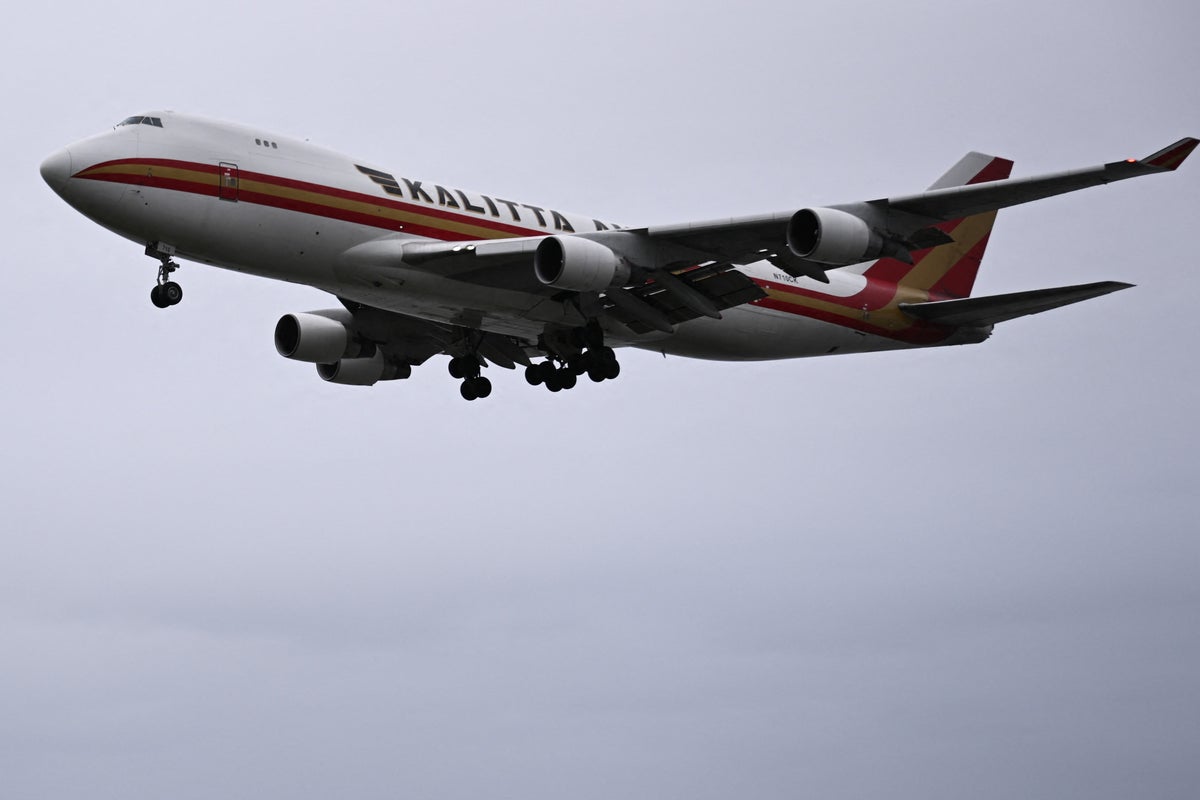
Video of a massive cargo plane scraping its rear against a runway while throwing off a blinding shower of sparks looks like a movie stunt. It grabs headlines fast. People watch the footage online, hold their breath, and assume the worst almost instantly.
Sparks fly from a cargo plane as it tail skids while landing at an airport, yet the aircraft rolls to a stop, taxiing away as if nothing unusual happened.
That contrast confuses almost everyone outside commercial aviation. How can thousands of pounds of metal drag across concrete at 140 miles per hour without blowing up?
The answer sits at the intersection of heavy aircraft physics, sacrificial engineering, and strict pilot protocol. Tail strikes look violent. They sound terrifying inside the cabin. Yet, in the world of air freight, they're a known operational risk that planes are explicitly built to survive.
What Happens When a Cargo Jet Scrapes the Runway
A tail strike happens when the aft fuselage of an airplane contacts the runway surface during takeoff or landing. During takeoff, it usually stems from over-rotation, where a pilot pulls back on the control column too aggressively before reaching proper airspeed.
Landing strikes tell a different story. They happen during the flare. That's the delicate maneuver right before touchdown when the pilot raises the nose to soften the main landing gear's impact with the ground.
If the nose comes up too high, the tail drops. If the pitch angle exceeds the aircraft's structural clearance angle, metal meets tarmac.
Cargo planes are particularly prone to this during turbulent approaches. Freight haulers carry heavy, dense loads that shift the aircraft's center of gravity. A sudden gust of wind near the ground can force a pilot to make rapid pitch adjustments. Push the pitch a couple of degrees too high while battling crosswinds, and the tail scrapes.
Friction instantly grinds away at the lower skin of the tail. That friction creates extreme heat, lighting up the night sky with brilliant sparks. To a bystander, it looks like an impending fireball. To the flight crew, it feels like a heavy thump accompanied by a grinding vibration.
Why Tail Strikes Hurt Freight Operations More Than You Think
While a tail strike rarely causes an immediate crash, calling it harmless would be dead wrong.
The immediate danger isn't fire. It's structural compromise.
Directly behind the rear cargo doors lies the aft pressure bulkhead. This dome-shaped structure holds the cabin pressure inside the plane during high-altitude flight. If a tail strike severe enough to gouge deep into the lower fuselage goes unchecked or gets a quick-fix patch job, the structural integrity weakens.
Aviation history carries a stark warning about this exact issue. In 1985, Japan Air Lines Flight 123 crashed after its aft pressure bulkhead failed in flight. The root cause was a improperly repaired tail strike that had occurred seven years earlier. That single failure remains one of the deadliest single-aircraft accidents in history.
Because of this, modern inspection protocols after a tail skid are brutal.
When a cargo jet drags its tail, it doesn't just reload and fly out an hour later. The plane gets grounded immediately. Maintenance crews pull off access panels, run ultrasound scans on the aluminum or composite skin, and inspect every rivet near the strike zone.
Even minor skin abrasions require structural engineers to evaluate structural stress. Grounding a heavy cargo jet costs operators tens of thousands of dollars per day in lost revenue, broken logistics chains, and emergency repair bills.
The Physics Behind Landing Flares Gone Wrong
Why do experienced pilots scrape the runway? It rarely comes down to sheer carelessness.
Flight dynamics on approach are a delicate balance of pitch, power, airspeed, and descent rate. Every airliner has a specific maximum pitch angle allowed on touchdown. On a Boeing 767 or 777 freighter, for example, that angle is usually around 9 to 10 degrees depending on the variant. Exceed that, and you touch ground with the tail before the wheels.
Several factors conspire to ruin a smooth landing:
- Unstable speed management. Flying too slow forces the pilot to pitch the nose higher to maintain lift, cutting down the tail clearance margin.
- Sudden wind shear. A sudden drop in headwind causes a loss of airspeed, sinking the plane rapidly and causing the pilot to instinctively pull back on the yoke.
- Improper weight distribution. Cargo loaders calculate the Center of Gravity before every flight. If cargo shifts or is loaded incorrectly, the plane becomes tail-heavy, changing how the flight controls respond during the flare.
- Bounce recoveries. If a plane touches down hard and bounces back into the air, a pilot's natural reflex might be to pull back to cushion the second touchdown. That knee-jerk reaction is a leading cause of severe landing tail strikes.
Pilot training emphasizes holding the pitch attitude constant during a bounced landing or executing an immediate go-around rather than pulling the nose up higher.
How Aviation Engineers Design Planes to Take the Hits
Aircraft designers know tail strikes will happen. Human error and unpredictable weather guarantee it. So, they engineer safeguards directly into the airframe.
Many modern airliners feature physical tail skids. These come in two main varieties:
Mechanical Skids
A simple, sacrificial metal shoe or pad mounted under the rear fuselage. When the tail hits the runway, this hardened shoe takes the friction wear, keeping the primary aluminum skin intact.
Hydraulic and Cartridge Skids
Advanced jets use retractable tail skids connected to hydraulic shock absorbers or crushable cartridges. When the tail touches down, the mechanism absorbs the kinetic energy and compresses. Sensors immediately trigger a warning light on the cockpit display, telling the crew they've made contact.
On fly-by-wire aircraft like modern Airbus freighters, software acts as the first line of defense. The flight control computers run Pitch Attitude Protection algorithms. If the system detects the nose rising to an angle that would cause a tail strike during landing, it automatically dampens pilot input to prevent the tail from hitting.
Yet electronics can only do so much when mother nature throws a massive gust at a landing jet.
Practical Steps Operators Take to Prevent Tail Strikes
Aviation safety relies on continuous adjustment based on flight data. Fleets don't just fix damaged metal; they adjust operations to prevent the next incident.
Flight Data Monitoring systems continuously record parameters like pitch rate, speed, and stick movement. If a pilot lands with a pitch angle uncomfortably close to the strike limit, safety managers flag the event for review even if no contact occurred.
Air cargo carriers use specific operational checks to minimize landing risks:
- Verify load manifests twice. Double-check cargo placement to ensure the center of gravity sits squarely within safe limits before flight departure.
- Commit to go-arounds early. If an approach becomes unstable below 500 feet, push the throttles forward and go around instead of wrestling the plane onto the tarmac.
- Master bounce recovery in simulators. Practice handling bounced landings without pulling the control column back into a high-pitch attitude.
- Inspect skid wear indicators. Mechanics check sacrificial tail pads during routine ground walkarounds to catch subtle scrapes that pilots might not have felt in the cockpit.
Managing heavy aircraft comes down to respecting the physical limits of the machine every single time it touches the ground.


