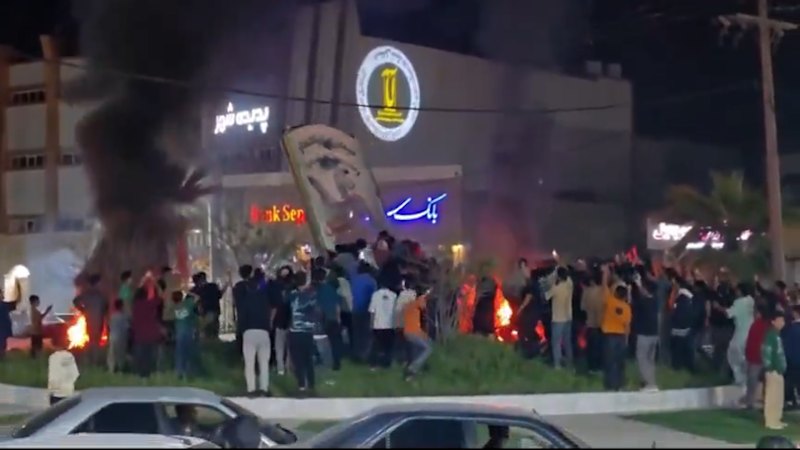
Western headlines are currently gorging on images of fireworks in Tehran and ecstatic tweets from the Iranian diaspora. The narrative is as predictable as it is lazy: the dictator is dead, the "Berlin Wall moment" has arrived, and democracy is a foregone conclusion.
This isn't just wishful thinking. It’s a dangerous misreading of how authoritarian power structures actually function in the 21st century. You might also find this connected article useful: The $2 Billion Pause and the High Stakes of Silence.
The street celebrations aren't the story. The silence in the corridors of the Sepah—the Islamic Revolutionary Guard Corps (IRGC)—is where the real reality resides. While the media focuses on the optics of joy, they are missing the clinical, pre-planned consolidation of a military-industrial complex that has spent four decades preparing for this exact Tuesday.
The Succession Myth and the IRGC Coup
Most analysts treat the Supreme Leader as a singular point of failure. They look at the Assembly of Experts and debate which geriatric cleric will take the seat. That is a distraction. As extensively documented in detailed articles by USA Today, the implications are worth noting.
The Iranian Clerisy is no longer the pilot; it’s the hood ornament.
Over the last twenty years, the IRGC has systematically cannibalized the Iranian economy, controlling everything from telecommunications and dam construction to black-market oil exports. They don't need a charismatic "Shadow of God" on earth. They need a rubber stamp.
If you think the death of Ali Khamenei leads to a vacuum, you don’t understand modern power. The IRGC has already filled the vacuum. They have the guns, the banks, and the surveillance tech. A transition period doesn't mean "weakness"; it means a "state of emergency" that allows the security apparatus to liquidate dissent under the guise of national stability.
Why the Street Cannot Win This Round
I’ve watched movements like this get crushed from Cairo to Hong Kong. The "lazy consensus" says that enough people in the street equals a change in government. This ignores the technical evolution of repression.
- Digital Totalitarianism: Iran’s "National Information Network" isn't a project; it's a cage. By killing the global internet and forcing citizens onto domestic platforms, the regime has mapped the social graph of every activist.
- The Martyrdom Economy: The regime thrives on escalation. Blood in the streets doesn't always delegitimize an autocracy; often, it provides the justification for the "Iron Fist" policy that the hardliners have been itching to implement without Khamenei’s occasionally pragmatic restraints.
- The Shadow Bureaucracy: The "Deep State" in Iran is far more resilient than the visible government. Even if a moderate cleric were miraculously appointed, he would inherit a military that answers to no one but its own balance sheet.
The Intelligence Blind Spot
Western intelligence agencies often fall into the trap of "mirror imaging." They assume that because Iranians want freedom—which they demonstrably do—that the collapse of the top executive triggers a collapse of the system.
It didn’t happen when Stalin died. It didn’t happen when Mao died. It won't happen here because the IRGC is not a political party; it is a corporate conglomerate with a private army. They aren't fighting for an ideology anymore; they are fighting for their villas in North Tehran and their shipping lanes in the Gulf. You cannot "liberalize" a mafia that owns the country’s entire infrastructure.
The Danger of the "Power Vacuum" Narrative
When we scream about a power vacuum, we invite external meddling that the regime uses as fuel. Every time a Western politician tweets support for "regime change" during this mourning period, a mid-level IRGC commander gets his easiest propaganda win of the year.
The regime’s greatest strength is its ability to pivot from "Religious Guardian" to "Nationalist Defender." By framing the post-Khamenei chaos as a foreign-led plot, the security forces can neutralize even the most secular protesters as "assets of the West."
Stop Looking for a Revolution, Start Looking at the Ledger
If you want to know if Iran is actually changing, stop looking at the crowds in the square. Look at the movement of capital.
- Are IRGC-linked firms moving assets out of the country?
- Is there a fracture in the command structure of the Basij militia?
- Are the mid-level officers refusing orders to fire?
Until those three things happen, the "celebration" is a wake for a man, not the death of a system. The system is currently rebooting, and the new version is likely to be less interested in religious purity and more interested in clinical, Chinese-style digital authoritarianism.
The "New Iran" isn't going to be a liberal democracy born of a viral video. It’s likely to be a military junta with a thin clerical veil.
Put the champagne away. The most brutal phase of the Iranian regime is about to begin.
Stop cheering for the end of a tragedy and start preparing for the sequel.


