The polished brochures from Astana and Tashkent want you to believe Central Asia is a sleek, digitized "Middle Corridor" ready to swallow global capital. They point to the Trans-Caspian International Transport Route as a magic wand that bypasses Russia. They show you glossy photos of the Astana International Financial Centre (AIFC) and whisper about "English Common Law" as if a legal framework can survive in a vacuum of institutional history.
It is a fairy tale.
While McKinsey and the Big Four are busy writing white papers about the region’s $100 billion investment potential, they ignore the reality on the ground. This isn't a "new framework" for global capital. It is a desperate rebranding of a geography that is still structurally allergic to the transparency that true institutional capital demands.
The English Law Illusion
The biggest lie currently being sold to Western investors is the "legal island" concept. The AIFC in Kazakhstan operates under a framework based on the principles of English law. It has its own court and international judges. It looks great on a PowerPoint slide.
In practice, this is a jurisdictional anomaly that can only exist as long as the local ruling elite allows it. You cannot have a high-functioning, independent legal system for foreign billionaires while the domestic courts remain tethered to Soviet-era legacy systems and political influence. Real capital doesn't want a "special zone." Real capital wants a country where the property rights of the local baker are as protected as those of a multinational oil firm.
When the shocks hit—like the "Bloody January" unrest in 2022—no amount of English Common Law prevents the internet from being shut off or the tanks from rolling into the streets. If you think your digital assets or your equity stakes are safe because a retired British judge is sitting in a fancy building in the middle of the steppe, you don't understand how power functions in this part of the world.
The Middle Corridor Is a Bottleneck, Not a Bridge
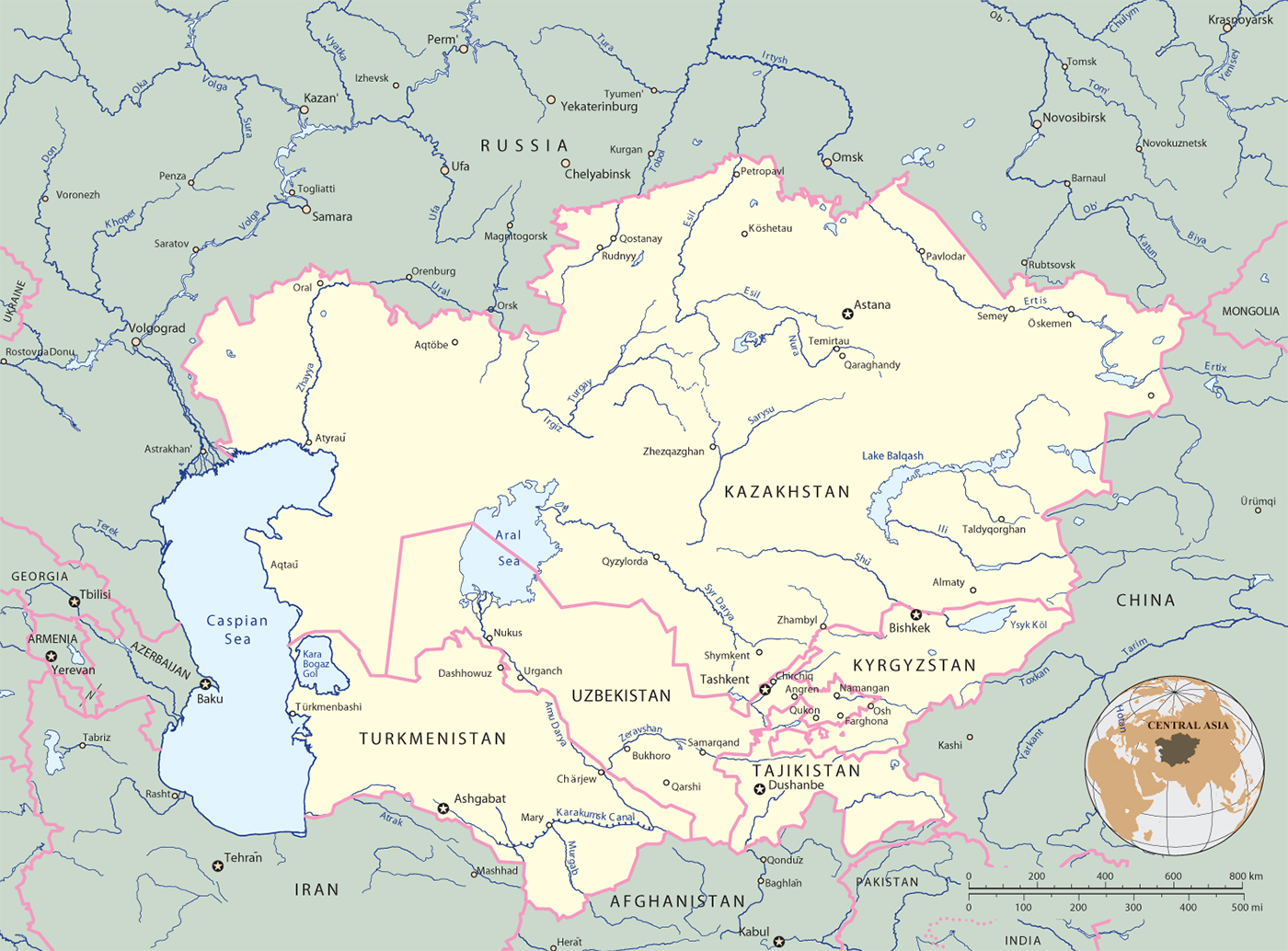
Everyone is obsessed with the Middle Corridor. The logic: Russia is radioactive, so we go through Kazakhstan, across the Caspian, through Azerbaijan and Georgia, into Turkey and Europe.
Look at a map.
The logistics are a nightmare. To move a single container from China to Europe via this route, you have to cross two seas and navigate multiple rail gauges. Every border crossing is a fresh opportunity for rent-seeking and administrative friction. The "multimodal" nature of this path means you are loading and unloading cargo from trains to ships and back again.
The costs are astronomical compared to the Northern Route through Russia or the maritime route through the Suez Canal. Even with the geopolitical premium on avoiding Russia, the Middle Corridor currently handles less than 10% of the volume that the Northern Route once did. It isn't a "framework for global capital"; it's a high-maintenance backup plan that only survives on state subsidies and political hope.
The Ghost of Multi-Vector Diplomacy
Central Asian leaders love the term "multi-vector diplomacy." It means playing Washington, Beijing, and Moscow against each other to see who offers the biggest check.
For the last thirty years, this worked. Today, it’s a liability.
The world has shifted from globalization to fragmentation. You can no longer sit on the fence when the neighbors own your infrastructure. China’s Belt and Road Initiative (BRI) didn't just build roads; it built debt. Much of the regional infrastructure is now collateral. Meanwhile, Russia remains the primary security guarantor through the CSTO (Collective Security Treaty Organization) and the main destination for millions of migrant workers.
Western investors are walking into a three-way tug-of-war where they have the least amount of leverage. You aren't "diversifying" your portfolio by entering Central Asia. You are buying a front-row seat to a geopolitical collision.
The Transparency Deficit
We need to talk about the "privatization" waves being promised. Uzbekistan is currently the darling of the emerging market world because it is finally opening up after decades of isolation. But who is buying?
In many cases, privatization in Central Asia is just a reshuffling of assets between the old guard and a new class of technocrats who are still loyal to the center. They call it "reform." I call it a liquidation sale where the buyers are already in the room.
If you are an institutional investor, you are looking for ESG (Environmental, Social, and Governance) compliance. Good luck. The extractive industries—gold, uranium, oil—are the backbone of these economies. These sectors are notorious for opaque ownership structures and environmental records that would make a compliance officer faint.
The Uranium Trap
Kazakhstan produces roughly 43% of the world’s uranium. On paper, that makes it the most important player in the nuclear renaissance.
However, Kazatomprom, the state-backed giant, has recently warned about production shortfalls. Why? Because they can't get the sulfuric acid needed for extraction, and the logistics of shipping through Russia are becoming increasingly precarious. You aren't betting on green energy; you are betting on a supply chain that passes through a war zone and relies on a chemical industry that hasn't seen an upgrade since the 1980s.
The "Young Population" Myth
Demographic charts for Central Asia show a "youth bulge." The conventional wisdom says this is a massive untapped labor pool and a future consumer market.
Here is what the charts don't tell you: the education systems are failing to produce the talent required for a modern economy. There is a massive "brain drain" as the brightest minds flee to Dubai, London, or even Moscow. What’s left is a disillusioned youth with high expectations and low economic mobility. This is a recipe for social volatility, not a vibrant consumer base.
How to Actually Play This (If You Must)
Stop looking at Central Asia as a cohesive block. It’s a collection of vastly different risks.
If you are going to put money into this region, stop chasing the "digital transformation" hype. The real money is in the unglamorous plumbing of the world.
- Hard Infrastructure (With Strings): Don't buy the equity of the companies. Build the warehouses. Own the cold storage facilities. In a region where logistics are broken, the person who owns the physical bottlenecks wins.
- Energy Hedging: Use the region as a hedge for energy prices, but only through vehicles that have physical off-take agreements. Avoid the "national champions" unless you enjoy watching your dividends disappear into "social development funds."
- Local Currency Arbitrage: The volatility of the Tenge and the Som is where the real traders make their money. But this requires boots on the ground and a stomach for 20% swings in a single afternoon.
The Reality Check
The competitor article you read probably mentioned the "Silk Road" five times. That should be your first warning sign. Using 13th-century romanticism to justify 21st-century investment is the hallmark of a grifter or a fool.
Central Asia isn't becoming a global financial hub. It is a frontier market in the truest, most dangerous sense of the word. It is a place where you can make 500% returns or lose everything because a border guard had a bad day or a nephew of a minister wanted your warehouse.
The "New Framework" is just the old framework with a better PR agency. The capital isn't building a new world there; it’s just paying for the privilege of being the last one out the door.
If you want a safe bet, go to a boring market with boring laws and boring politicians. If you want a gamble, come to the steppe—just don't pretend it's an "investment grade" opportunity.
Stop reading the brochures. Start looking at the power lines.