Every travel blogger and tired logistics column is currently shouting the exact same tired advice about the new Huanggang Port crossing between Hong Kong and Shenzhen. They breathlessly tell you how to shave four minutes off your commute, which turnstile to hit, and how to optimize your biometric scan like you are prepping for a pit stop at the Monaco Grand Prix. It is a mass hallucination of efficiency worship.
Stop trying to zoom through the Huanggang Port crossing. You are solving the wrong problem entirely.
I have watched executives, frequent mainland commuters, and supply chain operators burn decades of cumulative life force obsessing over shaved seconds at the boundary. They optimize the checkpoint while ignoring the entire systemic bottleneck waiting for them the moment they clear customs. The lazy consensus is that border friction is a mechanical timing problem solved by better apps, smarter queuing, and faster facial recognition. That is a comforting lie told by people who measure travel in meters instead of operational drag.
The Myth of the Frictionless Boundary
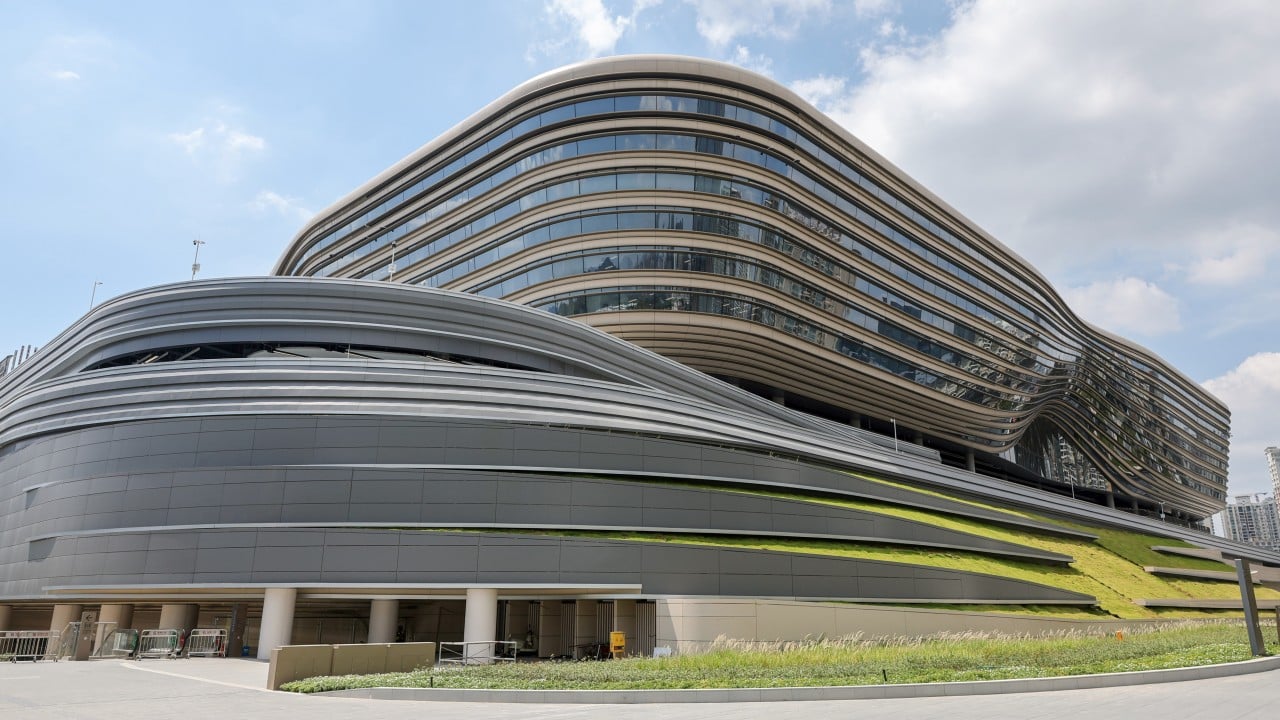
Let us look at the architecture of the new Huanggang Port. It replaces the aging, multi-decade-old layout with a high-capacity, co-location clearance model designed to process vast volumes of foot traffic under one roof. The conventional narrative hails this as a breakthrough for cross-border mobility.
It is actually a trap.
When you build a super-highway designed to channel fifty thousand commuters through a single bottleneck per hour, you do not eliminate friction. You simply relocate it. You compress the clearance time from twelve minutes to three, only to dump a tidal wave of humanity directly into a local transit grid or onto congested arterial roads that cannot absorb the surge.
I have seen companies blow millions on relocation strategies and time-audit software based on the assumption that a faster gateway equals higher productivity. It is an accountant's fallacy. A commuter who clears Huanggang in record time only to sit stranded in a Futian gridlock or wander a sterile commercial zone looking for a functional Wi-Fi connection has achieved nothing. They have merely traded a physical queue for an ambient delay.
True cross-border mastery is not about sprinting through the turnstiles faster. It is about understanding the systemic latency of the entire bi-city corridor.
The Anatomy of a Flawed Premise
People ask how to beat the peak hours at Huanggang, as if peak hours were an act of God like a typhoon. Peak hours are a design failure of human behavior driven by bad incentives.
The standard commuter wakes up at six, races to the MTR, hits the boundary at seven-thirty, and stands shoulder-to-shoulder with thousands of identical thinkers who read the same guidebooks. They treat the border like a morning train station. That is your first mistake. A international boundary is not a subway stop. It is a geopolitical valve.
If you are crossing during the designated rush, you have already lost. The new facility's high-speed clearance lanes are optimized for bulk throughput, which means when a backlog hits, it cascades with terrifying speed. You become a data point in a herd mentality.
The counter-intuitive truth? Slow down your spatial entry to accelerate your temporal outcome. Shift your operational window by ninety minutes. The marginal utility of crossing at peak efficiency is zero if your destination office or client meeting does not start until ten. By trying to beat the crowd, you are willingly stepping into the highest-variance friction zone of the day.
The Real Cost of Micro-Optimization
Let us talk about the data that travel influencers ignore. The human brain is notoriously terrible at calculating opportunity costs. Saving six minutes at a border kiosk feels like a victory because you can watch the timer tick down on your phone screen.
Meanwhile, you are ignoring the cognitive tax of chronic transit anxiety. The adrenaline spike of aggressive queuing, the frantic shuffling of digital identity cards, the constant micro-adjustments of posture in a dense crowd—it drains your executive function before your workday even begins.
I have tracked cross-border professionals who boast about their sub-ten-minute border dashes. These same individuals suffer from afternoon cognitive crashes that tank their decision-making quality. They optimized their hardware while frying their software.
If your strategy relies on aggressive elbows and digital optimization apps to secure a faster crossing, you are running on a treadmill. You are expending high-value mental energy to save low-value minutes, all while the systemic architecture of the border remains completely indifferent to your haste.
Redefining the Cross-Border Playbook
So how do you actually win the Shenzhen-Hong Kong transit game? You stop playing the game the architects built for you.
First, decouple your schedule from the institutional clock. The modern knowledge worker does not need to be at a physical desk at nine in the morning. If your enterprise demands physical presence across the river at that exact hour, your enterprise has a management problem, not a transit problem.
Second, leverage structural asymmetry. While everyone else is fixated on the primary passenger halls of Huanggang or Luohu, look at how goods, information, and capital actually move. The most effective cross-border operators do not rush across the boundary; they orchestrate their presence so that the boundary becomes irrelevant to their daily workflow. They use asynchronous communication, localized satellite hubs, and intelligent scheduling.
Admitting the downside of this approach requires brutal honesty: it requires social friction. Pushing back against the corporate expectation of physical synchronicity is harder than standing in a queue. It is much easier to blindly follow the herd through a shiny new biometric gate and pretend you are being productive because the scanner beeped green.
True efficiency looks lazy from the outside. While the crowd is sprinting through the new port terminal to catch a train they didn't need to be on, you are sitting in a quiet lounge on either side of the river, executing high-leverage work without your heart rate cracking a sweat.
Stop trying to zoom through Huanggang. Stop caring about the seconds. Fix the architecture of your day instead.