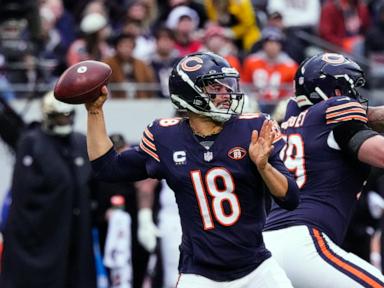
Winning solves almost everything in the NFL until suddenly it doesn't. Sitting at 9-2 after a heart-stopping 39-35 Thanksgiving comeback against the Detroit Lions, the Chicago Bears hold first place in the NFC North and have locked up back-to-back winning seasons for the first time since 2005-06. On paper, life at Halas Hall couldn't look much better. Look closer at the game tape, though, and a glaring contradiction jumps off the screen. Chicago keeps stacking victories while its offense actively searches for basic, down-to-down offensive consistency heading into the toughest stretch of its 2026 schedule.
Fans in Chicago have seen this movie before, even if the quarterback and play-caller are vastly superior to regimes past. For weeks, Dennis Allen's defense and explosive, sporadic bursts carried a team that struggled to sustain clean drives. Even after Caleb Williams threw for 345 yards and two touchdowns—including the game-winning six-yard strike to Rome Odunze with three seconds left at Ford Field—the underlying flaws haven't magically vanished. With Jacksonville, Miami, Buffalo, Green Bay, Detroit, and Minnesota lining up over the final six weeks, surviving on fourth-quarter heroics and defensive takeaways is a dangerous way to live.
The Anatomy of an Inconsistent Contender
To understand why coaches sound uneasy despite a six-game winning streak, you have to rewind just a few days before Thanksgiving. Following an 8-2 start powered by five consecutive wire-to-wire leads—a streak Chicago hadn't pulled off since 1959—offensive coordinator Press Taylor didn't sugarcoat the unit's struggles. He called their offensive trouble "kind of an everything issue."
That wasn't coachspeak. Against New Orleans in Week 11, Chicago scraped together a 21-13 win while generating just 311 total yards and converting 5 of 12 third downs. Strip away rookie receiver Zavion Thomas's 30-yard reverse, and the Bears' primary running backs averaged less than four yards per carry against a defense they should have bullied after a Week 10 bye. Head coach Ben Johnson admitted afterward that running the football consistently was a major point of emphasis coming out of the break, yet the execution simply wasn't there.
Explosive Plays vs. Down-to-Down Rhythm
Here's the catch with the 2026 Bears offense. They can hit a home run from anywhere on the field, which keeps them near the top of the league in scoring, yet they routinely stall out on routine second-and-manageable situations.
Look at how their biggest moments have unfolded recently:
- Reliance on gadget and broken plays: Against the Saints, Zavion Thomas accounted for Chicago's two longest gains—a 30-yard reverse and a 40-yard grab on third-and-17—after entering the afternoon with just seven catches all season.
- Cover 3 headaches: Between Weeks 6 and 11, after Williams returned to the lineup, Chicago saw Cover 3 shells on 39.1% of dropbacks, the third-highest rate in football. According to tracking data, they ranked 27th in expected points added per dropback against that exact look before finally cracking the code late against Detroit.
- Pass protection leaks: Williams has already been sacked 20 times in eight starts this season, including four takedowns in Detroit and four in Atlanta. When teams collapse the pocket without blitzing, Chicago's timing concepts fracture immediately.
Honest evaluation requires acknowledging both truths at once. Williams has posted a 97.7 passer rating with a 68.3% completion mark across his eight regular-season appearances, showing massive growth from his 58.1% completion rate in 2025. Still, an offense built on third-and-17 conversions and last-minute drives eventually runs into a playoff defense that refuses to blink.
The Turnover Paradox Holding Chicago Back
Nothing highlights Chicago's razor-thin margin for error quite like ball security. During Ben Johnson's 11-6 debut season in 2025, the Bears led the entire NFL with a staggering plus-22 turnover differential. They protected the football relentlessly while taking it away in bunches.
In 2026, that script has flipped. Through the first 10 games alone, Chicago coughed up 19 turnovers—10 interceptions and nine fumbles—while forcing just 15 takeaways. Even during their recent surge, sloppy mistakes nearly sank them:
- Williams threw four interceptions in a 27-24 nail-biter against Tampa Bay in Week 9, forcing the defense to bail out the offense repeatedly.
- D'Andre Swift lost an early fourth-quarter fumble against New Orleans with Chicago holding a 21-10 lead, handing the Saints possession at their own 46-yard line before the Bears' defense stood tall on fourth-and-2 inside the 10.
- Tight end Colston Loveland lost a fumble in Detroit on Thanksgiving, contributing to a game where Chicago fell behind by double digits multiple times before Williams's late magic saved the afternoon.
Swift's individual slide tells a similar story. Before breaking loose for 65 rushing yards and 97 receiving yards against the Lions, Swift had averaged just 3.3 yards per carry and 53.4 rushing yards per game over his prior seven starts. Worse, he has already lost three fumbles in 2026 after losing only two all of last year and none in 2024. When your lead back struggles to churn out dirty four-yard gains on first down and puts the ball on the turf in the fourth quarter, every offensive series becomes an uphill climb.
Why Defense Can Only Carry the Load So Far
Let's give credit where it's due. Dennis Allen's unit has been the primary reason Chicago sits atop the division. Against New Orleans, the Bears generated 24 quarterback pressures—their highest single-game total since Week 9 of 2018, per Next Gen Stats—and recorded five of their six sacks using a four-man rush. With Jeffery Simmons, Montez Sweat, and Grady Jarrett collapsing interior pockets, Chicago has suffocated mediocre offenses for stretches.
Then Thanksgiving happened. Facing Jahmyr Gibbs, Amon-Ra St. Brown, and a Detroit offense that punted just three times while piling up 549 total yards and 8.1 yards per play, Chicago's defense finally looked human. Gibbs alone gashed them for 205 rushing yards and three touchdowns, including a 70-yard breakaway with eight minutes left that pushed Detroit ahead 35-24.
That game served as an unmistakable warning flare. Against elite, balanced contenders, holding opponents to 13 points isn't realistic. If Chicago's offense goes silent for two quarters—like it did during stretches against Minnesota in Week 2 (a 9-3 loss) or Green Bay in Week 5 (a 31-7 blowout)—the defense will eventually crack under the weight of constant short fields and lopsided time of possession.
The Six-Game Gauntlet That Will Define Chicago's Season
If the first 11 games were about proving Ben Johnson's 2025 turnaround wasn't a fluke, the final six weeks are about proving Chicago belongs among true Super Bowl contenders. Right now, ESPN's playoff calculator gives the Bears a 96% chance of reaching the postseason, yet only a 42% shot at repeating as NFC North champions. One look at the remaining calendar explains why:
- Week 13 vs. Jacksonville Jaguars (Dec. 6): Trevor Lawrence brings an AFC South-leading squad into Soldier Field that thrives on disciplined zone coverage and opportunistic pass defense.
- Week 14 at Miami Dolphins (Dec. 13): A December trip to South Florida tests conditioning and offensive tempo against speed on both sides of the ball.
- Week 15 at Buffalo Bills (Dec. 19): Facing Josh Allen at Highmark Stadium in mid-December demands an offense capable of trading touchdowns in freezing conditions.
- Week 16 vs. Green Bay Packers (Dec. 25): A Christmas Day rematch at Soldier Field against a Packers team that embarrassed Chicago 31-7 back in Week 5.
- Week 17 vs. Detroit Lions (Jan. 3): Round two against Dan Campbell's squad, likely with the division crown and conference seeding directly on the line.
- Week 18 at Minnesota Vikings (Jan. 10): Closing the regular season inside U.S. Bank Stadium against a Brian Flores defense that already held Chicago to three points earlier this fall.
Every single opponent on that slate either leads its division, boasts a top-tier quarterback, or plays the exact brand of physical, disguised coverage that has given Chicago fits. Remember what happened last year—Chicago opened 8-3 through 11 games before limping to a 3-3 finish down the stretch. Repeating that fade in 2026 could turn a potential top-two seed into a brutal road wild-card matchup.
What Has to Change Before January Arrives
Ben Johnson knows what elite offense looks like—he built one in Detroit before bringing his playbook to Chicago, and he proved on Thanksgiving that he can still dial up surgical answers when his back is against the wall. Watching Williams shred Detroit's Cover 3 on three straight passes covering 71 yards in barely a minute showed what this roster looks like when protection holds and receivers hit their landmarks.
For that version of the Bears to show up every Sunday instead of every fourth quarter, three concrete adjustments have to stick immediately:
- Commit to complementary backfield roles: Kyle Monangai returned from toe and thumb injuries to punch in two short-yardage touchdowns against Detroit, while Salvon Ahmed ripped off a 46-yard burst. Leaning into a true committee keeps Swift fresh for passing-down mismatches and punishes light boxes on early downs.
- Eliminate unforced red-zone and midfield turnovers: Fumbles by skill players and forced throws into bracket coverage are the only things keeping opponents in games when Chicago starts fast. Protecting the football has to become non-negotiable again.
- Simplify early-down timing for Caleb Williams: When Johnson pairs quick-game concepts to Rome Odunze, Luther Burden III, and Colston Loveland with selective deep shots, Williams stays upright and defensive fronts can't tee off on third-and-long.
If you're tracking whether this Bears team is built for a deep January run, stop staring at the 9-2 win-loss column on Sunday afternoons. Watch their first-down efficiency, watch the turnover counter, and watch how cleanly they operate between the twenties against Jacksonville and Buffalo. Wins in November buy you cushion, but clean, repeatable offense is the only currency that spends in the playoffs.