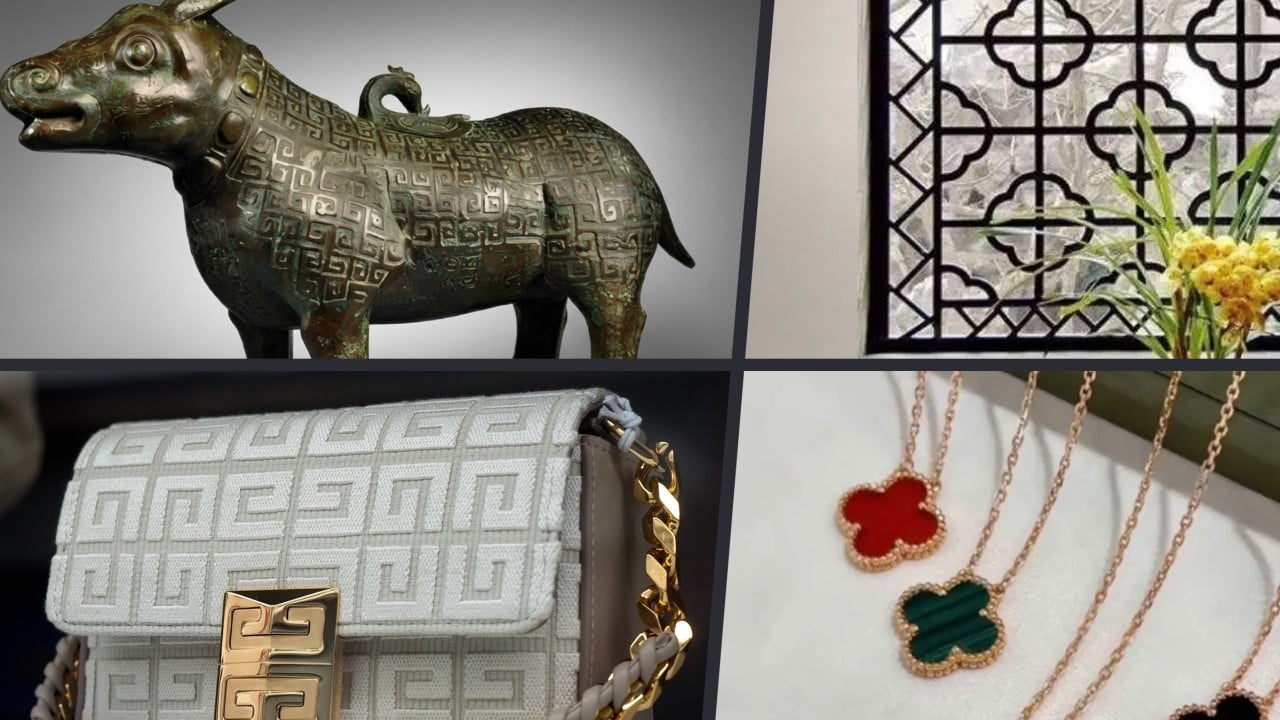
Western luxury houses are not "exploiting" Chinese visual heritage. They are filling a void that Chinese brands willingly left wide open.
The standard cultural narrative surrounding global fashion is predictable, lazy, and deeply hypocritical. Every time a Parisian heritage brand prints a traditional Qing Dynasty pattern on a five-thousand-dollar silk scarf or references Song Dynasty ceramics in an autumn collection, the commentary follows a scripted outrage playbook. Critics cry cultural appropriation. Columnists demand strict intellectual property protections for national motifs. Pundits insist that foreign conglomerates are extracting wealth from China's cultural treasury while leaving local artisans with nothing.
This victim mentality completely misunderstands global luxury mechanics.
Western luxury brands do not steal Chinese visual motifs because they are predatory colonizers of design. They use them because those motifs possess immense aesthetic value, and Chinese capital has spent decades refusing to build the domestic luxury houses capable of monetizing them at scale. Complaining about cultural extraction while refusing to build competing luxury infrastructure isn't heritage protection. It is strategic negligence.
The Soft Power Fallacy: Protectionism Destroys Brand Equity
The most persistent myth in the global fashion ecosystem is that traditional motifs need legal, legislative, or institutional safeguarding against commercial adoption.
The moment you wrap cultural heritage in regulatory tape, you kill it.
I have sat in boardrooms with executives who genuinely believe that national heritage can be protected through heritage registries, trademark crackdowns, and defensive PR campaigns. It never works. High fashion is an engine of desire, not an archive. Luxury valuation is built entirely on exclusivity, narrative control, and cultural relevance.
When LVMH or Kering borrows from classical Chinese iconography, they perform a masterclass in value creation:
- Recontextualization: They take static historical art and inject it into modern high-status social environments.
- Aesthetic Validation: They translate hyper-local historical motifs into the universal language of global status symbols.
- Margin Expansion: They sell an idea at a 90% gross margin because they control the storytelling pipeline.
If a local artisan carves jade in Suzhou and sells it for three hundred dollars, but a European conglomerate mounts that same visual concept on a platinum hardware setting and sells it in Ginza for fifty thousand dollars, the problem is not that the European house "exploited" the motif. The problem is that the local market failed to create a brand that commands that margin.
Legal barriers do not build brand equity. Defensiveness does not inspire desire. You do not safeguard culture by locking it in a museum vault and suing anyone who draws inspiration from it; you safeguard it by building commercial engines so powerful that your interpretation becomes the authoritative standard.
Stop Asking How to Safeguard Motifs: Build Better Conglomerates Instead
Search engines and industry forums are flooded with queries about how emerging markets can defend their creative property from international conglomerates. The entire premise of this search intent is fundamentally flawed.
People ask: How can native traditions be protected from corporate appropriation?
The brutal reality? They shouldn't be. Culture is an open-source codebase. Attempting to patent a color palette, a weaving technique, or a historical pattern is an admission of failure.
Look at how luxury actually operates:
| Modern Strategic Failure | The Brutal Industry Reality | The Superior Counter-Strategy |
|---|---|---|
| Treating historical motifs as static intellectual property to be guarded. | Unused cultural assets lose relevance and are adopted by whoever commands global retail channels. | Deploy aggressive, venture-backed luxury conglomerates to commercialize domestic heritage natively. |
| Relying on heritage registries and public relations shaming to deter foreign usage. | Global consumers do not care about moral outrage; they buy status, craftsmanship, and brand power. | Out-design, out-market, and out-price foreign competitors using superior craftsmanship narrative control. |
| Viewing Western adoption as visual theft and economic exploitation. | Foreign adoption proves the inherent market value of the visual language. | Capitalize on the global demand validated by foreign brands by scaling authentic, high-end alternatives. |
I have spent years analyzing supply chain mechanics and brand positioning across Asian and European retail markets. The differential isn't in the raw materials, nor is it in the technical execution. The silk weaving techniques in Hangzhou and the ceramic glazing standards in Jingdezhen match or exceed anything coming out of Lyon or Sèvres.
The gap is entirely institutional. European houses spent two centuries building holding companies—buying up tanneries, securing global real estate on Avenue Montaigne and Fifth Avenue, and turning heritage into an investment asset class. China, despite controlling some of the most advanced manufacturing and craft ecosystems on earth, treated its own visual heritage as either cheap tourist souvenirs or untouchable, non-commercial museum relics.
When you refuse to commercialize your own culture at the highest level, someone else will do it for you. Calling that process exploitation is simply shifting the blame.
The Trap of C-Beauty and Nationalistic Consumption
The rise of Guochao (national trend) consumerism is frequently cited as the ultimate solution to foreign dominance. Analysts point to domestic cosmetics brands, sportswear giants, and homegrown apparel labels incorporating traditional elements as proof that local markets are reclaiming their identity.
This is a dangerous optical illusion.
Most Guochao campaigns rely on short-term nationalistic pride rather than true luxury value creation. They pump out mass-market products, wrap them in traditional packaging, and ride a wave of domestic momentum.
That is not high luxury. That is fast fashion wearing a traditional costume.
[ Mass-Market "Guochao" Strategy ]
Low Margins + High Volume + Domestic Pride = Local Trend Dependency (Fragile)

               VS.

[ Global High-Luxury Strategy ]
Extreme Margins + Artificial Scarcity + Universal Mythmaking = Global Dominance (Resilient)
By relying on domestic sentiment, these brands trap themselves. True luxury does not demand loyalty based on passport or regional pride; it demands obsession based on absolute desirability. When a French house sells a bag, they aren't appealing to French nationalism. They are selling a dream to a buyer in Shanghai, Tokyo, New York, and Dubai simultaneously.
If domestic brands rely solely on local pride, they fail the moment the trend cools down. They trade global prestige for quick domestic volume. To compete with established Western conglomerates, companies must stop relying on patriotic sentiment and start mastering the brutal, uncompromising mechanics of global luxury positioning.
How Domestic Capital Actually Reclaims the Narrative
If the goal is genuine sovereignty over visual heritage, the roadmap has nothing to do with international copyright court or public shaming. It requires aggressive, cold-blooded commercial execution.
1. Acquire the Distribution Channels
Stop trying to build boutique stores in regional hubs while paying exorbitant rents to Western real estate trusts. Acquire the retail real estate, the multi-brand platforms, and the global distribution networks. Luxury is a game of physical and digital presence. If you do not own the avenue, you are just a tenant in someone else's narrative.
2. Fund Long-Term Mythmaking Over Short-Term ROI
Western luxury conglomerates operate on decades-long strategic horizons. They are willing to run flagship stores at a loss in prime locations for ten years just to anchor a brand's status in the consumer's psyche. Domestic capital notoriously demands fast returns, high-volume turnarounds, and immediate scale. Luxury cannot be built on an e-commerce quarterly sprint. It requires patience, deliberate scarcity, and relentless mythmaking.
3. Price for Status, Not Market Share
The single largest mistake emerging luxury brands make is competing on price. The moment you offer a lower price point to be "accessible," you eliminate the psychological driver of luxury acquisition. If a brand utilizes traditional hand-embroidery techniques that take three hundred hours to execute, charging fifteen hundred dollars is an insult to the craft. Price it at forty thousand dollars. Limit the production run to twelve pieces worldwide. Create a waiting list. Force the global market to recognize the economic weight of the craftsmanship.
4. Co-opt the Disruptors
Instead of protesting foreign interpretations, buy equity in them or out-recruit their creative leadership. The European luxury sector has used foreign design talent for decades to keep its houses relevant. Domestic conglomerates should actively recruit top-tier creative directors from Paris, Milan, and London, hand them centuries of visual history, and task them with creating hyper-modern, uncompromisingly expensive collections for a global audience.
The Uncomfortable Truth About Heritage
There is an obvious risk to this aggressive commercial strategy: it strips away the comfortable moral superiority of play-acting as the aggrieved party.
It forces domestic industries to take actual financial and creative risks. It forces investors to write long-term checks without guaranteed short-term yield. It exposes brands to the cold reality of global consumer judgment, where patriotic appeals mean absolutely nothing.
Heritage is not a sacred object that perishes when touched by commerce. It is a living, competitive asset.
If Western luxury houses are currently making billions by interpreting Eastern visual history, they shouldn't be condemned. They should be thanked for validating the asset class. Now, it is up to domestic capital to step into the ring, build the conglomerates, command the margins, and take the market share that was theirs to lose in the first place.
Stop playing defense. Build the houses. Charge the premium. Own the room.