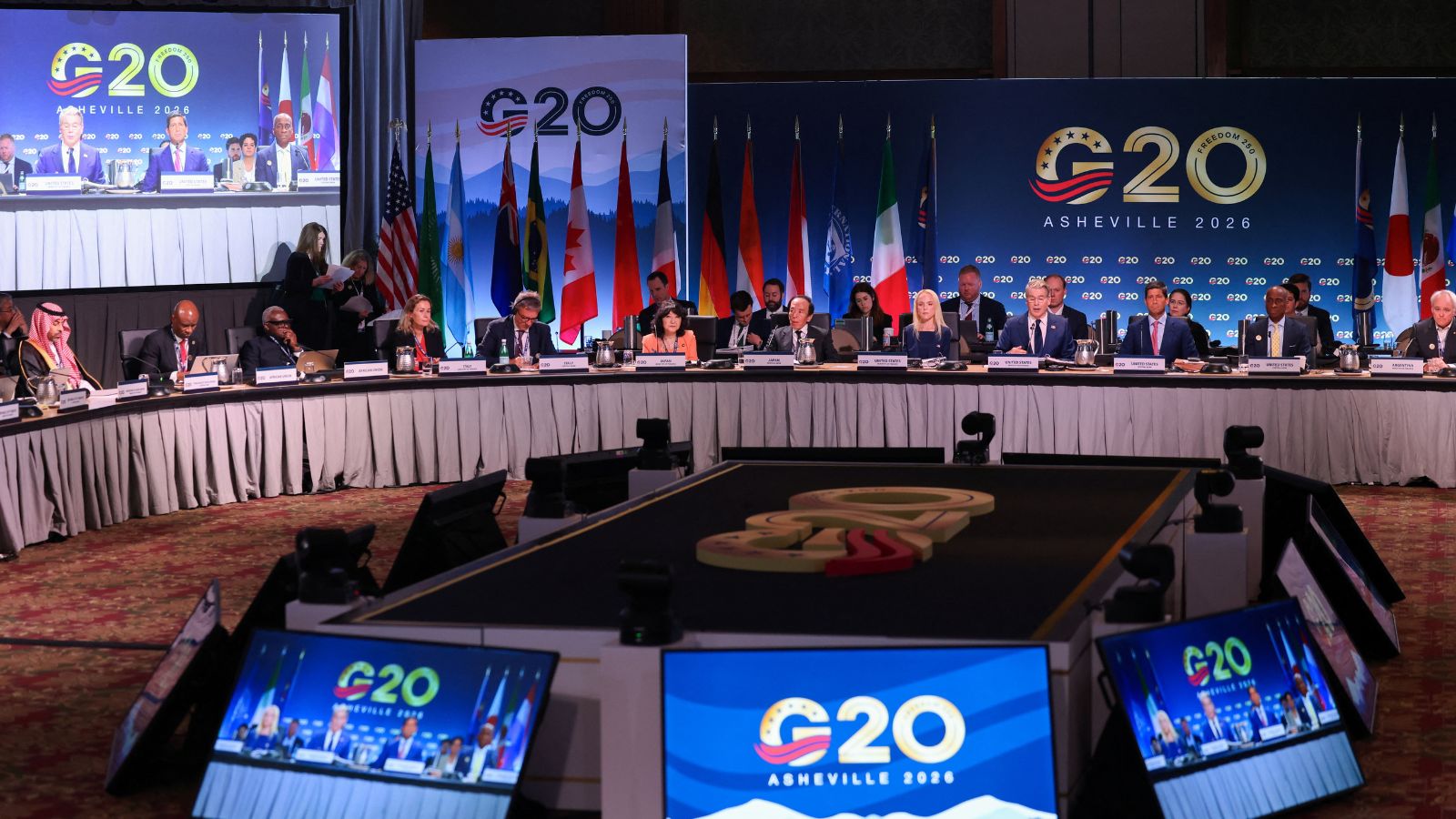
Global trade politics rarely make for quiet room conversations. When international finance ministers gather, the polite diplomatic language usually hides sharp elbows beneath the table. Recently, a familiar fault line cracked wide open again. Major economic powers squared off over what they call distorted trade practices, and Beijing found itself standing entirely alone against a united front of Western and allied economies.
If you look past the headlines, this showdown isn't just about steel quotas or manufacturing subsidies. It's a fundamental disagreement over who gets to write the economic rules of the road for the next decade. Let's talk about what's actually happening behind closed doors. For a closer look into similar topics, we recommend: this related article.
The Breaking Point in Global Markets
Trade distortion sounds like dry bureaucratic jargon. It isn't. It means one nation pumps massive state subsidies into domestic industries, builds up overcapacity, and then floods international markets with cheap goods that local competitors cannot possibly match.
For years, industrial nations absorbed the blow. Factories closed. Supply chains shifted. Workers lost jobs. But patience ran out. For broader context on the matter, detailed reporting is available at Forbes.
Finance chiefs from major economies pushed hard for unified condemnation and direct pushback against these practices. They argued that current market imbalances threaten global economic stability. China's representatives dug in their heels. They rejected the accusations entirely, claiming their industrial policy drives green transition technology and keeps global inflation low.
The Anatomy of State Subsidies
You cannot understand this friction without looking at the mechanics. When a government backs a sector with cheap land, below-market loans, and direct cash injections, standard market rules stop working.
Take electric vehicles and renewable energy components. Beijing poured billions into these sectors early. That foresight created a dominant manufacturing base. It also created massive structural overcapacity. Domestic consumption couldn't absorb the output.
Factories had to export the excess. When those goods land in Europe or North and South America at a fraction of local production costs, domestic industries scream for protection.
Western finance ministries now view these subsidies as an existential threat to their own industrial bases. They are deploying tariffs and trade defenses at a scale we haven't seen in decades.
Why Beijing Refuses to Back Down
From Beijing's perspective, the sudden outcry from Western capitals looks entirely hypocritical.
For decades, Western nations preached free market gospel while quietly protecting their own agriculture and strategic tech sectors through subsidies and tax breaks. Now that a competitor has mastered industrial policy and beaten them at their own game, the rules suddenly change.
Chinese officials argue their state-supported investments are accelerating the global shift toward green energy. Without cheap solar panels and batteries, climate targets slip further out of reach. They see trade restrictions not as fair play, but as a protectionist trap designed to block their technological rise.
This creates an immovable object meeting an unstoppable force. Neither side can compromise without looking weak domestically.
The Real Cost to Global Supply Chains
Consumers love cheap goods. When affordable solar panels and electric cars become widely available, adoption rates soar. That looks like a win on paper.
The hidden bill arrives later. When production concentrates entirely in one geographic region due to state backing, the rest of the world loses manufacturing capacity and supply chain resilience.
Supply chain shocks during recent global crises proved how dangerous this vulnerability is. Relying on a single dominant player for critical inputs creates a geopolitical choke point.
Finance chiefs know this risk intimately. They are trying to re-engineer trade routes through friend-shoring and domestic manufacturing incentives. It's expensive. It's inefficient. But governments now prioritize national security over pure economic efficiency.
What Comes Next for Global Commerce
The split within the G20 signals the end of the hyper-globalized consensus. We are entering a fractured economic era where national security dictates trade policy.
Expect more friction. Tariffs will rise. Investment screening will tighten. Supply chains will continue to decouple or fragment into regional blocs.
Businesses operating internationally can no longer rely on smooth, rules-based globalization. You have to build redundancy into your operations. Diversify your sourcing. Watch regulatory shifts like a hawk. The era of cheap, frictionless trade is gone for good.