You think you’re untouchable in Beijing if you deliver world-class victories for the state. Then the knock comes at the door.
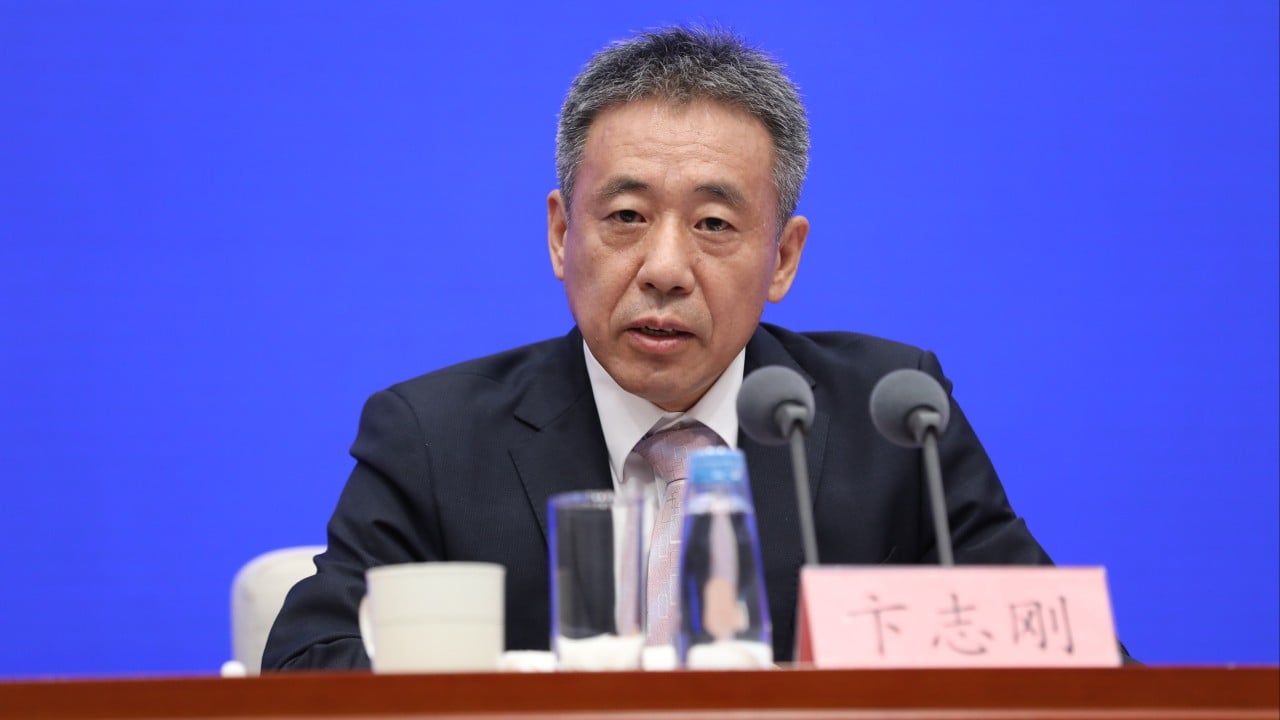
Ma Xingrui found that out the hard way. He was the golden boy of China's civilian aerospace push. He ran the China Academy of Space Technology. He steered the high-profile Chang'e lunar exploration missions and the Shenzhou manned space flights. He was literally the face of China's pitch for international space cooperation, shaking hands with global scientists and inviting foreign partners to build a lunar research station.
Then, the Central Commission for Discipline Inspection dropped the hammer.
Ma is under investigation for serious disciplinary and legal violations. In plain English, that means corruption. His downfall follows a string of terrifyingly high-level purges, including former Vice Chairmen of the Central Military Commission He Weidong and Zhang Youxia.
If you're watching from the outside, it looks like madness. Why decapitate the leadership of your most successful, cutting-edge programs when you're locked in a tech race with Washington?
Because inside Beijing's current political calculations, absolute internal loyalty beats external scientific success every single time.
The Rocket Force Connection
You can't separate China's civilian space achievements from its military hardware. The tech that puts a rover on the far side of the moon is the exact same tech that guides an intercontinental ballistic missile to a target across the ocean.
Ma Xingrui spent decades building this infrastructure. He wasn't just a bureaucrat; he was a brilliant engineer who became the youngest doctoral supervisor at the Harbin Institute of Technology at age 34. He knew where the bodies were buried because he helped build the graveyard.
Experts tracking the purge note that China’s aerospace industry is deeply intertwined with the People's Liberation Army Rocket Force. That specific military branch has been completely hollowed out by corruption investigations over the last two years. When the military side fell, it was only a matter of time before the civilian aerospace side got dragged into the undertow.
The defense procurement system in China handles billions of dollars with zero public oversight. It’s an environment practically engineered to breed bribery. Hardware gets greenlit, suppliers get hand-picked, and "promotion fees" change hands to keep the wheels turning.
Look at what happened to Guo Yonghang, a close aide to Ma during his time as the party secretary of Shenzhen. Guo fell to a corruption probe just weeks before Ma did. It’s the classic playbook. The investigators squeeze the inner circle first. They collect the receipts, get the confessions, and then they move in on the main target.
Winning Space Races Doesn't Buy Immunity
The biggest mistake foreign analysts make is assuming that economic or scientific utility provides a shield.
Ma Xingrui was a technocrat who actually delivered results. He was meant to show the world that China could run a clean, modern, collaborative space program. His team successfully brought back lunar soil samples with Chang'e 5 and landed the Zhurong rover on Mars. They built the Tiangong space station from scratch.
None of that mattered when the political winds shifted.
The current crackdowns are part of a brutal preparation phase for the 21st Party Congress in 2027. Leadership positions across both central and provincial governments are up for grabs. The goal here isn't just cleaning up financial books. It's about processing every single potential liability before the new personnel system gets locked in. They want to prevent what internal party documents call "promotions despite having illnesses."
If a loyalist like Ma—a man personally elevated through the ranks for his competence—can be thrown to the wolves, the message to the rest of the bureaucracy is deafening. Nobody is safe.
What This Means For Global Partnerships
If you are an international space agency considering a joint venture with Beijing, this purge changes the entire risk math.
China has been aggressively courting foreign nations to join its International Lunar Research Station project, aiming for a permanent moon base in the 2030s. They wanted to present an alternative to NASA’s Artemis Accords. Ma Xingrui was supposed to be the competent, reliable manager ensuring those global partnerships ran smoothly.
Now, those foreign partners have to deal with a system where the top leadership can vanish overnight.
When a program director gets purged, the entire network of trust disappears with them. Contracts get audited. Projects freeze. Decisions stall because lower-level officials become too terrified to sign off on anything that might later be viewed as a compliance violation or a national security leak.
For Western intelligence and global policymakers, the next moves require a total reassessment of China's institutional stability. You cannot treat China's space program as a standard scientific entity. It is a political entity first, a military asset second, and a scientific program third.
If you are managing supply chains or international research agreements linked to Chinese aerospace entities, audit your touchpoints immediately. Ensure your intellectual property is completely ring-fenced. The internal chaos inside Beijing's defense and space sectors means that policies can pivot instantly, and the person you signed a contract with today might be in an interrogation room tomorrow.