Traditional car dealerships across Britain are sweating. If you've tried buying a new vehicle lately, you've likely noticed aggressive price cuts and dealer incentives that sound almost too good to be true. That is not an accident. The Society of Motor Manufacturers and Traders recently admitted a blunt truth: there is heavy discounting happening everywhere because established brands are panicking.
Why? Because Chinese automotive giants are rewriting the rules of the UK market.
Chinese-owned brands now command roughly fifteen percent of all new car registrations in Britain. Names like MG, BYD, OMODA, and JAECOO are no longer niche curiosities seen only at auto shows. They are sitting on suburban driveways, undercutting legacy European and Japanese manufacturers by thousands of pounds while offering high-tech cabins and impressive electric driving ranges.
Legacy automakers built their business models on fat profit margins and steady brand loyalty. That era is over.
The Cost Advantage Nobody Can Match
How are Chinese manufacturers doing it? Simple efficiency and scale.
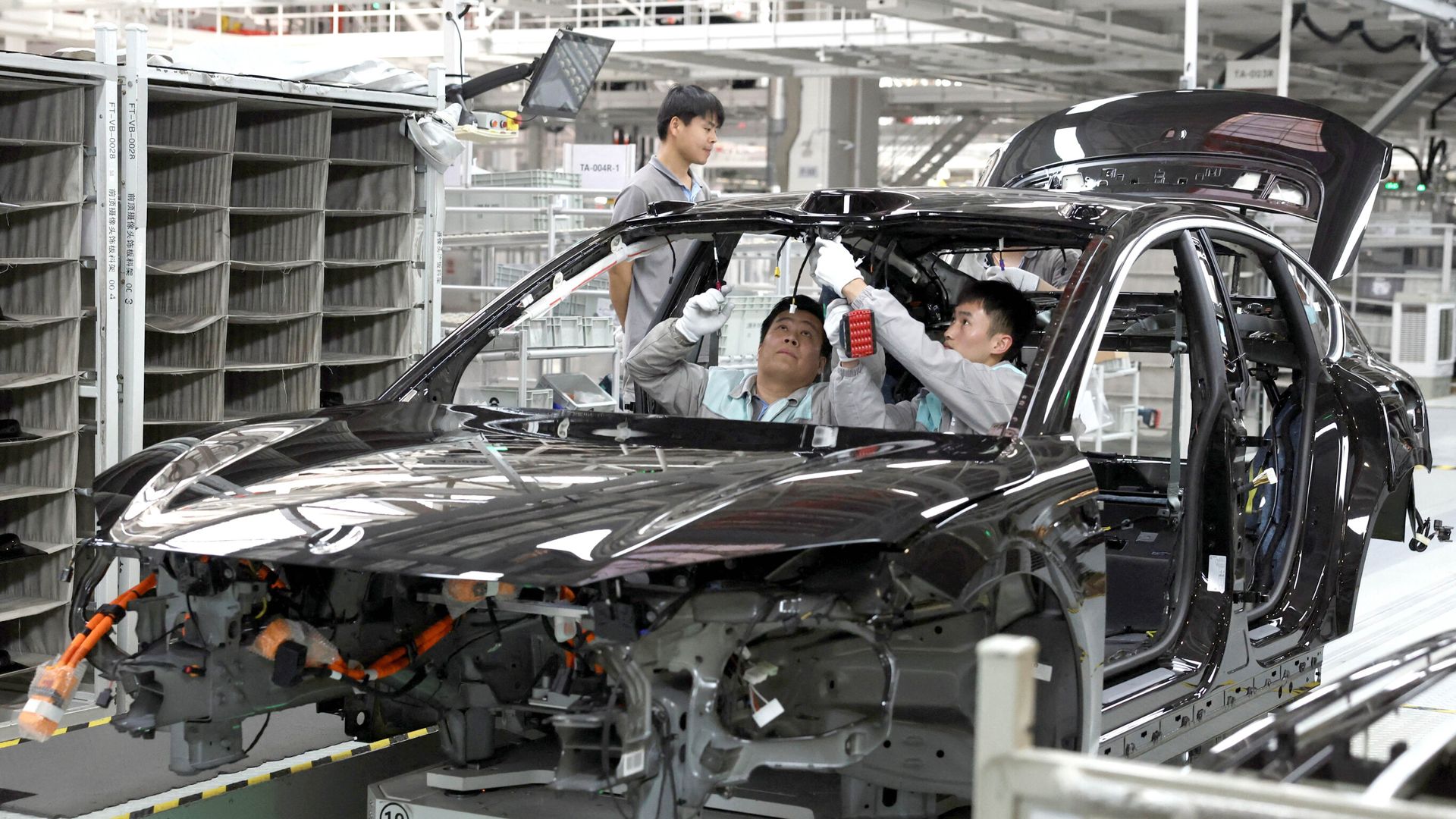
According to SMMT chief executive Mike Hawes, traditional volume brands are under extraordinary pressure because Chinese competitors simply build quality vehicles at a drastically lower cost. Back home in China, a brutal domestic price war has forced automakers to trim every ounce of waste from their supply chains. When those companies look abroad, they bring hyper-optimized production costs with them.
European regulators tried to build a wall against this tide. The European Union slapped hefty tariffs on Chinese-built electric vehicles, claiming unfair state subsidies. But Britain sits outside the EU bloc. Without equivalent tariff barriers blocking the ports, the UK became an open highway for competitively priced imports.
Traditional brands cannot match these base prices without bleeding cash. Instead, they rely on frantic discounting to keep factory lines moving and showroom floor space occupied.
Domestic Manufacturing Takes a Hit
This price war is not just a headache for marketing departments. It is reshaping the entire industrial landscape.
British vehicle manufacturing contracted by seven and a half percent in the first half of the year. While global trade uncertainty and shifting investment play a role, the sheer velocity of cheap imports accelerates the squeeze.
Look at what is happening across the Channel. German industrial heavyweight Volkswagen recently announced plans to deepen internal cost cuts just to stay in the ring against Chinese rivals. When Volkswagen starts slashing budgets out of survival panic, you know the traditional automotive playbook is broken.
Yet, curiously, British manufacturers have not pushed for emergency tariffs. Unlike their continental neighbors who ran straight to regulators, UK carmakers have largely absorbed the blow, leaning instead on marketing incentives and financing deals to hold their ground.
What This Means If You Are Buying Right Now
If you are in the market for a new car, this chaos works entirely in your favor.
For years, dealerships held all the cards. Inventory shortages gave buyers zero leverage. Today, traditional brands are desperate to protect their market share from being swallowed by fast-rising Asian competitors. That desperation translates directly into cash discounts, low-APR financing deals, and bloated trade-in values.
You can walk onto a forecourt and demand a deal because legacy brands cannot afford to let you walk out the door toward a competing showroom featuring a lower-priced plug-in hybrid or EV.
At the same time, test drive the Chinese alternatives before you sign anything. Many buyers walk in skeptical and walk out impressed by the build quality, software integration, and warranty packages.
The British car market has fundamentally shifted. Take advantage of the price war while it lasts, because legacy manufacturers cannot fund these discounts forever.