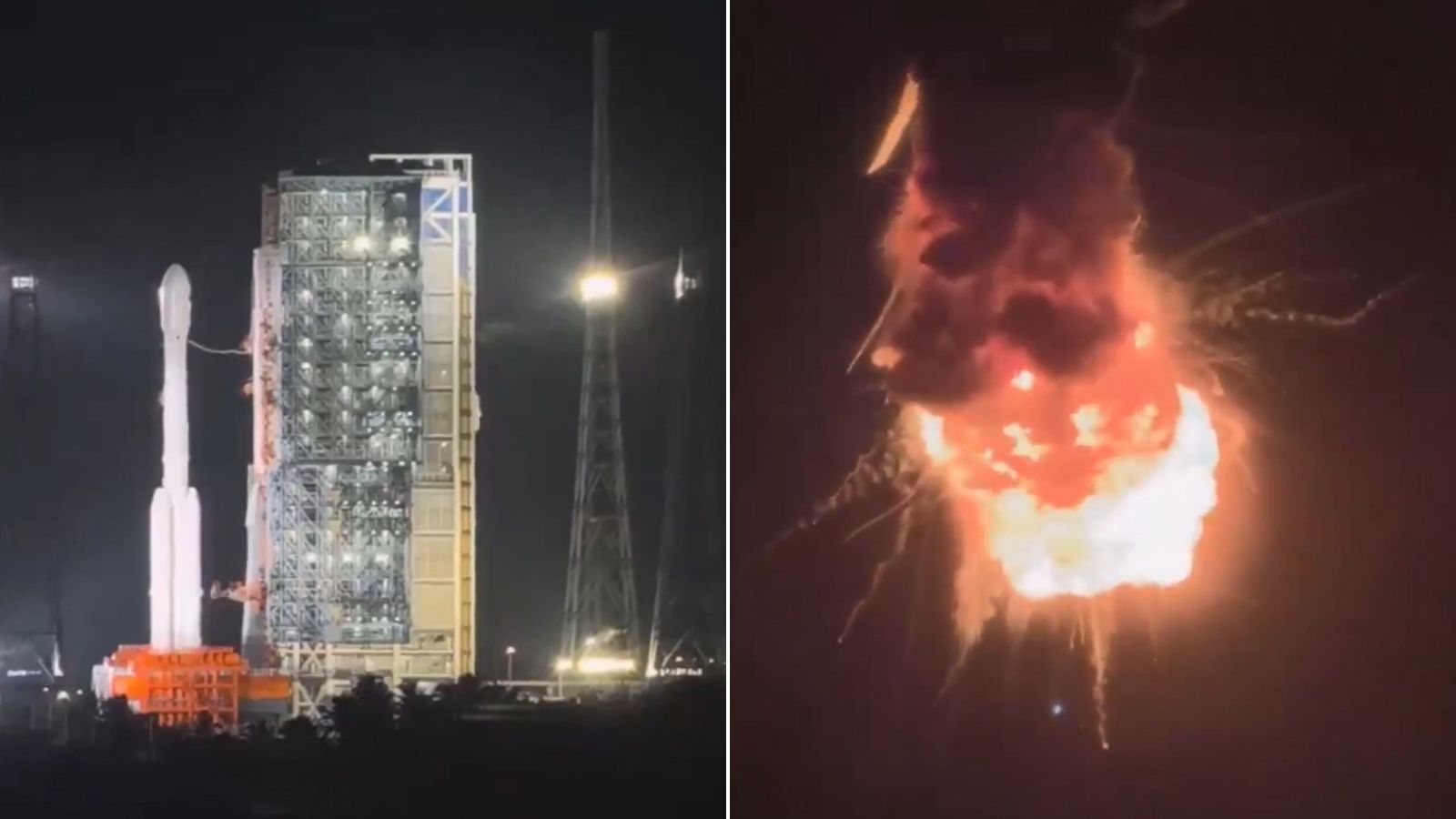
Spaceflight looks routine until it isn't. When a rocket carrying a commercial satellite tears apart just eighty-five seconds after leaving the pad, everyone stops scrolling. It's violent. It's sudden. And it shatters the illusion that putting hardware into orbit is easy.
Most news outlets treated this recent Chinese rocket failure as a simple freak accident. They aren't paying attention. This event exposes massive pressure points in modern aerospace engineering. Private and state programs are pushing hardware faster than safety margins allow.
Let's break down what actually happened during those critical eighty-five seconds, why the mission failed, and what this means for the future of global space exploration.
The Timeline of a Failure
Telemetry data doesn't lie. When the vehicle cleared the tower, everything looked normal. Stage one engines burned hot. Thrust was nominal. Then, right around the eighty-five-second mark, things went sideways. Literally.
Telemetry shows a sudden drop in pressure within the main propulsion feed lines. Vector control actuators maxed out trying to compensate. They couldn't.
Why Eighty-Five Seconds Matters
Flight dynamics change dramatically right around the one-minute mark.
- The vehicle punches through maximum dynamic pressure, known as max-Q.
- Aerodynamic stress peaks on the airframe.
- Guidance systems shift from vertical ascent to a downrange trajectory pitch.
When a failure happens here, structural overload is usually the prime suspect. Either the rocket hit an invisible atmospheric wall of shear stress, or a valve gave way under the brutal vibration environment.
The Hardware Behind the Mission
You can't talk about this launch without looking at the rocket itself. This wasn't a vintage design. It was a modern medium-lift launch vehicle utilizing advanced propellant combinations designed for rapid turnaround.
Speed is the enemy of reliability.
When you scale up manufacturing lines to pump out rockets every month, quality control changes. You rely more on automated testing and less on hand-inspected welds. I've watched hardware specifications shift drastically over the last decade. Engineers are forced to trim safety margins to shave off crucial kilograms of structural weight.
Every extra kilogram of payload capacity means millions of dollars in commercial contracts. But shave off too much margin, and your vehicle turns into shrapnel when it hits unexpected acoustic resonance or vibration harmonics.
What the Media Misses About Commercial Satellites
The payload wasn't just a dummy mass. It was an advanced Earth-observation and communications satellite.
Low Earth orbit is getting crowded. Companies want constellations up yesterday. This creates a frantic race where launch providers take calculated risks.
"Space is hard" is a cop-out phrase used by PR teams when things go boom. Space isn't hard; it's unforgiving of rushed physics.
When a rocket fails, the financial fallout goes way beyond the hardware cost. Insurance premiums spike across the entire Asian commercial launch sector. Operators scrambling for orbital slots suddenly find their launch manifest delayed by months while accident investigation boards comb through every single byte of recovered telemetry.
Where Safety Protocols Go Wrong
Engineers running these programs know the risks. They run thousands of Monte Carlo simulations before a single bolt gets tightened. So why do rockets still blow up?
- Software filters masking hardware anomalies: Sometimes flight computers interpret sensor glitches as real problems and overcorrect.
- Supply chain substitutions: A single sub-tier supplier swapping out an alloy grade can alter thermal tolerance.
- Ground test limitations: You can simulate every environment except the actual chaotic reality of atmospheric flight.
We need a cultural shift in how aerospace companies handle anomalies. Sweeping minor telemetry spikes under the rug because a launch "succeeded anyway" sets the stage for a catastrophic failure later.
Moving Forward After the Smoke Clears
The launch site is already cleaning up the debris field. Technicians are pouring over video feeds frame by frame. They will find the root cause. They always do.
If you're watching the commercial space sector right now, don't let flashy PR statements fool you. Every failure teaches the engineering teams something brutal and expensive. The real test isn't whether a rocket can avoid exploding. It's how fast the team figures out why it happened and fixes it permanently before the next bird leaves the pad.
Keep your eyes on the upcoming manifest adjustments. The true impact of this anomaly will show up in how design teams alter their structural margins over the next twelve months.