The steel of the Maersk Bering doesn't just vibrate; it hums with a low-frequency anxiety that you feel in your teeth. Out here, where the Persian Gulf squeezes into the Gulf of Oman, the water isn't just a medium for transport. It is a psychological pressure cooker. On the bridge, the radar screen is a chaotic scattering of green blips—fishing dhows, patrol boats, and the massive, lumbering shapes of VLCCs (Very Large Crude Carriers) carrying enough oil to lubricate the gears of an entire continent.
Twenty-one miles. That is the width of the Strait of Hormuz at its narrowest point. It is a geographic fluke that dictates the price of your morning commute, the stability of your retirement fund, and the likelihood of a global conflict. When the headlines say the U.S.-Iran ceasefire is fraying, they aren't talking about ink on paper. They are talking about the sweat on the palms of a twenty-four-year-old helmsman watching a fast-attack craft weave toward his bow.
The Mathematics of a Bottleneck
We treat global trade like magic. We click a button, and a box appears. We turn a key, and the engine starts. But the reality is a fragile, physical chain, and the Strait of Hormuz is its weakest link. Roughly one-fifth of the world’s total oil consumption passes through this corridor every single day. That is nearly 21 million barrels of oil. To visualize that, picture a line of Olympic-sized swimming pools stretching from New York to London, all filled with crude.
The physics of the Strait are unforgiving. Because the shipping lanes are only two miles wide in either direction, separated by a two-mile buffer zone, there is no room for error. If a single tanker is disabled or a handful of naval mines are scattered in the dark, the "Insurable Interest" of every vessel in the region evaporates. Insurance premiums skyrocket. Tankers stop moving. The world’s energy supply doesn't just slow down; it constipates.
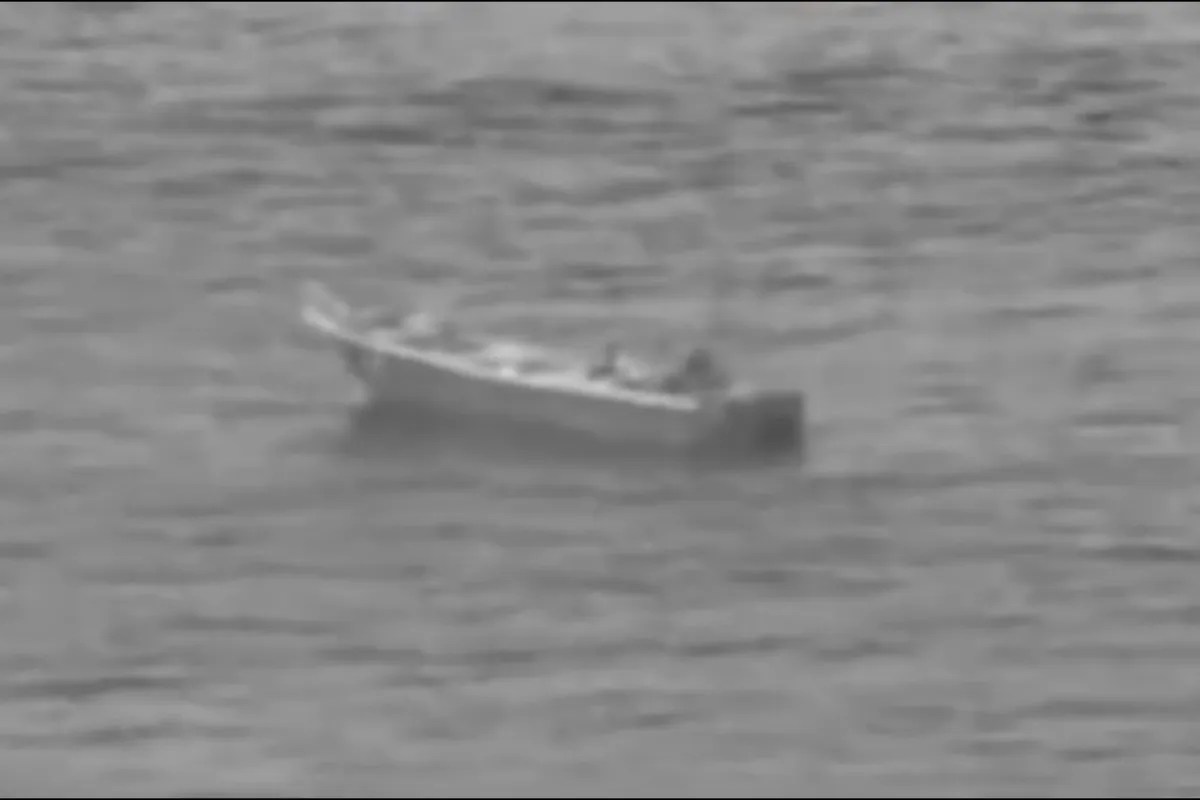
The "fraying" mentioned in the news reports isn't a sudden snap. It’s a slow erosion of trust. When a ceasefire begins to fail, it looks like a series of "gray zone" provocations. It’s a drone that flies just a little too close to an American destroyer. It’s a boarding party that claims a "technical violation" to seize a South Korean vessel. These aren't accidents. They are signals. They are the geopolitical equivalent of a finger hovering an inch from someone's face, whispering, I’m not touching you.
The Invisible Ghost in the Machine
Consider a hypothetical engineer named Elias working in a semiconductor plant in Dresden. He doesn't think about the Strait of Hormuz. He thinks about the precision of the lithography machines. But those machines require massive amounts of energy to run, and the European economy relies on a delicate balance of LNG (Liquefied Natural Gas) and oil to keep the lights on.
When tensions escalate in the Strait, the ripple effect moves faster than the oil itself. Markets are built on anticipation. The moment a revolutionary guard boat shadows a British tanker, the "fear premium" is added to the price of Brent Crude. This isn't just a number on a screen in Manhattan. It flows down to the cost of the plastic in Elias’s components, the fuel for the trucks delivering his groceries, and the interest rates on his mortgage as central banks scramble to fight the resulting inflation.
We often talk about "geopolitical tensions" as if they are weather patterns—unavoidable and abstract. They are actually a series of human decisions made by people in windowless rooms in Tehran and Washington. Each side is playing a game of chicken with the global economy. The U.S. relies on the "Freedom of Navigation" doctrine, backed by the sheer kinetic power of the Fifth Fleet. Iran relies on "Strategic Depth," using its proximity to the Strait to remind the world that while it may not have a dozen aircraft carriers, it has the power to turn off the world’s lights.
The Ghost of 1988
History has a way of repeating itself in these waters, and the current friction feels eerily like the "Tanker War" of the 1980s. Back then, both Iran and Iraq targeted commercial shipping to bleed each other’s economies. The U.S. eventually stepped in with Operation Earnest Will, reflagging Kuwaiti tankers and providing military escorts.
It culminated in a day that still haunts naval strategists: April 14, 1988. The USS Samuel B. Roberts struck an Iranian mine. The blast blew a fifteen-foot hole in the hull and nearly broke the ship’s back. The U.S. responded with Operation Praying Mantis, the largest American surface engagement since World War II.
Today, the technology has evolved, but the stakes are identical. Only now, we aren't just worried about mines. We are worried about swarm tactics—hundreds of small, fast boats equipped with missiles and suicide drones that could overwhelm the sophisticated Aegis combat systems of a modern destroyer. It is the classic struggle of a "Silver Bullet" (the expensive, high-tech U.S. ship) versus "Lead Bullets" (the cheap, plentiful Iranian assets).
The shift in the ceasefire isn't just about military posturing; it’s about the death of the "Shadow War." For years, both sides were content to strike each other in ways that allowed for plausible deniability. A cyberattack here, a limpet mine there. But as the ceasefire frays, the actions are becoming more overt. When you stop hiding your hand, you are telling your opponent that you no longer fear the consequences of a full-scale confrontation.
The Fragile Architecture of Peace
Why should we care if two old adversaries are bickering over a strip of water thousands of miles away? Because our modern world is built on the assumption of "Just in Time" logistics. We no longer keep massive stockpiles of resources. We rely on the constant, rhythmic flow of ships through places like Hormuz, Malacca, and Suez.
If the Strait of Hormuz were to be blocked for even a week, the global GDP would take a hit that would make the 2008 financial crisis look like a rounding error. We aren't just talking about higher gas prices. We are talking about the collapse of supply chains for food, medicine, and technology. The world is a body, and the Strait is a carotid artery. You don't have to sever it to cause a stroke; you just have to squeeze.
The tragedy of the situation is that neither side truly wants a war. A full-scale conflict would be catastrophic for the Iranian government, likely leading to the total destruction of their naval and air assets. For the U.S., it would mean another "forever war" in the Middle East, likely dragging in regional allies and adversaries alike.
So, they dance.
They dance on the edge of the abyss, testing boundaries, pushing the "rules-based order" until it bends. The fraying ceasefire is the sound of that order beginning to crack. It is the sound of a radio transmission from a patrol boat telling a commercial captain to change course. It is the silence in a boardroom in London when the risk assessment for a new shipment is deemed "unacceptable."
The Human Cost of High Stakes
Back on the Maersk Bering, the sun sets over the jagged cliffs of the Musandam Peninsula. The mountains look like scorched teeth. The crew isn't thinking about the "Pivot to Asia" or the nuances of the JCPOA. They are thinking about the "Danger Zone" markings on their navigation charts.
We like to believe we have progressed beyond the era where geography dictates destiny. We have satellites, the internet, and AI. But at the end of the day, we are still a species that depends on iron tubs moving through narrow gaps in the earth. Our entire civilization is held together by the hope that the people steering those boats, and the people commanding the drones watching them, don't blink.
The ceasefire isn't just a document. It is the collective breath we all take when a ship makes it through the Strait without incident. As that breath becomes shorter and more ragged, we have to ask ourselves how long we can survive on such thin air.
The water remains deep, dark, and indifferent to the flags that pass over it. But for those watching the radar, every blip is a question. And the world is running out of easy answers.