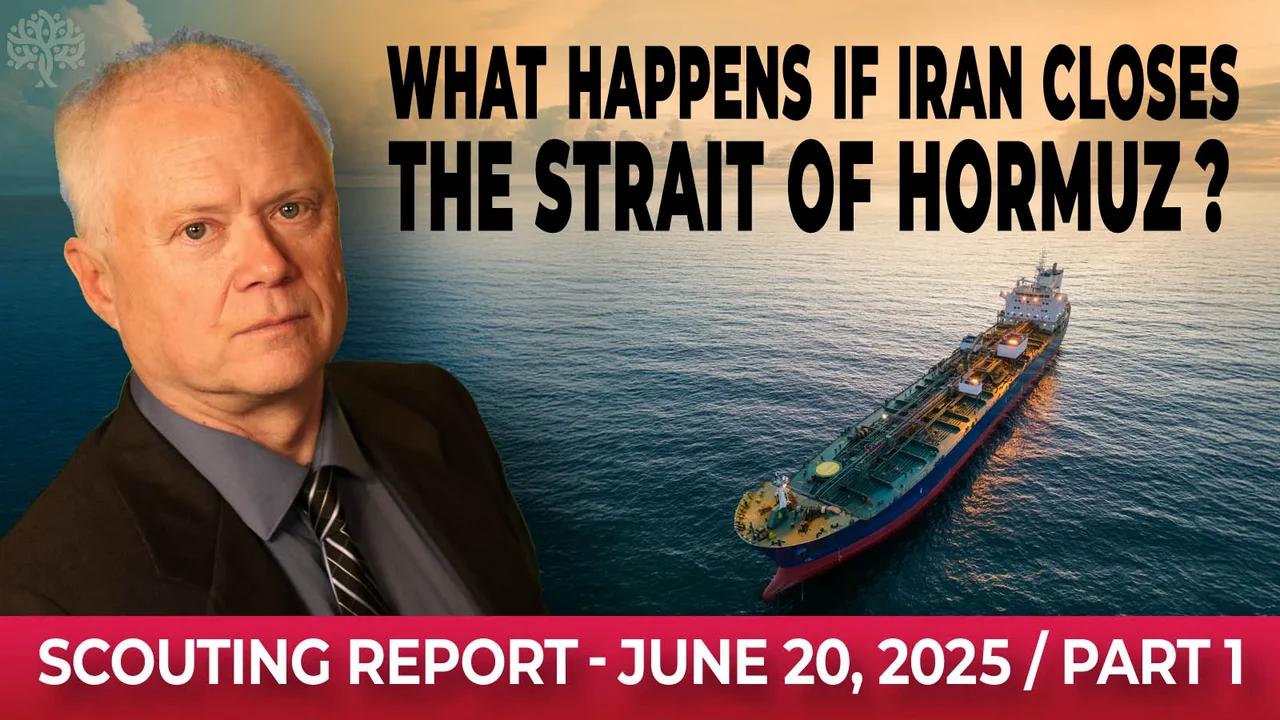
A single drop of saltwater can corrode steel given enough time, but in the Strait of Hormuz, the friction isn't just chemical. It is geopolitical. Imagine standing on the deck of a Very Large Crude Carrier (VLCC). The air is a thick, humid blanket that smells of salt and heavy fuel oil. Beneath your feet, three hundred thousand tons of crude oil—the literal lifeblood of global industry—throbs in rhythm with the massive engines. You are navigating a narrow corridor where the distance between stability and a global energy crisis is measured in mere miles.
This is the world's most sensitive jugular vein.
Through this thin strip of blue water, connecting the Persian Gulf to the Gulf of Oman, flows twenty percent of the world’s petroleum. It is a mathematical certainty that some part of the device you are using to read these words, or the fuel powering the vehicle that delivered your last meal, passed through this specific coordinate on a map. Now, the rules of the passage are changing. Iran has introduced a new mechanism for ship movements, a shift in maritime protocol that sounds like dry bureaucracy but carries the weight of an international ultimatum.
The New Hand on the Rudder
For decades, the dance of tankers through Hormuz followed a predictable, if tense, choreography. Captains checked their charts, signaled their intent, and adhered to the Traffic Separation Schemes established by international maritime law. But the Iranian Ports and Maritime Organization has signaled a departure from the status quo. They are implementing a new system of "coordination and reporting" for vessels entering these waters.
On the surface, it is presented as a measure for safety and environmental protection. Every nation has the right to manage its territorial waters. Yet, in the high-stakes poker game of the Middle East, a new "mechanism" is rarely just about the environment. It is about visibility. It is about who holds the clipboard at the gate.
Consider a hypothetical captain named Elias. He has spent thirty years at sea. He knows the temperament of these waters better than his own backyard. For Elias, a change in reporting requirements isn't just an extra line of paperwork. It is a psychological shift. Suddenly, the "innocent passage"—a bedrock principle of the Law of the Sea—feels less like a right and more like a granted privilege. When a coastal state demands more granular data, more frequent check-ins, and tighter adherence to local "mechanisms," the invisible fence around the Strait grows taller.
The Physics of Pressure
Why does this matter to someone sitting in a coffee shop in London or a factory in Ohio? Because the global economy is a series of interconnected tubes, and the Strait of Hormuz is the narrowest point in the entire system.
When Iran introduces a new layer of control, the insurance markets in London flinch. Underwriters sit in glass offices, recalculating the risk of a "War Risk" premium. A one percent increase in the cost of insuring a tanker doesn't stay on the ship. It trickles down. It manifests as a few extra cents at the pump, a slight uptick in the cost of plastic manufacturing, and a subtle thinning of profit margins for shipping conglomerates.
The mechanism is a rheostat. By turning the dial, Tehran can increase or decrease the "friction" of global trade without firing a single shot. By requiring ships to engage more directly with their coastal authorities, they are asserting a reality that the West often tries to ignore: you cannot move through this house without acknowledging the owner.
The Invisible Stakes
We often speak of "shipping lanes" as if they are highways painted on the water. They aren't. They are fragile agreements held together by mutual self-interest. The new Iranian mechanism targets the data flow of these lanes. In the modern era, knowing where a ship is, what it is carrying, and where it is going is as valuable as the cargo itself.
If the reporting system becomes more stringent, the potential for "accidental" delays increases. A ship is flagged for a minor paperwork discrepancy. It is asked to wait for "clarification." In the world of maritime logistics, time is not just money; it is a compounding debt. A twelve-hour delay for a tanker can disrupt the schedule of a refinery six thousand miles away. This is the power of the "mechanism." It is the power of the pause.
The tension is palpable for the crews. These sailors are often from the Philippines, India, or Eastern Europe. They are caught in the middle of a struggle between capitals they will never visit. To them, the Strait of Hormuz is a gauntlet. They watch the fast-attack craft of the Revolutionary Guard zip across the wake of their massive ships like dragonflies. The introduction of new "movements mechanisms" adds to the mental load. It is one more variable in an already volatile equation.
Beyond the Horizon
The shift is a signal to the International Maritime Organization (IMO) and the global powers that the old ways of "business as usual" are under revision. It challenges the Western-led maritime order by asserting a localized, sovereign control that prioritizes Iranian oversight.
This isn't just about ships moving left or right. It is about the digital sovereignty of the seas. By funneling movement data through their own proprietary mechanisms, Iran creates a parallel record of global trade. They see the pulses of the world's energy heart in real-time, often before the data reaches the commercial hubs in Singapore or Rotterdam.
The real question isn't whether the mechanism is legal under the United Nations Convention on the Law of the Sea (UNCLOS). The question is who has the will to challenge it. For a shipping company responsible for a billion-dollar vessel and a hundred-million-dollar cargo, the path of least resistance is usually to comply. You fill out the new forms. You report to the new stations. You acknowledge the new hand on the rudder.
And slowly, the exception becomes the rule.
The Strait of Hormuz remains a place where the water is blue, the sun is merciless, and the silence is deceptive. Beneath the waves and across the radio frequencies, a new architecture of control is being built, brick by bureaucratic brick. The world watches the headlines for explosions or seizures, but the real change is happening in the quiet updates to maritime manuals and the shifting protocols of radio calls at midnight.
The jugular vein is being squeezed, not with a fist, but with a finger on a scale. It is a reminder that in the modern world, power isn't always found in the roar of a cannon. Sometimes, it is found in the simple, devastating ability to ask a ship to stop and state its business.
The heat in the Strait never breaks, and the tankers keep coming, each one a gleaming target in a game where the rules are being rewritten in salt and ink.