Every weekday morning, thousands of educators unlock their classroom doors, turn on the overhead fluorescent lights, and prepare to navigate one of the most delicate public jobs in modern society. A public school is a quiet ecosystem. It is a place where community values, constitutional rights, and personal convictions collide long before the first morning bell finishes ringing.
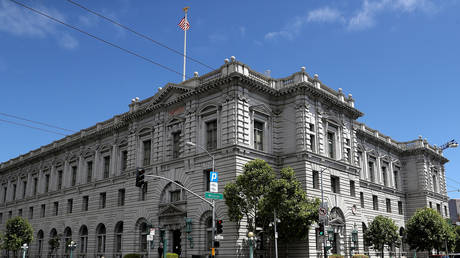
When a federal appeals court recently upheld the firing of an educator who defied school district policies regarding gender identity and controversial literature, the ruling sent a clear signal across the legal and educational worlds. The decision did not simply resolve a employment dispute in a single school district. It drew a definitive line around the legal boundary where a teacher's personal speech ends and a school board's duty to its students begins.
To understand how a disagreement over books ends up in federal court, one has to examine the framework that governs public employment in the United States.
The Balance of Power Inside School Walls
Public employees do not surrender their constitutional rights at the school gate, but those rights exist within a carefully defined legal boundary. Decades of legal precedent, rooted in the landmark Supreme Court decision Pickering v. Board of Education, established a balancing test. On one side sits an individual’s First Amendment right to speak out on matters of public concern. On the other side sits the public employer’s operational necessity to maintain an orderly, non-disruptive, and welcoming educational environment.
When an individual takes a job in a public institution, they agree to carry out the curriculum and policies established by elected school boards and administrators. The court's recent ruling reinforced this fundamental distinction: speaking as a private citizen on your own time is protected, but refusing to abide by official school policies while acting in the capacity of a public educator is not.
Consider a hypothetical teacher, standing before a room of twenty-five teenagers. When that teacher speaks, assigns reading, or decides which materials to distribute, they are acting as an agent of the state. If an educator chooses to bypass established administrative channels to remove, alter, or promote specific texts based on personal religious or political views, the disruption spreads quickly through the entire district.
Parents file grievances. School board meetings turn into late-night ideological battles. Students find themselves caught in the center of an adult controversy.
The Human Core of Institutional Rules
It is easy to view these cases through a purely ideological lens, but the human cost lands heavily on everyone involved.
For school administrators, managing these conflicts is a exercise in statutory compliance and student safety. District officials face strict obligations to protect students from discrimination and harassment while ensuring that educational materials conform to state guidelines. When an employee actively resists district guidelines regarding gender identity or inclusive books, administrators are left with few choices. Permitting unchecked non-compliance creates legal liability for the district and signals to vulnerable students that official policies offer little real protection.
For students, particularly those navigating complex questions about their own identity, the school environment carries enormous weight. A library shelf or a classroom reading list is often the first place a student looks to see if they belong. When adults turn those spaces into battlegrounds, the quiet, safe space that school is supposed to provide begins to erode.
The appellate court recognized this reality. The judges noted that public schools cannot function efficiently if every individual employee retains the authority to rewrite district policy from inside the classroom.
The Broader Legal Precedent
This decision fits into a growing body of case law addressing speech rights within public institutions. Across the nation, federal courts are repeatedly confirming that while private expression remains broadly protected under the First Amendment, workplace misconduct and direct insubordination are not shielded simply because they touch on sensitive cultural debates.
The court made it clear that public school districts retain the authority to set educational standards, curate library materials through established committees, and mandate professional conduct among staff. An educator remains free to write letters to the editor, attend public rallies, or express their personal viewpoints outside of work hours. But inside the workplace, adherence to policy is a condition of employment.
The ruling offers clarity at a time when administrative guidelines across the country are being tested. It reminds local communities that the workplace rules governing public schools are designed to maintain order and protect student welfare, not to serve as personal platforms for individual employees.
The bell rings at three o'clock, the hallways clear out, and the stack of books sits on the desk under the dimming lights. The law has spoken, but the quiet work of balancing rights, obligations, and human dignity inside America's classrooms continues every single day.

/https://i.s3.glbimg.com/v1/AUTH_e84042ef78cb4708aeebdf1c68c6cbd6/internal_photos/bs/2026/g/B/3vpkvHQKizRKAfzDxjXA/vini-jr-antes-e-depois.jpg)