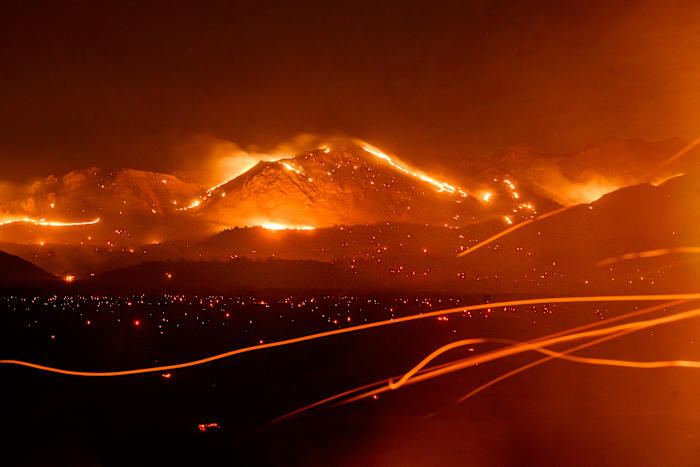
Global climate instability is rarely a story of uniform warming; it is an escalation of systemic volatility. When aggregated weather anomalies breach historical standard deviations, modern supply chains, municipal debt markets, and agricultural yields face simultaneous stress tests. The prevailing narrative treats environmental disasters as acute, independent anomalies. This framing is analytically flawed. Every extreme weather event operates as a compounding shock to highly optimized, low-redundancy infrastructural networks.
Understanding the true vector of climate risk requires mapping how isolated environmental stressors propagate through tightly coupled economic systems. The mechanisms driving catastrophic events are governed by non-linear feedback loops, where a minor increase in baseline atmospheric energy triggers exponential responses in hydrological and thermodynamic cycles.
The Thermodynamics of Systemic Shocks
To evaluate how climate events manifest as shocks, one must first isolate the energy inputs driving the system. Global mean temperature anomalies function as a proxy for total trapped radiative forcing. As the troposphere retains higher energy levels, the capacity for moisture retention increases exponentially, following the Clausius-Clapeyron relation. A warmer atmosphere holds roughly seven percent more water vapor per degree Celsius of warming, fundamentally altering precipitation dynamics.
This hyper-saturated atmosphere does not distribute moisture evenly. Instead, it intensifies extremes at both ends of the hydrological spectrum. Droughts accelerate because elevated vapor pressure deficits strip moisture from soils at higher rates. Conversely, when atmospheric rivers or convective systems trigger precipitation, the volume of water released overwhelms drainage capacity designed for historical baseline distributions.
The analytical error made in standard environmental reporting is treating these extremes as separate phenomena. They are dual outputs of a single thermodynamic engine. The economic cost function associated with this engine is asymmetric. Linear increases in global temperature yield exponential increases in tail-risk disaster frequency. Infrastructure, insurance models, and agricultural inputs are calibrated for a stationary climate that no longer exists.
The Propagation Vector Through Infrastructure
Modern industrial societies rely on synchronized, just-in-time logistics. When extreme weather impacts a critical node, the failure cascades across sectors that treat geographic isolation as a risk-mitigation strategy.
Power Grids and Thermal Efficiency
Electrical transmission networks experience severe efficiency degradation during sustained high ambient temperatures. Copper and aluminum resistance increases with heat, reducing carrying capacity precisely when demand for cooling peaks. Simultaneously, thermal power plants require cooling water from rivers or oceans. When intake water temperatures rise or flow rates drop due to drought, plants must throttle output or shut down completely to prevent structural damage.
Supply Chain Bottlenecks
Maritime shipping and inland waterways depend on predictable bathymetry. Prolonged low-precipitation regimes lower river levels on major commercial arteries like the Mississippi, the Rhine, and the Danube. Barges must shed cargo weight to navigate shallower channels, multiplying the number of transits required and inflating freight spot rates. Conversely, localized flooding compromises rail beds and port facilities, stalling container throughput and creating inventory gridlock thousands of miles from the physical impact zone.
Financial Contagion and Insurance Withdrawal
Property and casualty insurance markets act as the primary quantitative barometer for physical climate risk. Insurers and reinsurers use historical loss data to price annual risk pools. As catastrophe frequency outpaces actuarial models, underwriters face capital adequacy crises. The traditional response is risk repricing or outright market withdrawal.
When private insurance retreats from high-hazard zones, municipal credit ratings absorb the shock. Local governments depend on property tax bases to service infrastructure debt. If real estate values adjust downward to reflect uninsurable climate exposure, municipal borrowing costs rise, starving local budgets of the capital required to upgrade seawalls, stormwater management, and grid resilience.
Quantifying Agricultural Vulnerability
Agriculture represents the most immediate point of intersection between atmospheric volatility and human security. Crop yields are not a linear function of seasonal averages; they are acutely sensitive to threshold breaches during critical phenological stages, such as pollination and grain filling.
Crop tolerance thresholds for temperature stress are narrow. Maize, wheat, and rice experience sharp metabolic declines when daytime temperatures exceed specific physiological limits for even a few consecutive days during flowering. High nighttime temperatures exacerbate this loss by accelerating cellular respiration, burning stored carbohydrates that would otherwise form grain mass.
Soil degradation compounds climatic stress. Decades of intensive tillage and chemical dependency have reduced the organic carbon content of arable land. Soil with low organic matter lacks structural stability and water-holding capacity. When high-intensity precipitation events strike degraded soils, infiltration rates are low, triggering mass topsoil erosion rather than groundwater recharge. The resulting agricultural output volatility introduces severe price shocks into global commodity markets, translating environmental stress directly into geopolitical instability and food price inflation.
The Limits of Adaptation Strategies
Mitigation efforts focus on emissions reduction, but adaptation strategies dictate near-term survival. Current adaptation frameworks rely heavily on historical defense models, such as building higher dikes, drilling deeper wells, or expanding air conditioning capacity. These reactive measures suffer from diminishing marginal utility and create a moral hazard trap.
Protecting a coastal development with a seawall encourages further capital investment in a high-hazard zone, increasing the total asset exposure when the barrier eventually fails. Similarly, relying on groundwater extraction to offset agricultural drought depletes aquifers faster than recharge rates can sustain, guaranteeing a harder crash in future dry cycles.
True structural resilience demands shifting from defensive engineering to systemic redundancy. This entails decentralized micro-grids that can island during regional transmission failures, crop diversification incorporating heat- and drought-tolerant cultivars, and zoning laws that prohibit rebuilding in high-risk floodplains.
Capital allocation must pivot from post-disaster reconstruction financing to pre-disaster hardening. Insurance pools must be redesigned to risk-adjust premiums dynamically, forcing property owners and developers to internalize the true cost of environmental exposure rather than relying on government-backed backstops that socialize private risk.
The trajectory of climate volatility indicates that the frequency of compounding shocks will accelerate faster than institutional response times. Navigating this transition requires abandoning the assumption of climatic stability and replacing it with operational frameworks built explicitly for permanent volatility. Risk assessment must transition from static probabilities to dynamic, worst-case stress testing across all interconnected operational domains.