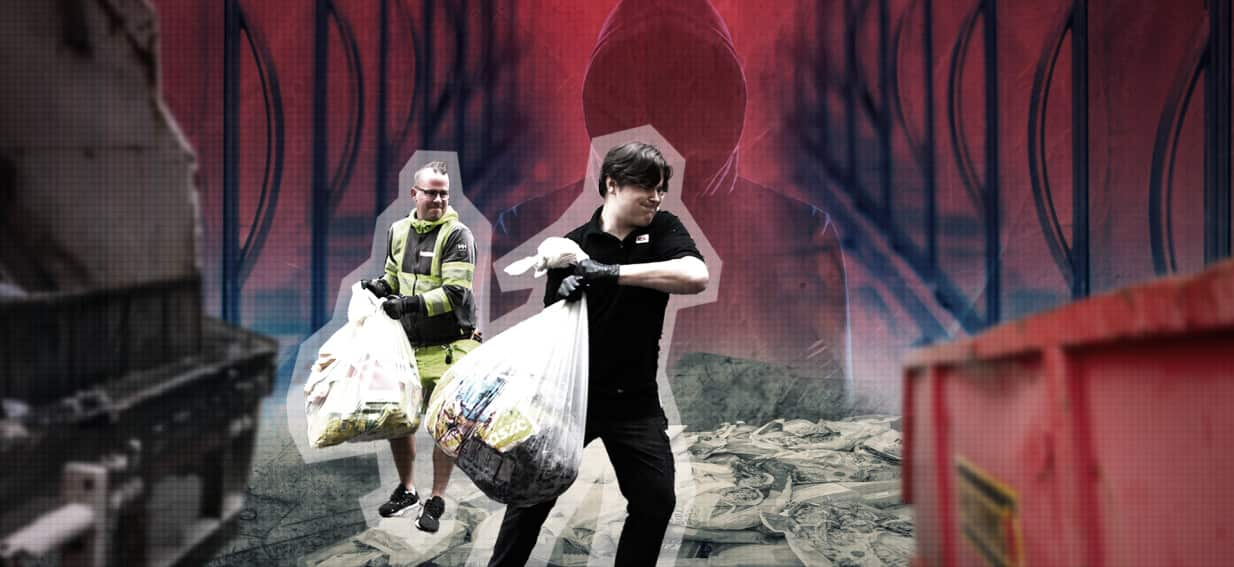
Industrial refrigeration is no longer an isolated mechanical utility; it is a network-connected operational technology (OT) asset with a severe, unpatched attack surface. Recent disruptions across European food distribution and pharmaceutical cold storage facilities demonstrate that threat actors are systematically targeting industrial control systems (ICS) to induce physical spoilage and extort operators. Australia’s cold chain sector—characterized by high geographic dispersion, reliance on identical legacy programmable logic controllers (PLCs), and rapid adoption of cloud-based telemetry—faces the exact same structural vulnerabilities, amplified by extreme ambient temperatures that compress thermal failure windows.
To understand why European cold storage facilities are being compromised and why Australian operators face imminent risk, one must deconstruct the architectural convergence of Information Technology (IT) and Operational Technology (OT), the economic incentives driving ransomware affiliates toward perishable logistics, and the thermodynamic realities of cold chain failure.
The Anatomy of Cold Chain Cyber-Physical Vulnerabilities
A modern commercial freezer facility operates on a tiered industrial architecture. At the lowest level (Level 0 and Level 1 of the Purdue Enterprise Reference Architecture), physical sensors monitor evaporator coil temperatures, compressor discharge pressures, and refrigerant levels, feeding data to PLCs and remote terminal units (RTUs). Above this sits the Supervisory Control and Data Acquisition (SCADA) layer (Level 2), which allows facility operators to adjust setpoints, manage defrost cycles, and monitor alarms via Human-Machine Interfaces (HMIs).
Historically, these systems were air-gapped, relying on proprietary serial protocols like Modbus RTU or PROFIBUS. The vulnerability emerged when operators connected Level 2 SCADA systems to Level 3 Manufacturing Operations Management and Level 4 enterprise IT networks to enable predictive maintenance, energy optimization, and remote vendor troubleshooting.
The Three Primary Attack Vectors
Exposed Industrial Protocols and Remote Access Gateways
To reduce maintenance dispatch costs, refrigeration contractors routinely install cellular modems or VPN appliances directly onto PLC networks. Investigations into European OT incidents consistently reveal poorly secured Remote Desktop Protocol (RDP) ports, Virtual Network Computing (VNC) interfaces without multi-factor authentication (MFA), and industrial routers running default administrative credentials. Once an attacker breaches the remote gateway, they bypass the enterprise IT firewall entirely, landing directly inside the control network.Flat Network Topologies
In many mid-sized cold storage warehouses, network segmentation is nonexistent. The enterprise network handling invoicing, inventory management, and employee email shares the same flat subnet as the refrigeration SCADA servers. When a standard phishing payload compromises an administrative workstation in Level 4, lateral movement tools allow threat actors to enumerate active hosts on Level 2. Because industrial protocols like Modbus TCP and BACnet/IP lack native authentication or encryption, any device on the local network can issue valid write commands to alter temperature setpoints or disable compressor relays.Unpatched Legacy Operating Systems
HMI terminals and SCADA historians frequently run on end-of-life operating systems such as Windows 7 or Windows Server 2008 R2. Facility managers avoid applying security patches because vendor validation cycles are slow, and rebooting an HMI server risks interrupting continuous monitoring. This leaves critical control nodes exposed to known remote code execution exploits that require minimal sophistication to weaponize.
Attribution and Threat Actor Taxonomy
Determining who is behind the European freezer incidents requires separating confirmed forensic attribution from strategic hypotheses based on observed tactics, techniques, and procedures (TTPs). Intelligence assessments divide the threat actors targeting European cold chain infrastructure into two distinct operational profiles: financially motivated ransomware syndicates and state-aligned hybrid warfare units.
Financially Motivated Ransomware Affiliates
The majority of documented disruptions in European food logistics trace back to Ransomware-as-a-Service (RaaS) groups and independent initial access brokers. Unlike traditional data theft, where attackers exfiltrate intellectual property and threaten publication, cold chain attacks rely on thermodynamic extortion.
In standard corporate environments, executives can afford to spend 72 hours negotiating a ransom while restoring from backups. In a cold storage facility holding frozen proteins, dairy, or biologics, a compressor shutdown triggers an irreversible countdown. Depending on insulation R-values, ambient external temperatures, and thermal mass, a facility may have less than 12 to 24 hours before internal temperatures breach regulatory compliance thresholds, rendering millions of dollars of inventory legally unsellable. Threat actors explicitly calculate this thermal decay rate to force rapid ransom payments, bypassing prolonged negotiation cycles.
State-Aligned Sabotage and Hybrid Operations
A secondary, higher-severity hypothesis involves state-sponsored actors—specifically Russian intelligence-linked groups—conducting low-level infrastructure disruption across Europe. Following geopolitical escalations in Eastern Europe, cybersecurity agencies in Germany, the Netherlands, and the Nordic states have documented increased reconnaissance against European critical national infrastructure (CNI), including food supply chains and maritime ports.
While financially motivated groups deploy encryption payloads to lock SCADA workstations, state-aligned actors focus on stealthy persistence and subtle manipulation. A sophisticated saboteur does not necessarily shut down a freezer immediately; instead, they alter sensor calibration offsets or disable alarm notifications while gradually raising the temperature setpoint. By the time physical inspections reveal compromised cargo, the contamination or spoilage has already propagated downstream into retail distribution networks. While forensic attribution to specific state units remains difficult due to the use of proxy hacktivist fronts and shared criminal infrastructure, the targeting of European agricultural and cold logistics aligns directly with hybrid warfare doctrines designed to erode public confidence and strain domestic supply chains.
The Thermodynamic and Economic Cost Function
To evaluate the true risk profile of a cold storage breach, executives must model the failure state using an operational cost function rather than standard IT recovery metrics. The financial damage of a refrigeration hack scales non-linearly once a specific thermal threshold is crossed.
Variables of a Cold Chain Breach
- Thermal Decay Rate ($dT/dt$): Determined by the insulation integrity of the cold room, door seal efficiency, external ambient temperature, and the specific heat capacity of the stored goods. High-density frozen pallets act as a thermal battery, slowing initial warming, whereas chilled produce rooms with high air exchange rates degrade rapidly.
- Regulatory Spoilage Threshold ($T_{max}$): Under Hazard Analysis and Critical Control Points (HACCP) frameworks and pharmaceutical Good Distribution Practice (GDP) regulations, any excursion above a strict temperature ceiling (typically -18°C for frozen goods or +8°C for chilled biologics) invalidates the chain of custody. Even if the product has not physically degraded, the lack of continuous, verifiable telemetry logs forces total stock destruction.
- Direct Inventory Write-Off ($C_{inv}$): A single automated high-bay cold storage warehouse can hold between 20,000 and 50,000 pallets. If an attack compromises a pharmaceutical cold hub, $C_{inv}$ can exceed $100 million within a single diurnal cycle.
- Physical Infrastructure Damage ($C_{equip}$): Malicious manipulation of PLC logic—such as rapid short-cycling of industrial ammonia or CO2 compressors, or disabling oil pressure safety interlocks—can cause catastrophic mechanical failure. Replacing custom-engineered industrial compressors introduces supply chain lead times measured in months, effectively bankrupting single-site operators.
When attackers encrypt the SCADA historian, they destroy the regulatory audit trail simultaneously with the cooling control. Even if facility engineers manually override the PLCs to restore cooling within four hours, the absence of immutable temperature logs during the blackout window often necessitates the disposal of the entire inventory to mitigate public health liability.
Why Australia Faces Amplified Structural Exposure
The hypothesis that Australia is the next primary target for cold chain cyber disruption rests on four structural vulnerabilities specific to the Australian market. Threat actors operate globally; they do not target nations out of geographic preference, but rather scan the internet for exposed IP ranges hosting vulnerable industrial hardware. Australia’s digital and physical infrastructure creates an environment where the impact of these automated scans is uniquely severe.
1. Identical Technology Stack and Vendor Monoculture
Australia’s commercial refrigeration sector relies on the exact same European and North American OEMs—such as Danfoss, Emerson, Carel, and Schneider Electric—that dominate the European market. The PLC firmware, SCADA software packages, and remote monitoring gateways deployed in cold storage facilities in Melbourne, Sydney, and Brisbane are identical to those compromised in Rotterdam, Hamburg, and Antwerp. Any zero-day vulnerability or default credential exploit developed against a European refrigeration controller is immediately transferable to Australian assets without modification.
2. Extreme Ambient Thermal Loads
Thermodynamics dictates that heat transfer into a refrigerated space is proportional to the temperature differential ($\Delta T$) between the exterior environment and the interior setpoint. During the Australian summer, ambient temperatures in major logistics corridors frequently exceed 35°C to 40°C, compared to 15°C to 25°C in Northern Europe.
This higher $\Delta T$ drastically accelerates the thermal decay rate ($dT/dt$) following a compressor shutdown. An Australian facility suffering a cyber-induced cooling outage has roughly half the buffer window of a comparable facility in Northern Europe before internal temperatures breach HACCP compliance limits. This compressed timeline increases the probability that operators will capitulate to extortion demands rather than risk total inventory loss.
3. Geographic Dispersion and Single-Point Logistics Failures
Australia’s population and agricultural production are separated by vast distances, relying on long-haul road and rail corridors connecting regional processing hubs to coastal export ports. Unlike Europe, where a compromised cold storage facility in Belgium can offload inventory to redundant warehouses in France or the Netherlands within a two-hour drive, Australian facilities operate as isolated nodes. If a major regional cold hub in Queensland or Victoria goes offline, there is rarely sufficient spare refrigerated capacity within a viable transit radius to absorb the displaced freight. A localized cyber incident rapidly cascades into a national supply chain bottleneck.
4. Regulatory Lag in Mid-Tier Logistics
While the Australian government has strengthened critical infrastructure protections through updates to the Security of Critical Infrastructure (SOCI) Act, enforcement and compliance resources remain heavily concentrated on Tier-1 energy, telecommunications, and banking entities. Mid-sized cold storage operators, regional abattoirs, and third-party logistics (3PL) providers frequently fall below regulatory thresholds or lack the specialized OT cybersecurity engineering talent required to audit their refrigeration networks. These mid-tier operators represent the soft underbelly of Australia’s agricultural export economy and domestic food supply.
Operational Limitations of Standard Cybersecurity Controls
Applying conventional corporate IT security playbooks to industrial refrigeration environments frequently fails and can inadvertently cause the exact operational downtime operators seek to prevent. Security leaders must recognize the strict boundaries of standard defensive tooling in an OT context.
- Active Vulnerability Scanning: Running standard network scanners (such as Nessus or Nmap) across a refrigeration subnet can crash legacy PLCs. Older industrial network stacks cannot handle malformed packets or high-frequency port probes, causing the controller to fault and drop the compressors offline.
- Automated Endpoint Detection and Response (EDR): Deploying aggressive EDR agents on SCADA servers risks false-positive quarantining of proprietary vendor dynamic link libraries (DLLs) required to communicate with fieldbus gateways. If an EDR agent isolates a critical driver executable, the operator loses visibility and control over the plant floor.
- Frequent Password Rotation and MFA: Enforcing strict 30-day password expiration or mobile-app MFA on local plant-floor HMIs introduces dangerous operational friction. During an ammonia leak or high-pressure alarm, an operator wearing heavy thermal PPE cannot retrieve a smartphone to approve a push notification.
Defensive Architecture and Tactical Remediation
Securing cold chain infrastructure requires prioritizing physical process continuity and deterministic fail-safes over pure data confidentiality. Facilities must implement a defense-in-depth architecture tailored specifically to the operational realities of industrial thermodynamics.
1. Enforce Strict Unidirectional Network Segmentation
Operators must eliminate flat network architectures by establishing an Industrial Demilitarized Zone (IDMZ) between Level 3/4 enterprise IT networks and Level 2 SCADA systems. All data flowing from the refrigeration network to corporate ERP systems or cloud analytics platforms should pass through unidirectional security gateways (data diodes) or tightly restricted bastion hosts. Remote vendors must never be granted persistent VPN access directly to the PLC subnet; instead, they must authenticate through a monitored jump server with session recording and time-bound access tokens that remain disabled by default.
2. Implement Hardware-Level Mechanical Fail-Safes
Software security cannot be the sole barrier preventing physical spoilage or equipment destruction. Critical refrigeration systems must incorporate hardwired, non-programmable electro-mechanical relays and physical thermostatic bypass switches. If a compromised PLC commands a compressor to run continuously beyond safe pressure limits, a physical high-pressure cutout switch must mechanically sever the circuit. Conversely, facilities should maintain manual bypass protocols allowing certified refrigeration mechanics to decouple compromised SCADA servers and run compressors manually via local control panels until clean software images can be restored.
3. Deploy Passive OT Network Monitoring
Because active scanning is unsafe for legacy controllers, facilities must deploy passive network tap sensors on core industrial switches. Passive monitoring tools inspect deep packet traffic—analyzing Modbus, BACnet, and EtherNet/IP commands—without injecting a single packet onto the wire. These systems establish a baseline of normal operational behavior and trigger immediate out-of-band alerts if an unauthorized IP address attempts to write new temperature setpoints, alter defrost schedules, or upload modified PLC ladder logic.
4. Isolate Telemetry Historians for Regulatory Compliance
To neutralize the regulatory extortion vector, temperature logging must be decoupled from the primary SCADA control loop. Facilities should deploy independent, battery-backed cellular IoT temperature loggers inside cold rooms that transmit encrypted telemetry directly to an immutable cloud archive via an out-of-band network path. In the event that ransomware encrypts the primary SCADA server, the operator retains an unbroken, auditable HACCP compliance record, removing the legal requirement to destroy unspoiled inventory.
The Strategic Imperative for Cold Chain Operators
Australian cold storage and logistics executives must abandon the assumption that geographic isolation or niche industrial protocols provide security through obscurity. Automated scanning infrastructure operated by global cybercriminal syndicates is continuously indexing exposed industrial control interfaces across Australian IP blocks. The convergence of identical European hardware vulnerabilities, extreme summer ambient temperatures, and concentrated supply chain nodes guarantees that an attempted disruption of Australian cold storage infrastructure is a certainty rather than a theoretical risk.
Immediate capital allocation must shift away from perimeter IT defenses toward Level 1 and Level 2 operational resilience. Operators must execute a physical-first remediation strategy within the next two quarters: audit and terminate all direct cellular and VPN connections to refrigeration PLCs, establish a strict IDMZ separating corporate email from SCADA controllers, and verify that plant engineers can manually operate cooling infrastructure in a completely disconnected state. Facilities that fail to decouple their thermodynamic survival from their enterprise IT networks will inevitably face an operational choice between paying a seven-figure ransom or writing off their entire physical inventory within a single afternoon.