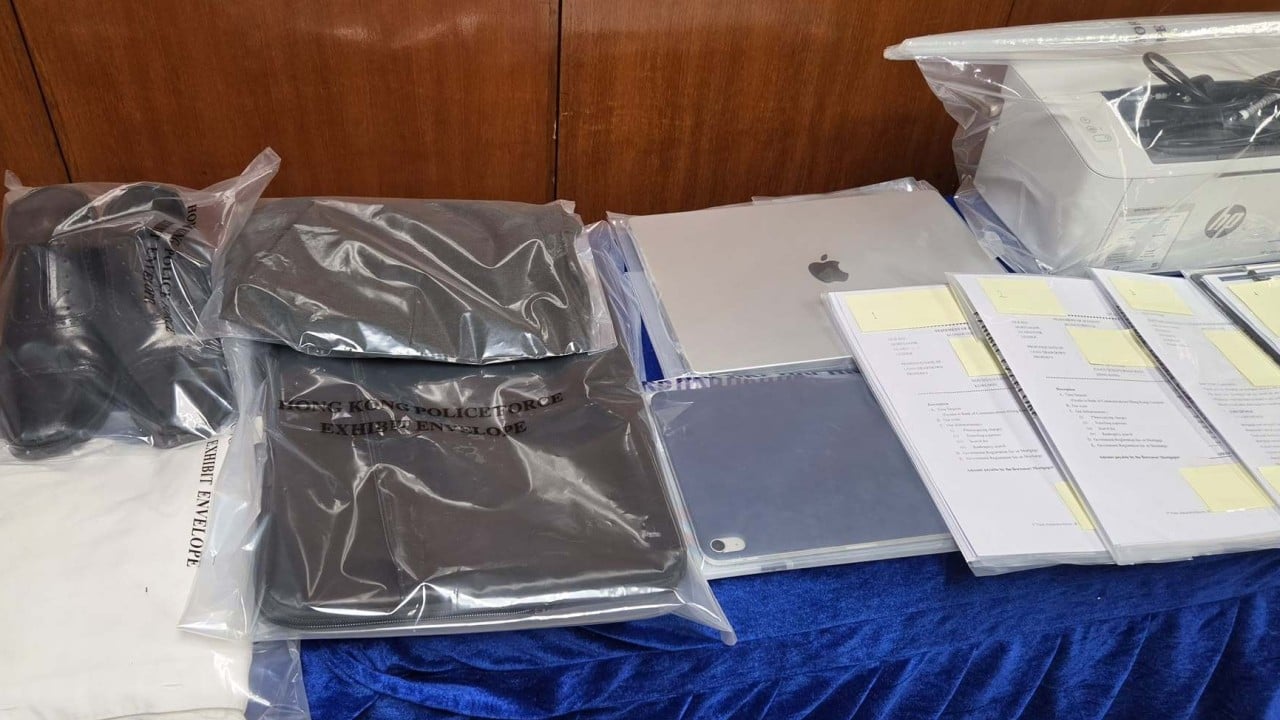
A HK$400 million criminal damage prosecution just evaporated over a handful of unanswered phone calls. In November 2026, Hong Kong prosecutors dropped their flagship criminal charge against Wan Wenguo, the 43-year-old former captain of the container ship Newnew Polar Bear, ending a two-year legal saga over the October 2023 rupture of the Balticconnector gas pipeline.
He didn't walk away with a prison sentence for sabotaging European energy infrastructure. Instead, he pleaded guilty to two minor regulatory violations under Hong Kong's Merchant Shipping (Safety) Ordinance—sailing without sufficient anchors and failing to submit mandatory daily reports—and received fines. Immigration authorities then prepared to send him back to mainland China. If you found value in this article, you might want to check out: this related article.
Most news coverage treats this as a simple courtroom anti-climax. That misses the real story. If you look closely at how this prosecution fell apart, you see the massive legal blind spot protecting ships that tear up the world's seabed infrastructure.
Why Prosecutors Dropped the HK$400 Million Charge
The collapse of the criminal damage count wasn't about sudden doubts over whether the ship hit the pipe. Everyone already knew what happened on the seabed. For another perspective on this event, see the recent update from USA Today.
On October 8, 2023, pressure dropped sharply inside the 77-kilometer Balticconnector pipeline linking Finland and Estonia across the Gulf of Finland. Nearby subsea telecommunications cables were severed during the same window. When Finnish investigators inspected the seafloor, they found a massive drag trench leading straight to a six-ton anchor resting near the ruptured steel pipe.
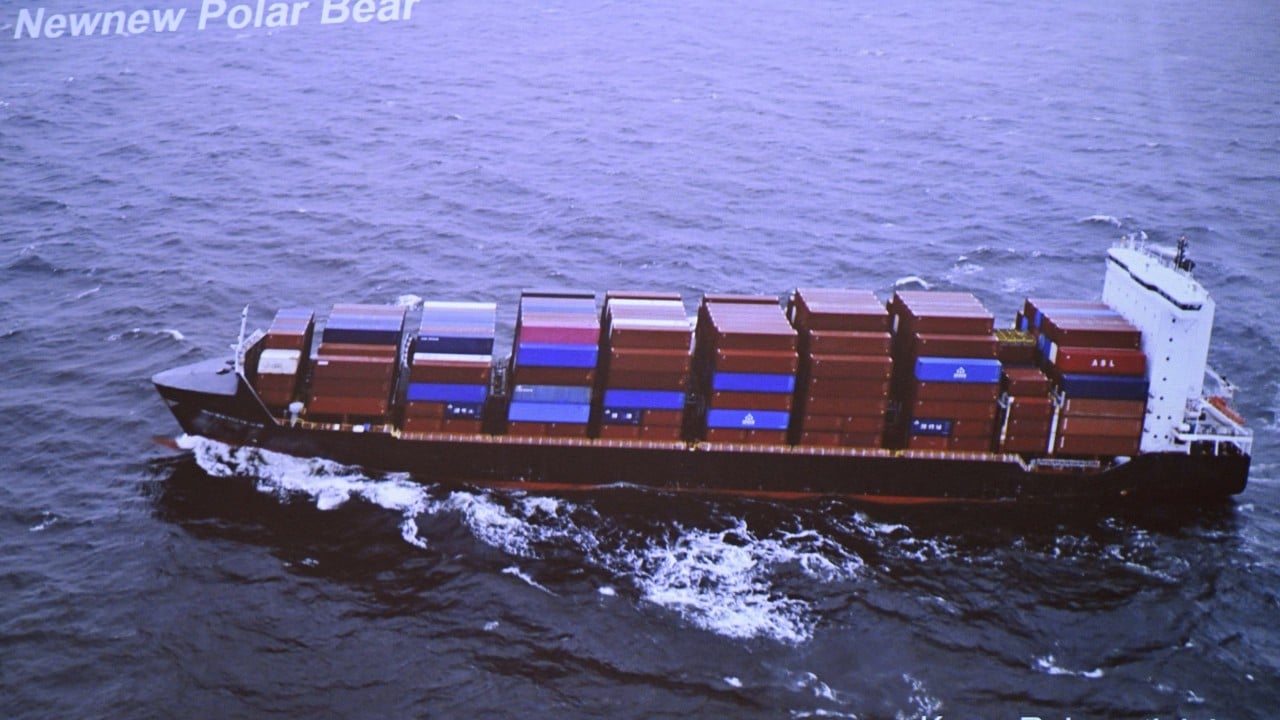
Photos taken at Russian ports in St. Petersburg and Arkhangelsk shortly after the incident showed the Hong Kong-flagged Newnew Polar Bear—a 169-meter ice-class container vessel operated by Hainan Xin Xin Yang Shipping—with its portside anchor chain dangling and its anchor completely gone. Even Chinese authorities acknowledged in August 2024 that the vessel's anchor caused the damage, though they blamed a severe storm and called it an accident.
So why couldn't Hong Kong convict the captain of criminal damage?
The prosecution hit a brick wall called witness access. To prove criminal damage beyond a reasonable doubt in a Hong Kong court, prosecutors needed testimony from the ship's former crew members to establish what happened on the bridge that night. Was the anchor dropped deliberately? Did the bridge crew ignore alarms while dragging six tons of steel across the Gulf of Finland for hours?
Those crew members were living in mainland China. Prosecutors couldn't reach them or compel them to testify in Hong Kong. Without eyewitnesses from the bridge, proving criminal intent or reckless disregard became impossible. You can't convict a ship master of a HK$400 million crime using only seabed photographs and AIS tracking data.
The Regulatory Slap on the Wrist
Once the headline criminal damage charge died, the case shrank down to strict-liability paperwork and safety rules.
Under Hong Kong's Merchant Shipping (Safety) Ordinance, prosecutors didn't need to prove what Wan was thinking in the Baltic Sea. They only had to prove two straightforward operational failures:
- Sailing unseaworthy: Wan continued his voyage from Russia back to China without a full complement of anchors after losing the portside anchor on the seabed.
- Missing daily reports: He failed to file mandatory daily position and status reports during the transit.
Wan admitted to both offenses in November 2026. The court gave him until June 30, 2027, to pay the fines, noting during proceedings that the vessel's owning company had previously been fined just HK$1,500 for comparable regulatory breaches.
Compare those numbers for a second. Repairing the Balticconnector pipeline took more than six months and cost roughly €35 million—close to HK$300 million on its own, before factoring in damaged telecom cables and winter liquefied natural gas import costs for Finland. Yet the only convictions secured anywhere in the world ended in minor statutory fines.
A Prosecution With No Precedent
It's worth giving Hong Kong's Department of Justice credit for even bringing the case to court in the first place. When Wan first appeared before an Eastern Magistrates' Court in late 2024 and was remanded in custody in May 2025, the presiding magistrate explicitly noted that the prosecution was a "special case" with no precedent in Hong Kong.
Why was it so unusual? Because under the United Nations Convention on the Law of the Sea (UNCLOS), coastal states like Finland and Estonia have surprisingly limited jurisdiction over foreign-flagged ships operating in their Exclusive Economic Zones (EEZs) outside territorial waters.
When an incident happens in an EEZ:
- Coastal states can investigate, recover physical evidence from the seabed, and request cooperation from the ship's flag state.
- Coastal states generally cannot arrest a foreign vessel on the high seas or force it into port unless specific hot-pursuit or pollution thresholds are met.
- The flag state holds primary criminal jurisdiction over the master and crew for navigation incidents.
Because the Newnew Polar Bear was registered under the Hong Kong flag at the time of the October 2023 incident, Hong Kong was the only jurisdiction with clean legal authority to prosecute the captain directly. Neither Finland nor Estonia ever got their hands on the vessel or its crew; by the time investigators connected the dots, the ship was already in Russian waters before heading back to Asia. Later, in 2025, the ship was even renamed Belle Aries and reflagged to Panama.
Honestly, this is the dirty secret of maritime law. A ship flying a flag of convenience—or registered in a jurisdiction separated by legal borders from its crew—can drag an anchor across billions of dollars of critical infrastructure and leave coastal nations completely dependent on the flag state's willingness and ability to prosecute.
What Most People Get Wrong About Subsea Cable and Pipeline Protection
Whenever a subsea pipeline or fiber-optic cable gets severed, public debate immediately splits into two camps: "It was state-sponsored hybrid warfare" versus "It was just a clumsy captain in bad weather."
Both arguments miss the practical reality on the water.
First, proving sabotage versus gross negligence is nearly impossible without inside witnesses. A 16,000-gross-ton container ship moving at 12 to 15 knots in heavy Baltic autumn seas generates enormous engine noise and vibration. If a brake band on a windlass slips or isn't properly secured with a devil's claw and chain stopper, a six-ton anchor can run out in seconds. Once it bites into soft seabed clay, the drag slows the vessel down—sometimes by one or two knots—which a careless or distracted watch officer might initially blame on headwinds or currents.
Second, intent doesn't actually change the economic damage. Whether a captain dropped an anchor on orders from an intelligence agency or because the crew skipped pre-storm lashing checks, the result is identical: six months without a major gas interconnector and severed data lines.
European security officials openly doubted Beijing's "storm accident" explanation from day one. Estonian Defense Minister Hanno Pevkur and Finnish Minister of European Affairs Anders Adlercreutz both questioned how a ship could drag an anchor across multiple pieces of infrastructure without the crew noticing. They had every reason to be skeptical. Still, skepticism isn't admissible evidence in a common-law courtroom.
The Hidden Financial Battle Still Playing Out
Just because Wan Wenguo is heading home doesn't mean the financial fight over the Newnew Polar Bear is over. Criminal law and maritime civil liability operate on completely different tracks.
In criminal court, prosecutors needed proof beyond a reasonable doubt and live witnesses to convict an individual. In civil admiralty courts and London marine insurance arbitrations, the burden of proof is the balance of probabilities—and the target isn't the captain's personal bank account, it's the shipowner's Protection and Indemnity (P&I) club.
Even there, infrastructure operators face brutal uphill battles:
- Limitation of liability: Under international maritime conventions like the LLMC (Convention on Limitation of Liability for Maritime Claims), shipowners can cap their financial liability based on the vessel's tonnage unless claimants prove the owner personally acted with intent or recklessness. For a 16,324 GT feeder ship like the Newnew Polar Bear, that statutory cap is far lower than the €35 million repair bill.
- War and sabotage exclusions: Standard marine hull and P&I policies exclude acts of war, terrorism, and state-sponsored sabotage. Ironically, if European governments insist the incident was deliberate sabotage rather than an accident, they risk giving the ship's insurers a legal excuse to deny coverage.
- Corporate shell structures: Single-ship owning companies—like Hainan Xin Xin Yang Shipping—frequently reflag, rename, or restructure assets after major casualties, making cross-border judgment enforcement slow and expensive.
How Maritime Regulators and Infrastructure Operators Must Respond
The collapse of the Hong Kong case exposes a system built for 19th-century shipping rather than 21st-century subsea infrastructure. If governments and cable operators want real deterrence instead of symbolic arrests that fizzle out two years later, three changes have to happen immediately:
- Mandate automated anchor-drop alarms tied to AIS broadcasts. Modern vessels already broadcast speed, heading, and draft via Automatic Identification System transponders. Requiring tension sensors on anchor windlasses that automatically trigger an alert when an anchor leaves the hawsepipe—and transmit that status over AIS—would eliminate the "we didn't notice" defense overnight.
- Tie port-state access to witness cooperation agreements. Flag states want their vessels trading freely in European and North American ports. Port states should require flag registries to maintain enforceable legal mechanisms for producing crew members and Voyage Data Recorder (VDR) black boxes whenever a vessel is implicated in subsea infrastructure damage.
- Bury and armor shallow-water choke points. In waters less than 100 meters deep—like the Gulf of Finland—surface-laid or lightly trenched pipes and cables are sitting ducks for dragging anchors. Operators need to invest in deeper rock-dumping and trenching along high-traffic shipping lanes rather than relying on legal deterrence that stops at the edge of territorial waters.
Wan Wenguo spent roughly a year and a half detained in Hong Kong before prosecutors finally pulled the plug on the main charge. He paid a heavy personal price in lost time and career ruin, even without a criminal damage conviction. For everyone else responsible for guarding the pipes and cables on the ocean floor, though, the message from Hong Kong is blunt: until international maritime law catches up with subsea reality, dragging an anchor through critical infrastructure remains practically unprosecutable.