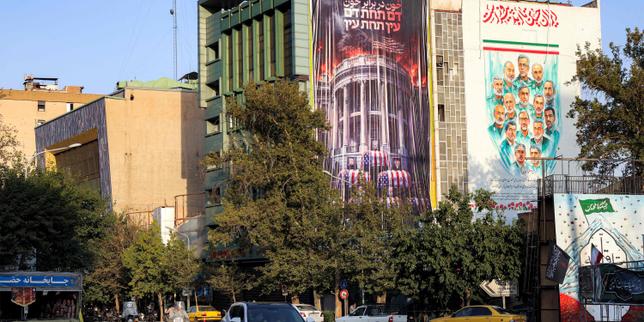
The kinetic exchange between the United States and Iran in the southwestern theater of Iran highlights a critical systemic vulnerability in modern air campaigns: the high strategic friction of proximate targeting. While the United States military describes its waves of strikes as precise operations aimed at degrading Iranian offensive infrastructure, the operational reality of striking targets immediately adjacent to civilian infrastructure produces disproportionate strategic costs. The recent strike near the Shahid Baqaei Hospital in Ahvaz—a specialized pediatric oncology facility—demonstrates how technical precision in targeting can still result in a strategic and informational failure.
Analyzing this event requires moving beyond the rhetorical postures of "barbaric attacks" or "precision operations". Instead, the incident must be deconstructed through three distinct operational vectors: the physics of kinetic proximity, the informational leverage of asymmetric defense, and the breakdown of de-escalation protocols in the Persian Gulf.
The Proximity Formula: Why Precision Misses the Civil Threshold
The central paradox of modern precision-guided munitions (PGMs) is that zero CEP (Circular Error Probable) does not equal zero collateral impact. When a weapon system successfully strikes its designated geographic coordinate, the physical phenomena of the detonation are not contained within the target boundary.
The Kinetic Transfer Function
To evaluate the impact of proximate strikes on sensitive civilian infrastructure, military planners utilize a cost-hazard function. This model evaluates how kinetic energy transfers from the point of impact to nearby structures. The damage profile is determined by three variables:
- Overpressure ($\Delta P_s$): The peak positive pressure of the shockwave, which decays exponentially with distance. Even when a structural target is destroyed cleanly, the blast wave radiating outward can shatter glass, collapse non-reinforced walls, and disrupt delicate medical machinery at substantial distances.
- Ground Vibrational Peak Particle Velocity (PPV): Ground-transmitted shockwaves from deep-penetrating munitions (bunker busters or heavy unitary warheads) can rupture underground municipal water lines, sever fiber-optic links, and knock out local electrical grids.
- Acoustic and Psychological Shock (APS): The acute acoustic signature of a heavy detonation within urban boundaries induces immediate panic and force-majeure operational decisions, such as the emergency evacuation of critically ill patients.
At the Shahid Baqaei Hospital, the physical strike did not directly demolish the medical facility. However, the close-quarters blast produced an intolerable local environment. The resulting emergency evacuation of 211 pediatric cancer patients—many in the middle of active chemotherapy regimens—creates a massive secondary mortality risk. From a logistical standpoint, evacuating immunocompromised patients under active bombardment is statistically likely to result in severe clinical complications, presenting a human cost that occurs entirely outside the immediate blast radius.
The Informational Leverage of Asymmetric Defense
In modern asymmetric warfare, physical battlegrounds are deeply intertwined with the information space. When a state actor with high technological capabilities engages an adversary with localized asymmetric advantages, any strike near a protected facility is quickly converted into a strategic weapon.
By locating military assets, command posts, or air defense systems near hospitals, schools, and dense residential zones, defending forces establish a structural deterrent. If the attacking force holds fire, the military asset remains protected. If the attacking force strikes, the defender leverages the inevitable proximate damage to undermine the attacker's moral and political legitimacy.
Following the strike in Ahvaz, Iranian state media and foreign ministry spokespersons immediately initiated a targeted messaging campaign, comparing the incident to historical strikes on healthcare facilities and framing it as a war crime. By focusing on the 211 evacuated children, the defensive communications apparatus successfully shifted the international focus away from the degraded military targets in Khuzestan and toward the humanitarian crisis in the hospital. The strategic objective of this information campaign is to increase the political cost of subsequent American sorties, creating a self-limiting loop for US Central Command (CENTCOM) planners.
The Breakdown of Regional De-escalation Frameworks
This escalation occurs against a backdrop of diplomatic paralysis. The Pakistani-mediated memorandum of understanding (MoU), designed to establish technical-level talks and prevent direct confrontations in the Strait of Hormuz, has experienced a complete operational breakdown.
The breakdown of this diplomatic safety valve can be traced to a structural feedback loop:
[Targeting of Oil/Naval Blockades]
       │
       ▼
[Regional Retailiation & Drone Attacks]
       │
       ▼
[Heavy Kinetic US Air Strikes (e.g., Ahvaz)]
       │
       ▼
[Destruction of Diplomatic Backchannels]
       │
       ▼
[Increased Air Defense Alert Levels]
When diplomatic backchannels fail, tactical commanders on both sides must operate under worst-case assumptions. For the US, this means prioritizing the rapid destruction of Iranian offensive assets (such as anti-ship cruise missile sites or drone launch pads) before they can be utilized against shipping lanes or regional US bases. For Iran, it means maximum integration of air defense systems and military communications within urban centers to maximize the survival rate of those assets.
The immediate result of this structural friction is an increased frequency of proximate strikes. As long as the primary strategic objective remains the enforcement of a naval blockade in the Strait of Hormuz, the targeting parameters will inevitably overlap with populated coastal and southwestern urban centers like Ahvaz, raising the probability of recurring collateral crises.
Operational Recommendations for Kinetic Risk Mitigation
To prevent the total collapse of regional stability and mitigate the severe political fallout of proximate strikes, military planners must adjust their targeting calculus. Continuing with standard target-verification models under the current conditions is strategically unsustainable.
- Establish a Dynamic No-Strike Buffer Zone (NSBZ): Implement a mandatory minimum radius of 1,000 meters around verified medical and educational facilities for heavy ordnance (weapons with warheads exceeding 250 lbs class). Any high-priority target within this buffer must be engaged exclusively with low-yield, ultra-precise kinetic energy penetrators or electronic warfare assets.
- Deploy Non-Kinetic Neutralization Options: Rather than relying on physical destruction via high-explosive PGMs, target sets in close proximity to civilian centers should be addressed via cyber-interdiction, localized electromagnetic pulse (EMP) deployment, or high-power microwave (HPM) systems designed to disable military electronics without generating blast overpressure.
- Re-establish Technical-Level Communications via Neutral Intermediaries: Use the established Pakistani channel to negotiate a limited, localized "safe zone" protocol specifically for major metropolitan health centers. Both parties must agree to a verified verification mechanism: Iran guarantees the absence of military communication arrays or IRGC command elements within the designated hospital coordinates, in exchange for a binding US commitment to omit these specific areas from active target lists.
Without these tactical and strategic adjustments, the ongoing campaign in southwestern Iran will continue to suffer from diminished returns, where the tactical degradation of military hardware is consistently outweighed by the strategic damage of humanitarian crises.