Every time an outbreak hits the Kivus or Equateur provinces in the Democratic Republic of Congo, the playbook gets dusted off and run verbatim. The World Health Organization steps up to the podium, drops the word exponential into a microphone, and watches the panic ripple across global newsrooms. Emergency committees form. Funding taps open. And the fundamental mechanics of how pathogens actually move through remote Central African rainforests get buried under layers of institutional hysteria.
The lazy consensus from Geneva is simple: cases are climbing fast, the math is runaway, and local populations are helpless against a tidal wave of contagion without massive, top-down foreign intervention. For a closer look into similar topics, we recommend: this related article.
It is a neat narrative. It is also dead wrong.
When you look past the breathless wire reports and examine the ground-level epidemiological data from past Ebola surges in North Kivu and ITuri, a starkly different reality emerges. The spread is not an unstoppable geometric wave sweeping uniformly across the map. It is hyper-localized, fiercely relational, and entirely dictated by specific social friction points. Calling it exponential is a lazy shorthand for institutional panic. For further information on this topic, comprehensive reporting can also be found on World Health Organization.
The Myth of the Blank Spread
Let us strip away the jargon. When public health bureaucrats throw around terms like exponential growth, they imagine an inkblot spreading evenly across a pristine white sheet of paper. Human geography does not work that way, least of all in the conflict-scarred terrain of eastern Congo.
I have spent years watching international agencies misread local dynamics because they insist on viewing outbreaks through a spreadsheet rather than a cultural lens. Pathogens do not diffuse evenly through air like gas molecules. They move along narrow vectors: traditional burial rites involving physical contact, crowded motorcycle taxi routes between trading hubs, and deeply entrenched distrust of state medical teams escorted by armed forces.
When a clinic is burned down in Beni or Butembo, it is not because villagers hate medicine. It is because foreign technocrats arrived with armed escorts, imposed arbitrary bans on mourning rituals that have endured for centuries, and treated human beings like biohazards to be contained rather than communities to be engaged.
The transmission chain snaps the moment you stop treating the population as the problem and start treating them as the primary epidemiological asset.
Dismantling the Heterogeneous Trap
The WHO loves to label the epidemiological situation as heterogeneous as if it were some profound scientific discovery. What they actually mean is that they cannot control the variables.
In a sterile laboratory, uniformity is a virtue. In the rainforests and bustling roadside markets of the DRC, heterogeneity is the normal state of affairs. One village has zero cases because the local customary chief took charge early, instituted local quarantine measures, and managed trade routes. Ten miles down the road, a Pentecostal prayer group hosting an underground healing service triggers a massive cluster.
That is not random mathematical chaos. That is human behavior responding predictably to incentives and authority.
When international responders whine that the data is messy, they are admitting they do not understand the terrain. They want standardized reporting forms in a region where the primary currency is informal trust and word-of-mouth. Until health authorities stop trying to force Western bureaucratic models onto decentralized, autonomous communities, the numbers will continue to spike wherever the friction is highest.
The Industrial Complex of Emergency Response
Let us address the elephant in the room. There is an entire multi-billion-dollar apparatus built around the permanent state of emergency.
When an outbreak is categorized as an international public health emergency of global concern, the funding machinery clicks into high gear. Consultants fly in. Luxury four-by-four convoys clog the red-dirt roads of Goma. Per diems are paid. Contracts are signed.
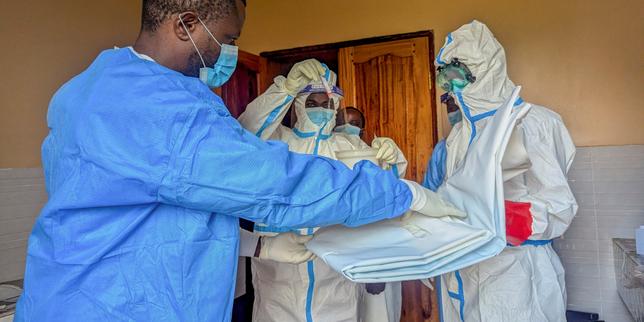
If you admit that an outbreak is self-limiting because local communities, once given correct information and basic protective gear, burn out the transmission chains themselves, the budget shrinks. If you admit that traditional healers are often more effective at contact tracing than a guy with an iPad sitting in a UN compound, the whole consulting ecosystem loses its leverage.
The panic is manufactured because panic pays.
Look at the actual fatality rates and containment timelines when local community health workers take the lead versus when international agencies try to run the show from a hotel ballroom. The community-led responses are faster, cheaper, and infinitely more sustainable. Yet the press releases always credit the cavalry that arrived on the last flight.
What Real Intervention Looks Like
If we want to stop repeating this tragic farce every few years, we have to throw out the current playbook.
First, stop weaponizing health interventions. In regions where armed groups operate and populations already distrust a predatory state, sending men with rifles alongside vaccination teams is a tactical disaster. It guarantees resistance.
Second, decentralize the response immediately. Hand the money, the logistics, and the messaging over to local nurses, civil society leaders, and customary authorities who actually know who lives in every house down the dirt track. They do not need a lecture on exponential growth models from someone who has never left Geneva. They need fuel for their motorbikes, secure diagnostic supplies, and the autonomy to handle their own dead with dignity.
The virus is opportunistic, but our institutional response is predictably archaic. Until we dismantle the crisis-industrial complex that profits off African contagion narratives, we will keep mistaking our own bureaucratic incompetence for an unstoppable natural force.
Stop panicking. Start listening.