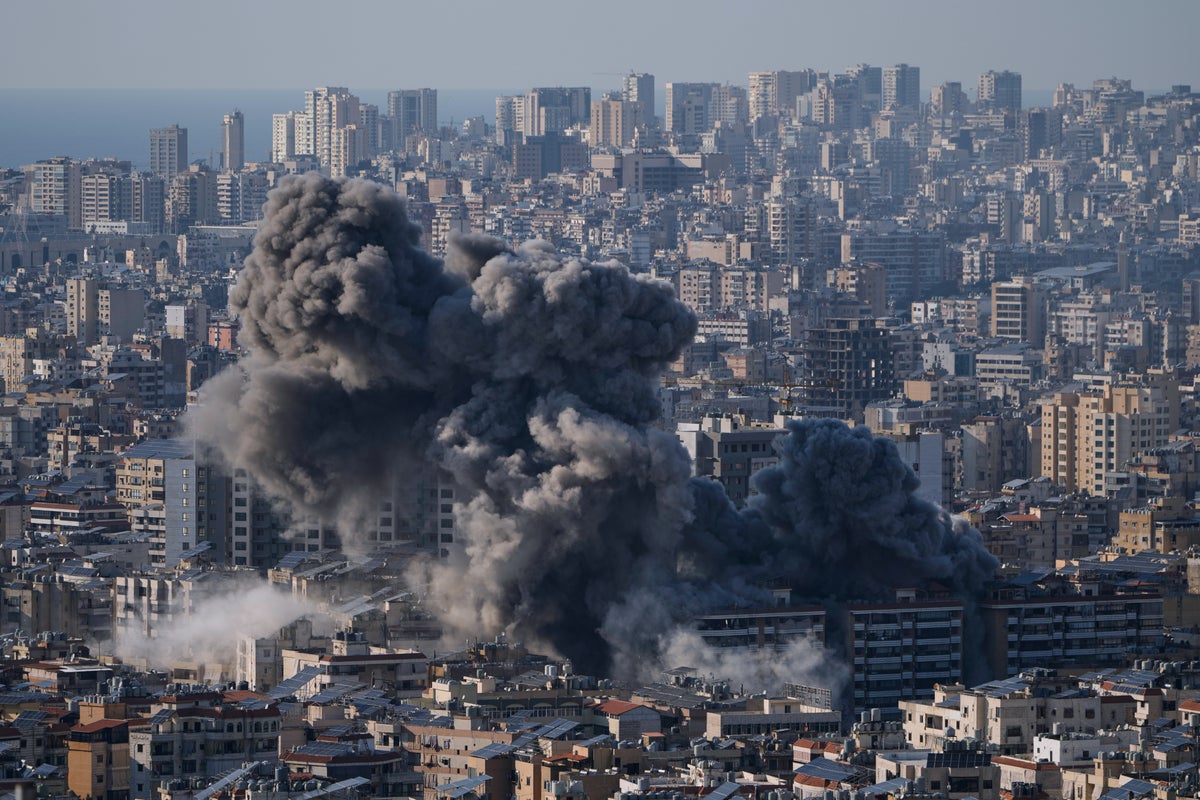
The silence is the loudest thing in Beirut.
It isn't a peaceful silence. It is the heavy, suffocating kind that follows a scream. For months, the city lived to the rhythm of percussive thuds and the persistent, mechanical hum of drones that felt like a migraine you couldn't shake. When the news of the ceasefire finally broke, the world exhaled. On television screens in London and Washington, maps were updated, "Conflict" labels were swapped for "Resolution," and the cameras began to pack up.
But for those standing in the middle of Bourj el-Barajneh or the scarred remains of Dahiyeh, the war didn't end with a signature on a piece of paper. It just changed shape.
The Weight of a Key
Imagine a man named Elias. He is a hypothetical composite of the dozens of fathers I have spoken to, men whose calloused hands tell a story that data points cannot. Elias has a silver key in his pocket. It is a heavy, old-fashioned thing that used to open a door on the fourth floor of a sun-drenched apartment building.
Today, that key is a relic.
The building is gone. Not just damaged—gone. It has been reduced to a gray, jagged mountain of pulverized limestone and twisted rebar. Elias stands at the edge of the perimeter, the dust of his own living room settling on his shoes. He isn't thinking about geopolitical leverage or the strategic success of a military campaign. He is thinking about a blue velvet sofa. He is thinking about his daughter’s school notebooks, buried under three tons of ceiling.
He is one of the thousands. The headlines say the "war" is over, but for the displaced, the war is now a logistical and existential siege. Displacement is a slow-motion disaster. It starts with a frantic bag packed in three minutes. It ends with the realization that you are a guest in a crowded school basement, sleeping on a thin foam mat, watching the world move on while you are frozen in time.
The Invisible Architecture of Loss
We often talk about reconstruction in terms of billions of dollars. We discuss "robust" aid packages and international "synergy" between NGOs. These are hollow words. They ignore the reality that a home is not just a structure of four walls; it is the physical manifestation of a family’s history.
When a missile strikes an apartment complex in a densely populated urban center, it doesn't just displace people. It shatters the social fabric that keeps a community sane. Consider the local baker who no longer has an oven. The grandmother who knew every neighbor by the sound of their footsteps on the stairs. The children who now flinch when a motorbike backfires, convinced the "peace" is just a cruel prank.
The sheer scale of the wreckage in Beirut creates a terrifying paradox. To rebuild, you must first clear. But how do you clear thousands of tons of debris when the equipment is scarce, the fuel is expensive, and the ground is potentially littered with unexploded ordnance?
The "war" might be over in the eyes of the generals, but for a mother trying to find a private place to wash her children in a collective shelter, the conflict is very much alive. It is a war against filth. A war against the cold. A war against the feeling that you have become a ghost in your own city.
The Geography of the Displaced
There is a specific kind of exhaustion that settles into the bones of a refugee. It isn't the tiredness that comes from hard work; it is the fatigue of uncertainty.
In the immediate aftermath of the ceasefire, the roads were choked. People piled mattresses and plastic jugs onto the roofs of aging Toyotas, desperate to return to the places they once called home. But what do you do when you arrive and find only a crater?
The geography of Beirut has been redrawn. There are now "No-Go" zones not because of active fighting, but because the structures that remain are structurally unsound. They are hollowed out, leaning precariously over the streets like skeletal giants. The thousands of people left homeless are now forced into a secondary migration. They move from the frontline to the shelter, and from the shelter to the cramped apartments of distant relatives who are themselves struggling to survive a collapsed economy.
Money has no value when there is no market. In Lebanon, the economic crisis was already a strangling cord around the neck of the middle class. The bombing simply cut the cord.
The Myth of the Clean Slate
There is a dangerous temptation to view a ceasefire as a "reset button."
We want to believe that once the explosions stop, life resumes its natural frequency. But the human psyche doesn't work that way. Trauma has a half-life. The children of Beirut are currently living through a collective psychological collapse. They have seen the skyline of their city altered in seconds. They have learned that the most solid thing in their lives—their home—is actually fragile.
If we focus only on the politics of the "war's end," we miss the real story. The real story is the elderly woman sitting on a plastic chair in the middle of a ruined street, guarding a pile of salvaged clothes as if they were gold. The real story is the teenager who has stopped talking because his brain can no longer process the dissonance between the quiet sky and the broken earth.
This isn't just about Lebanon. This is about the universal cost of modern urban warfare. When we use high-precision munitions in high-density areas, the "collateral damage" isn't just a percentage point. It is a generational displacement.
The Long Road to Somewhere
What happens to a city when ten percent of its population has nowhere to sleep?
The pressure builds. Tensions rise in the neighborhoods that were spared, as resources like water and electricity—already scarce—are stretched beyond the breaking point. The hospitality of the "safe" zones begins to fray. Charity turns to resentment. This is the stage of the conflict that the news cameras rarely capture because it isn't cinematic. It is just miserable.
Rebuilding isn't just about pouring concrete. It is about restoring the belief that the future is worth investing in. Right now, in the dust of Beirut, that belief is hard to find. People are scavenging for copper wire in the ruins of their bedrooms just to buy bread for the evening.
The war hasn't ended. It has just moved indoors. It is now a quiet struggle in the kitchens of strangers, a whispered argument about who gets the last blanket, and a desperate search for a sense of belonging in a city that looks like a graveyard of memories.
As the sun sets over the Mediterranean, the skeletons of the buildings cast long, jagged shadows over the ruins. The drones may have stopped humming, but the sound of hammers has yet to begin in earnest. For the thousands of homeless, the ceasefire is not a victory. It is simply the moment they were finally allowed to walk back to the place where their lives used to be, only to find that there is nothing left to hold onto but a silver key and the bitter taste of dust.
The world has turned its gaze toward the next crisis. But in the silence of the Dahiyeh, the dust is still settling. It coats the lungs. It blinds the eyes. It reminds every person standing in the rubble that while the war may be over for the men in suits, for the people in the shadows, the hardest part is just beginning.
Would you like me to analyze the economic impact of the reconstruction efforts or perhaps dive deeper into the psychological toll on the youth in post-conflict zones?