Concrete smells different when it is curing in the tropics. Anyone who has spent time around heavy construction in the Caribbean knows that sharp, alkaline bite in the humid morning air—a smell that promises permanence in places where almost nothing lasts.
For years, the only permanent thing in Port-au-Prince was the sound of gunfire echoing off corrugated tin roofs. Meanwhile, you can explore other events here: Inside the Indefinite Delay of Army Bomb Chemical Detonations in Iowa.
When word broke that Haiti had struck a deal with El Salvador to build new prisons following a high-level ministerial visit, the headlines treated it like a routine diplomatic transaction. A handshake. A memorandum of understanding. A few paragraphs of dry bureaucratic prose about bilateral security cooperation and infrastructure development.
Look closer, though, and that handshake carries the weight of two nations haunted by the same ghost. To see the complete picture, we recommend the excellent article by The Washington Post.
To understand why a Haitian minister flew to Central America to study concrete walls and steel bars, you first have to walk the broken streets of a capital city where the justice system didn't just crack—it evaporated.
A City Without Locks
Picture a hypothetical morning in Croix-des-Bouquets, just northeast of Port-au-Prince, in early 2024. Let's call our observer Jean-Luc, a retired schoolteacher whose house sits two miles from the national penitentiary. For years, Jean-Luc lived by an unspoken contract with his neighborhood: keep your head down, pay the informal road tolls to the men with rifles at the intersection, and hope the walls of the prison down the road hold.
On March 2, 2024, those walls stopped holding.
Armed gangs stormed Haiti’s two largest prisons—the National Penitentiary in downtown Port-au-Prince and the facility in Croix-des-Bouquets. Within hours, roughly 4,000 inmates walked out into the night. Among them were the architects of kidnappings, the killers of political figures, and the foot soldiers of coalitions like Viv Ansanm. The prison guards were outgunned, outmanned, and abandoned by a state apparatus that had long since lost control of the perimeter.
For Jean-Luc, the abstract concept of "institutional collapse" suddenly had a face—several thousand of them, armed and looking for territory to reclaim.
By late 2024 and into 2025, armed coalitions controlled roughly 85 percent of Port-au-Prince. Over 700,000 people had been driven from their homes, turning schools and church courtyards into sprawling, makeshift camps where families slept on cardboard and rationed buckets of water. Even before the mass jailbreaks, Haiti’s prisons were human pressure cookers, operating at over 300 percent capacity, where up to 80 percent of detainees sat in sweltering cells for years without ever seeing a judge.
When the doors blew open, Haiti didn't just lose its prisoners. It lost the very idea of consequence.
You cannot arrest your way out of a crisis when you have nowhere to put the people you arrest. And you cannot ask police officers—backed by a struggling multinational security support mission—to risk their lives capturing gang leaders if those same leaders will be walking the streets forty-eight hours later because the local jail has no roof, no gates, and no perimeter.
The Tecoluca Blueprint
That desperation is what put a Haitian ministerial delegation on a plane to San Salvador.
If you want to understand what those officials saw when they stepped off the tarmac in El Salvador, you have to understand the sheer psychological shock of the Salvadoran turnaround. Less than a decade ago, El Salvador was routinely labeled the murder capital of the world. Gangs like MS-13 and Barrio 18 didn't just extort shopkeepers; they governed daily life, carving neighborhoods into invisible borders that meant death if crossed by the wrong teenager on the wrong bus.
Then came President Nayib Bukele, a state of exception declared in March 2022, over 80,000 arrests, and a sprawling concrete fortress carved out of a remote valley in Tecoluca—the Terrorism Confinement Center, known globally as CECOT.
Built in just seven months to hold 40,000 inmates, CECOT became the ultimate symbol of iron-fisted state reclamation. Massive concrete modules. Signal blockers cutting off the outside world. Four concentric rings of walls and electrified fencing. No mattresses, no conjugal visits, no daylight leaking into the cavernous cellblocks.
By 2024, El Salvador’s homicide rate had plummeted to historic lows—below two per 100,000 people, a figure lower than Canada’s.
To a Haitian official watching their own country bleed out in real time, El Salvador doesn't look like a controversial political experiment. It looks like a lifeline.
During the ministerial visit, the conversations went far beyond polite diplomatic photo ops. Haiti’s transitional authorities needed more than advice; they needed engineering blueprints, logistical frameworks, and construction expertise from a government that had proven it could erect maximum-security infrastructure at wartime speed. The resulting agreement—to collaborate on building new prisons in Haiti—represents a deliberate pivot toward the Central American security doctrine.
Think of a nation’s justice system like a dam holding back a flooded river. For decades, international donors tried to fix Haiti’s flood by handing out buckets to bail out the water—workshops on judicial reform, sensitivity training, piecemeal equipment donations. Meanwhile, the concrete wall of the dam itself was crumbling into dust. Haiti’s bet on El Salvador is a decision to stop buying buckets and start pouring concrete.
The Illusion of the Easy Copy-Paste
Here is where the story gets complicated—and where anyone who has watched political quick-fixes play out across the Global South starts feeling a cold knot in their stomach.
History is merciless to leaders who believe they can import a security model without importing the conditions that made it work.
Let’s look closely at the anatomy of El Salvador’s transformation, because the glossy drone footage of CECOT hides the machinery underneath. Bukele’s crackdown did not begin with concrete. It began with a fully unified political command, a compliant legislature, a purged judiciary, and a national police and military apparatus of roughly 50,000 disciplined, paid, and equipped personnel operating inside a country the size of Massachusetts.
Now look across the water at Haiti.
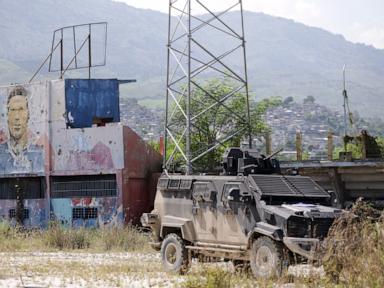
Haiti’s National Police force has struggled to keep even 10,000 active officers on the roster for a population of over 11 million people—a ratio so thin it defies basic policing math. The country has no elected president, no functioning parliament, and a transitional council fractured by competing political agendas and allegations of corruption. Its ports and highways are choked by armed checkpoints. Even moving bags of cement from a dock in Port-au-Prince to a construction site ten miles inland requires negotiating with—or fighting through—the very armed groups the prisons are meant to contain.
Consider what happens next if you build a fortress in the middle of a vacuum.
Suppose Haiti and its Salvadoran advisors break ground on a high-security facility tomorrow. Who guards the perimeter while the concrete dries? How do you prevent the corruption that routinely hollowed out Haitian institutions in the past, where underpaid guards faced a brutal choice between taking a gang’s bribe or watching their families get targeted?
A prison is not just walls and razor wire. A prison is an ecosystem of logistics, steady payrolls, independent judges, reliable electricity, clean water, and unbreakable supply chains. Without those invisible threads holding it together, a newly built super-prison isn't a solution. It is just an expensive building waiting to be besieged.
The Human Toll on Both Sides of the Bars
It is easy to talk about prisons in the abstract when you are safe behind a screen, far from the sound of automatic weapons. It is much harder when you have sat across from a mother in Port-au-Prince whose teenage son disappeared on his way to buy bread, or when you have read the testimonies of innocent men swept up in dragnet arrests.
I remember speaking years ago with a legal aid worker in Port-au-Prince who kept handwritten ledgers of detainees because the court computers had failed months earlier. She described visiting a holding cell where men took turns standing up to sleep because there wasn't enough floor space for everyone to lie down at once. Half of them had been arrested for petty thefts—a stolen phone, a sack of rice—and forgotten by a system that had lost their files.
In El Salvador, the miraculous drop in street violence came with its own quiet ledger of collateral damage. Human rights organizations documented thousands of arbitrary arrests during the state of exception—young men detained because of an anonymous tip, a nervous demeanor, or an old tattoo that had nothing to do with gang membership. Hundreds died in state custody before ever receiving a trial. Many Salvadorans accepted that price willingly, trading civil liberties for the simple miracle of letting their children walk to school without paying blood money to a local clique.
Haiti is now staring down that exact same moral bargain, only with far higher stakes and far fewer guardrails.
If Haiti adopts the aesthetics of the Salvadoran crackdown without building a functioning court system to process cases, those gleaming new cells will rapidly fill with whoever is easiest to catch—the poor, the unconnected, the bystanders—while heavily armed coalition bosses remain fortified in the hills above the capital.
And yet, tell that to Jean-Luc, our hypothetical retired teacher in Croix-des-Bouquets, locking three deadbolts on his door at five in the afternoon because dusk belongs to the men with rifles. Tell that to the market women in Pétion-Ville who watch their daily earnings vanish into extortion fees before they can buy cooking oil for their children.
When your house is burning down, you do not ask the person holding the fire hose whether their water pressure meets international regulatory standards. You just pray the water reaches the flames.
What the Deal Actually Signals
Strip away the diplomatic formalities, and this agreement between Haiti and El Salvador tells us something profound about how the world is changing.
For thirty years, security assistance in fragile states followed a predictable Western script: endless summits, consultant reports, gradual institutional capacity building, and strict adherence to procedural benchmarks that assumed a baseline of peace already existed. In Haiti, that script failed catastrophically. Billions of dollars in international aid vanished into administrative overhead while the gangs bought heavier weapons than the police.
By turning to San Salvador, Haitian leaders are sending an unmistakable message to Washington, Paris, and the United Nations: We are done waiting for your gradualism. We are hiring the people who actually cleared their streets.
El Salvador, in turn, gets something priceless—regional influence. Bukele has quietly transformed a tiny Central American nation into an ideological exporter, offering a turnkey strongman security brand to desperate neighbors across Latin America and the Caribbean. First came inquiries from Ecuador, Honduras, and Costa Rica. Now, Haiti has moved from admirer to formal partner.
Whether this partnership produces towering concrete cellblocks in the Haitian countryside or stalls out in the mud of logistics and funding remains an open question. Building a prison in a war zone is infinitely harder than building one in a pacified valley in Tecoluca. Every truckload of rebar will be a target. Every engineer on site will require an armed escort. Every dollar allocated will face the gravitational pull of a political class notorious for skimming from public works.
Still, the agreement marks a point of no return. The era of polite half-measures in Port-au-Prince is over, replaced by a raw, unapologetic gamble on containment and force.
Somewhere in a drafting room in San Salvador right now, engineers are rolling out blueprints for walls thick enough to stop a convoy, gates heavy enough to withstand a siege, and corridors designed to break the psychology of armed men who thought they were untouchable. Millions of Haitians are waiting to see if those walls will finally give them back their streets—or if they will simply become another monument to hope poured in wet concrete before the storm hits.