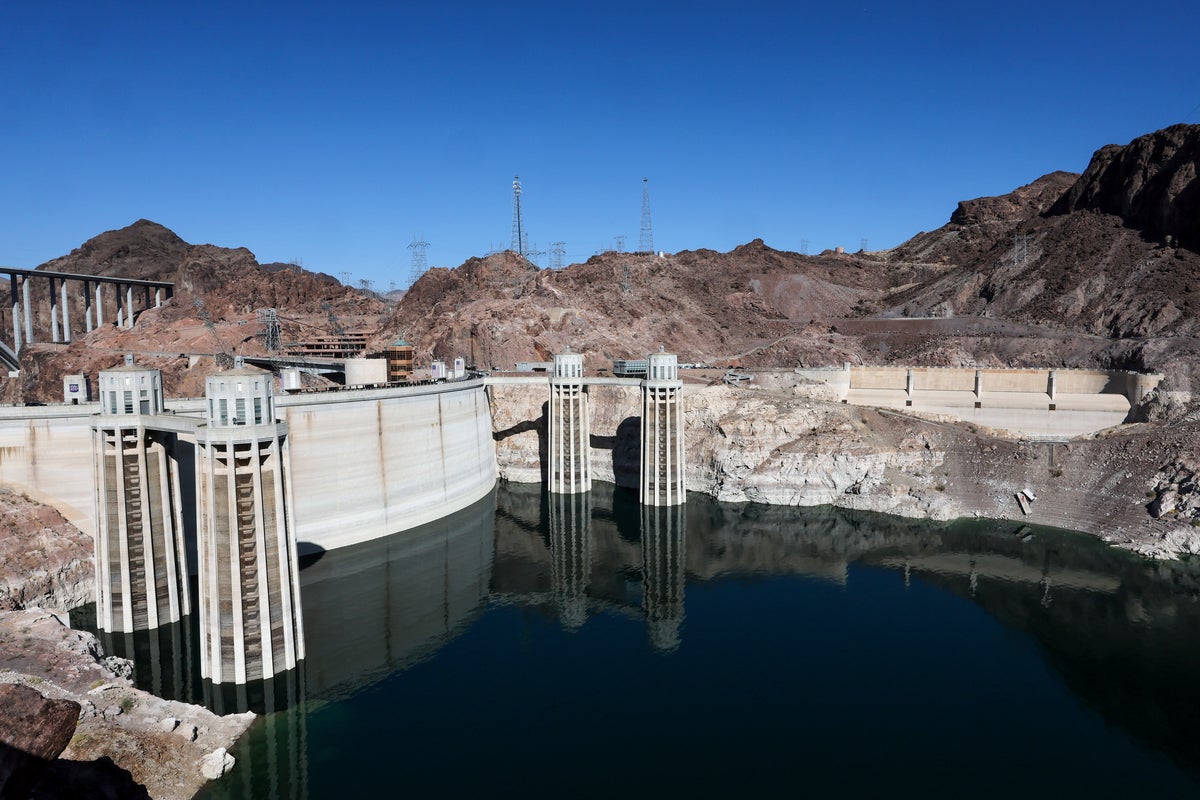
The air at the base of Black Canyon does not move. It sits between sheer walls of volcanic rock, heavy with the scent of sun-baked dust and old river silt, trapped by seven million tons of poured aggregate. Standing on the crest of the Hoover Dam, the wind tries to claw its way up from the gorge, but it breaks against the curved face of the engineering marvel that forced the Colorado River to kneel.
Then, the gates close. Again.
Twice in a single week, the tourist buses halt at the security checkpoints. The iron doors swing shut, locking out the steady stream of travelers who come from three hundred different zip codes each morning just to touch the Art Deco statues and stare down the dizzying drop to the tailrace below.
To the casual observer checking a traffic app or reading a brief morning alert, it looks like a logistical hiccup. A maintenance glitch. A footnote in the daily cycle of infrastructure management.
It is not.
Consider what happens next: When the dam shuts its doors to the public, the heartbeat of the desert skips.
To understand why a tourist closure at a concrete monolith matters to anyone who has never set foot in Nevada, you have to look past the gift shop and the bronze winged figures of the Republic. You have to look at the water.
Meet Arthur. Arthur is a hypothetical name for a very real kind of person—a citrus grower whose family has worked the same stubborn acreage in the Imperial Valley for three generations. Arthur does not care about the guided tours. He does not care about the elevator descending five hundred feet through solid rock to the power plant generators.
Arthur cares about inches.
Every morning, before the sun clears the jagged teeth of the mountains, Arthur checks a digital gauge that measures the elevation of Lake Mead. He watches the numbers the way a sailor watches a barometer before a squall. Because when the water level drops below the intakes, or when mechanical strain forces emergency inspections on the massive penstocks that feed hydroelectric turbines to four states, Arthur’s livelihood hangs by a thread as thin as a dry root.
When the Hoover Dam closes its gates to visitors unexpectedly—twice in seven days—it is rarely because a lightbulb burned out in the visitor center. It is because the aging machinery buried deep inside the belly of the beast is whispering warnings that engineers cannot ignore.
The public sees a locked gate. The operators see a stress test.
Built in the desperate shadow of the Great Depression, the dam was designed to tame a monster. Before 1936, the Colorado River was a chaotic, destructive force that periodically swallowed entire towns and left agricultural empires choking in dust. Frank Crowe, the legendary construction superintendent who drove the project, knew the stakes. He pushed men into tunnels where carbon monoxide pooled and temperatures hovered near unbearable extremes.
They poured concrete twenty-four hours a day. They cooled it with an intricate network of buried steel pipes carrying refrigerated water, knowing that if the massive block of stone cured too quickly, it would crack from the inside out and wash Phoenix and Los Angeles into the Pacific.
That structural paranoia never really left the canyon. It just changed shape.
Today, the enemy is no longer a rampaging flood. It is subtraction. Year after year, prolonged drought and relentless demand have steadily shaved feet off the surface of Lake Mead. The giant steel pipes, each large enough to swallow a Greyhound bus whole, pull water from shrinking reservoirs to drive turbines that power millions of homes from San Diego to Salt Lake City.
When maintenance forces a sudden lockdown, it points directly to the brutal arithmetic of modern infrastructure. You cannot run a machine at maximum capacity forever without paying a tax. And the tax is paid in downtime, emergency checks, and quiet moments of collective breath-holding by operators staring at sensor logs in underground control rooms.
Walk the top of the dam on a normal Tuesday. The sound is deafening.
It is not the sound of traffic, though the highway across the crest once hummed with cross-country trucks before the Mike O'Callaghan-Pat Tillman Memorial Bridge drew the heavy haulers away. It is the sound of absolute power converted into invisible light. Deep within the concrete core, massive shafts spin at hypnotic speeds, converting the kinetic energy of falling water into volts and amperes that race along high-voltage transmission lines across the Mojave.
When visitors walk those galleries, they are walking through the mechanical nervous system of the American Southwest. They touch the cool stone. They look down at the intake towers standing like giant chess pieces in the blue water.
When those gates slam shut, the silence that falls over the canyon is heavy. It is the silence of an essential organ pausing mid-beat.
We take these concrete leviathans for granted. We flip a wall switch in Las Vegas, and neon bleeds into the night sky. We turn a tap in Phoenix, and ice-cold water pours forth without hesitation. We assume the modern miracle is self-sustaining, a perpetual motion machine built by our grandparents that requires nothing more than our occasional admiration.
The reality is far more fragile.
Every unexpected closure, every restricted access zone, is a reminder that we are living on borrowed time and stored water. The engineers working behind those locked steel doors are playing a high-stakes game of chess against physics, climate shifts, and decades of deferred updates.
The tourists turn around at the barricade, disappointed, snapping photos of the distant bridge instead, wondering why their vacation itinerary hit a snag.
They drive away.
Below them, the river keeps pushing against the wall, patient, relentless, and heavy with the weight of an entire region's future.
The gates are locked. The desert waits.