Soil used to be something we tried to wash off our hands before dinner.
For generations, the path upward was paved. We poured gray slabs over the earth, traded our backyards for balconies, and called it progress. Supermarket aisles stretched endlessly, filled with cellophane-wrapped produce that arrived from thousands of miles away, its origin story completely scrubbed. We disconnected. We forgot what dirt smelled like after a spring rain. We forgot that a tomato actually tastes tart and heavy before it is bred for shelf-life endurance. For a deeper dive into this area, we recommend: this related article.
Then you step into a place like Oosterwold, and the architecture of modern life suddenly feels entirely backward.
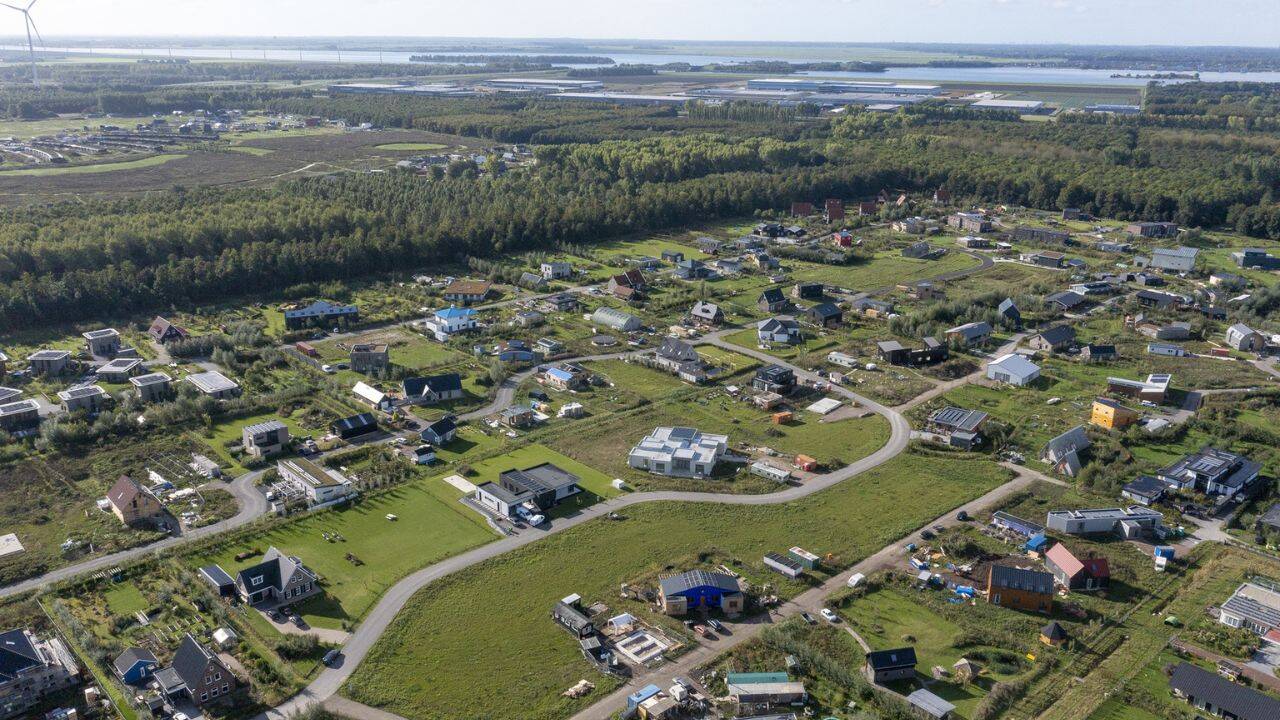
Imagine standing at the edge of a Dutch polder, a flat expanse reclaimed from the sea, where the wind pushes hard across the reeds. (Note: This descriptive opening uses a hypothetical framing to place you directly in the landscape.) Here, a quiet municipal experiment is rewriting the social contract between humanity and the ground beneath our feet. To get more information on this development, extensive analysis can also be found on Refinery29.
The rule is simple. It is audacious. It is disruptive.
If you want to build a house here, you must dedicate at least fifty percent of your plot to growing food.
Not a token window box of basil. Not a neat little ornamental hedge of lavender. Half. Fifty percent of your private land must become productive agricultural soil.
At first glance, it sounds like an authoritarian mandate straight out of a utopian fever dream. Bureaucrats dictating the contents of your backyard. Zoning laws weaponized against the lawn mower. But spend a week talking to the people who moved here—families fleeing the suffocating rent cycles of Amsterdam and Rotterdam—and the framing shifts entirely.
They did not come for the rules. They came for the antidote.
The Architecture of Hunger
To understand why this Dutch municipality took such a radical stance, look at the geography of our disconnection.
Modern cities are brilliant consumption engines. They pull in massive quantities of energy, water, and calories, process them through millions of human bodies, and export waste out of sight and out of mind. We outsourced our survival. When food comes from a plastic clamshell, we lose the instinctual understanding of seasonality, weather risk, and soil depletion.
Urban planners call this sprawl. Ecologists call it a crisis.
When land becomes nothing more than a blank canvas for real estate speculation, its value is measured strictly in square footage and property tax yield. Concrete multiplies. Greenery shrinks. The neighborhood turns into an island of asphalt that bakes under summer heat waves, requiring mechanical air conditioning to stay habitable, which in turn burns more fossil fuels, warming the very planet that birthed us.
The Dutch have always had a tense, sophisticated relationship with the land. Much of their country literally should not exist; it was fought for, inch by soggy inch, against the North Sea. They understand better than most that the earth is not a passive pedestal. It is an active partner.
So when Oosterwold was conceived as an agricultural development area near Almere, planners decided to flip the traditional development model on its head. Instead of building the houses first and squeezing in parks as an afterthought, they anchored the entire community in food production.
You build your house. You plant your crops. You build your own roads, manage your own water runoff, and negotiate your own utility lines with your neighbors. It is radically decentralized.
It is also terrifyingly hard work.
Getting Your Hands Dirty
Let us drop the abstraction and look at what this actually looks like on a Tuesday morning.
Mark, a former software engineer who spent fifteen years staring at glowing rectangles in downtown Utrecht, wakes up at dawn not to check Slack, but to check his irrigation lines. His hands are calloused. His fingernails carry the permanent dark stain of loam.
When he and his partner bought their plot in Oosterwold, they knew nothing about horticulture. Their previous agricultural experience extended entirely to a dying houseplant in a dimly lit apartment.
"The first year was a humiliation," Mark admits, leaning against a wooden fence while a bumblebee navigates the heavy blossoms of a zucchini plant. "I killed three hundred cabbages. I planted root vegetables in soil that was too dense, and they came out looking like deformed pretzels. I learned more about nitrogen cycles in six months than I did in twelve years of formal education."
The rules of the town do not care about your resume. The soil does not care that you used to manage a corporate portfolio. If you plant the wrong crop in the wrong pH balance, your harvest fails.
Yet, that failure carries a strange, redemptive weight.
In a digital career, mistakes are often invisible—a misplaced line of code, a missed email, a canceled contract. The consequences are cushioned by layers of abstraction. But in a garden, cause and effect are brutally, beautifully immediate. If you forget to water, things wither. If you nurture the soil with compost, cover crops, and earthworms, the earth responds with an abundance of kale, apples, and berries.
This is what modern life has purged: direct feedback loops with the physical world.
The Invisible Stakes
Critics frequently point out the obvious hurdles. Not everyone wants to be a farmer. Not everyone has the physical ability, the time, or the capital to turn half an acre of raw Dutch clay into a functional orchard and vegetable patch.
They are right. This lifestyle is not for everyone. If your idea of heaven is a maintenance-free high-rise condo where someone else mows the lawn and replaces the lightbulbs in the hallway, Oosterwold will feel like an exile.
But the point of the project was never to force a cookie-cutter utopia onto every citizen. The point was to prove that alternative models of human habitation are not just possible; they are desperately necessary.
Consider the compounding crises of our century. Food supply chains are increasingly fragile, vulnerable to geopolitical shocks, fuel price volatility, and extreme weather events. Loneliness is an epidemic, fueled by suburban designs that isolate households behind privacy fences and garages. Biodiversity is collapsing as manicured, sterile green lawns replace native habitats.
Now look at what happens when fifty percent of a town's land is dedicated to growing food.
Neighbors have to talk to each other. You cannot manage a shared water management system or a community composting network without cooperation. Food security stops to be a distant macroeconomic abstraction and becomes a shared harvest distributed across backyards. Biodiversity rebounds instantly when pesticides are restricted and diverse perennial crops replace monoculture grass.
The land heals because the people working it are forced to pay attention.
The Shift
We are standing at a cultural crossroads. For decades, we chased convenience at the expense of connection. We traded local resilience for global efficiency, and we are now paying the interest on that loan through ecological anxiety, dietary disconnection, and civic isolation.
What is happening in Oosterwold is not just an eccentric local ordinance in the Netherlands. It is a glimpse into a different way of existing on this planet. It asks a fundamental question that every modern city dweller should have to answer:
What are you giving back to the earth that sustains you?
As the sun dips low over the flat Dutch horizon, casting long amber shadows across rows of newly sprouted potatoes and trellised tomatoes, the answer echoes across the polder.
It starts with turning over the first spade of earth.