The afternoon coffee in Caracas is a ritual, a brief and necessary pause against the backdrop of an anxious city. At 3:14 PM, the porcelain cups inside Alejandro’s third-floor apartment began to chatter against their saucers. It was not the gentle vibration of a passing heavy truck. It was a deep, guttural groan that seemed to rise directly from the bedrock of the valley.
Then the floor dropped.
We often think of disasters in the abstract, reading them as mere tickers at the bottom of a television screen. We consume them as data points—magnitudes, depths, casualty counts. But when the earth beneath a capital city of millions fractures twice in less than ten minutes, statistics dissolve into pure, unadulterated terror. The two back-to-back tremors that tore through Venezuela’s capital did not just collapse the concrete pillars of the Chacao and Altamira districts. They shattered the fragile illusion of predictability that keeps a society functioning.
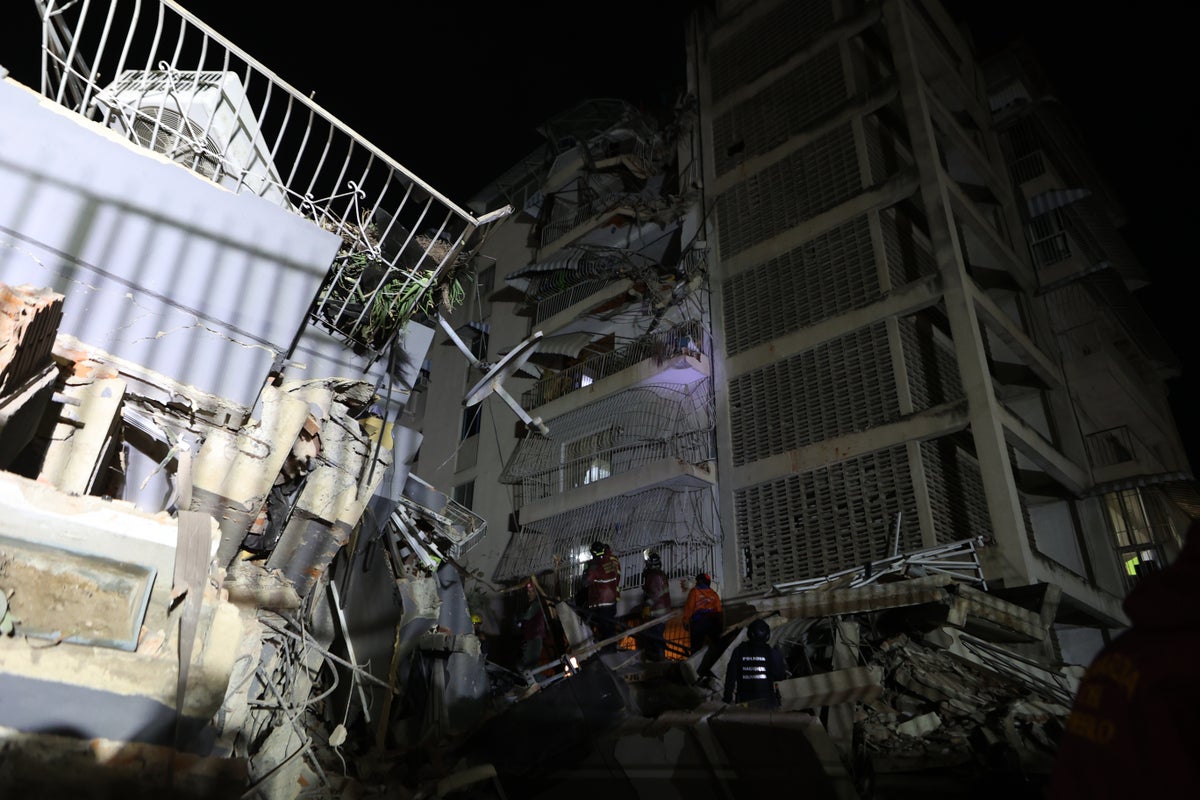
When the dust finally settled into a choking gray haze over the Avila mountain range, the baseline reality was staggering. At least 32 people were dead. More than 700 others were navigating the labyrinth of overwhelmed, under-supplied hospitals, their bodies broken by the very structures built to shield them.
To understand what happened in Caracas is to understand the violent physics of a shallow earthquake. It also requires looking closely at the invisible vulnerabilities of a modern metropolis built too fast, on ground that remembers every ancient trauma.
The Sound of the Earth Tearing
Earthquakes do not make a clean, sharp noise. They sound like a freight train driving through your living room wall, multiplied by a thousand.
Consider a hypothetical resident named Maria, a schoolteacher who was standing on the sidewalk near the Plaza Altamira when the first tremor struck. In a standard news report, she is a statistic—one of the thousands displaced or traumatized. In reality, she represents the terrifying immediacy of the event. One moment she was checking her watch; the next, the asphalt beneath her feet turned into a liquid wave.
The first quake struck with a violent lateral jerk, a tectonic shift that caught the city entirely off guard. Buildings in Caracas are tightly packed, a dense jungle of mid-century concrete and brick climbing up the hillsides. As the ground whipped back and forth, the structures began to fight each other. Concrete beams, designed to bear weight vertically, failed instantly under the brutal horizontal stress.
Before the city could even catch its breath—before parents could find their children or neighbors could pull the elderly from shifting stairwells—the second tremor hit.
This is the cruelty of back-to-back quakes. The first shock compromises the structural integrity of a building, cracking the load-bearing walls and fracturing the internal rebar. The second shock merely finishes the job. For several residential blocks in the heart of Caracas, those subsequent ten seconds were the difference between a building standing damaged and a building pancaking into a pile of pulverized stone.
The Anatomy of an Overwhelmed City
Caracas has always lived on a fault line, both geologically and socially. The San Sebastián fault system runs just off the coast, a silent neighbor that the city prefers to forget. When that neighbor stirs, the consequences ripple through every layer of civic infrastructure.
In the immediate aftermath, the city's vulnerabilities lay bare. The hospitals, already stretched thin by years of economic strain, became chaotic battlegrounds. At the Domingo Luciani Hospital, doctors did not have time to celebrate surviving the tremors themselves. They were forced to triage patients in the parking lot, using cell phone flashlights as the grid flickered and died.
The injuries were systemic. Crushed limbs, severe concussions from falling masonry, and the profound, silent shock of people who had watched their homes vanish in a heartbeat.
- Structural Fatigue: Many of the collapsed buildings were older structures built before modern seismic codes were strictly enforced.
- Geographic Amplification: The valley of Caracas acts like a bowl of jelly; seismic waves enter the soft sediment and bounce back and forth, amplifying the shaking.
- Emergency Bottlenecks: Narrow hillside roads, choked with debris and panicked traffic, prevented rescue vehicles from reaching the hardest-hit informal settlements.
The rescue efforts were a visceral testament to human desperation. Without heavy machinery immediately available, citizens formed human chains. Men in business suits worked alongside laborers in t-shirts, clearing chunks of concrete barehanded, listening for the faint, muffled cries of those trapped in the voids beneath the rubble.
The Invisible Stakes of the Aftermath
An earthquake does not end when the ground stops moving. The true crisis of a disaster like the Caracas tremors is the agonizingly slow secondary wave: the psychological toll, the displacement, and the looming question of structural safety for the buildings that managed to stay upright.
Thousands of people spent the night sleeping on the grass of public parks, terrified to return to their apartments. Every minor vibration—a truck shifting gears, a heavy door slamming—triggered a collective gasp of panic. The air remained thick with the smell of ruptured gas lines and pulverized drywall, a sensory reminder that the world had fundamentally shifted.
Engineers face a monumental task that will take months, if not years. Every high-rise, every overpass, and every bridge must be inspected for internal fractures. A building can look perfectly intact from the outside while its core columns are reduced to gravel held together by twisted steel. The city is now forced to play a high-stakes game of deduction, deciding which structures are safe to inhabit and which must be condemned.
The tragedy in Venezuela is a reminder of a harsh global truth. We build our civilizations upward, reaching for the sky with steel and stone, but we remain entirely at the mercy of the fragile crust beneath our feet. The 32 lives lost in Caracas were not victims of the earth itself; they were victims of the built environment's inability to withstand the earth's inevitable movements.
As dawn broke the morning after the disaster, the city was uncharacteristically quiet. The usual roar of traffic was replaced by the scraping sound of shovels on pavement and the occasional bark of a rescue dog searching the ruins. On a street corner in Chacao, a single yellow curtain fluttered out of a third-story window—the rest of the apartment building had completely sheared away, leaving a domestic scene exposed to the open air. A table was still set for afternoon coffee, the cups broken on the floor, waiting for a routine that would never return.