We love a clean lever. Paris looks at the endless fleet of kwassas crossing the channel from Anjouan to Mayotte, looks at the hundreds of millions doled out in public development aid, and assumes a simple transactional equation: cooperation in exchange for cash.
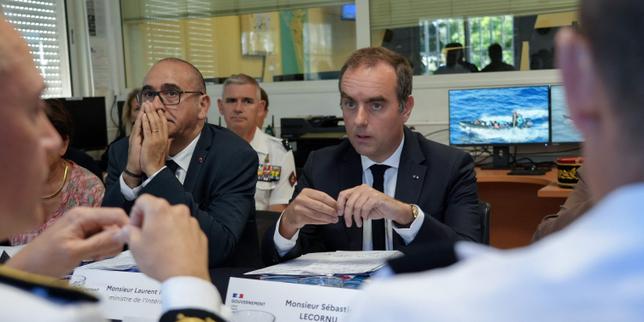
Prime Minister Sébastien Lecornu steps onto the tarmac in Dzaoudzi, surveys an island still catching its breath after years of chronic infrastructure failure, and brandishes the financial weapon. Tie development funds to readmissions and police cooperation. Make the Comores pay for looking the other way.
It sounds pragmatic. It sounds tough. It is also fundamentally unserious.
This lazy consensus relies on a profound misreading of why people board wooden boats in the middle of the night, and why regional governments operate the way they do. Treating development aid like a subscription service to a border guard agency ignores local political survival, structural economic gravity, and the limits of state capacity.
The Fiction of the Obedient Recipient
Imagine a scenario where the government in Moroni suddenly wakes up, decides to deploy a formidable coastal patrol, locks down every departure beach, and acts as an enthusiastic subcontractor for the French Ministry of Interior.
Politically, that regime signs its own death warrant. In the Comores, the historical and familial ties to Mayotte are not abstract geopolitical points; they are matters of kinship. Anjouan is a mere seventy kilometers away. Families span the border. A leader who cracks down too overtly on compatriots seeking a safer, richer life under the French tricolor faces immediate domestic insurrection, branded as a Paris puppet selling out his own people for crumbs of foreign assistance.
When politicians face a choice between losing a slice of European development funding or losing domestic power entirely, they will always choose power. They will take the money when they can, sign vague memoranda of understanding, hold token meetings, and let the boats sail anyway.
The Gravity of Economic Disparity
Let us look at the numbers that matter. The Gross Domestic Product per capita in the Comores sits at a fraction of what is available under French jurisdiction just a short horizon across the water. When the wage differential is that extreme, no amount of naval militarization or conditional aid distribution will stem the flow.
For decades, state officials have treated migration as a plumbing problem. Fix the pipes, tighten the valves, turn off the financial tap, and the leak stops. This ignores the basic laws of socio-economic pressure. Water flows downhill; labor moves toward wealth, stability, and institutional safety.
If Paris cuts development funds to Moroni out of frustration, the immediate outcome is not better border policing. The immediate outcome is accelerated local poverty, worsened public health metrics, and institutional decay in the islands of the union. Desperate populations do not stay home because a school or a water treatment plant didn't get funded; they migrate faster because the local economy completely flatlined.
The Trap of Performative Firmness
Statecraft often mistakes motion for action. Announcing tougher military postures, threatening financial penalties, and ramping up rhetoric about conditional assistance plays well on evening news broadcasts in mainland France. It projects authority. It answers the legitimate exasperation of local elected officials and residents in Mayotte who watch public services buckle under demographic strain.
Yet, policy built on wishful thinking creates its own traps. By tying development to cooperation on a metric that foreign governments cannot fully control without collapsing, Paris sets itself up for permanent diplomatic hostage-taking. Every time a boat lands on a beach in Longoni, politicians will scream betrayal, freeze more funds, escalate tensions, and watch the cycle repeat with compounding hostility.
Real leverage does not come from transactional threats that ignore local power structures. It comes from building deep, integrated regional architectures that recognize mutual dependency rather than imposing arbitrary financial punishments.
Stop pretending that withholding a check will turn a fragile neighboring state into an efficient border guard. Deal with the economic reality on the ground, or keep funding your own frustration.