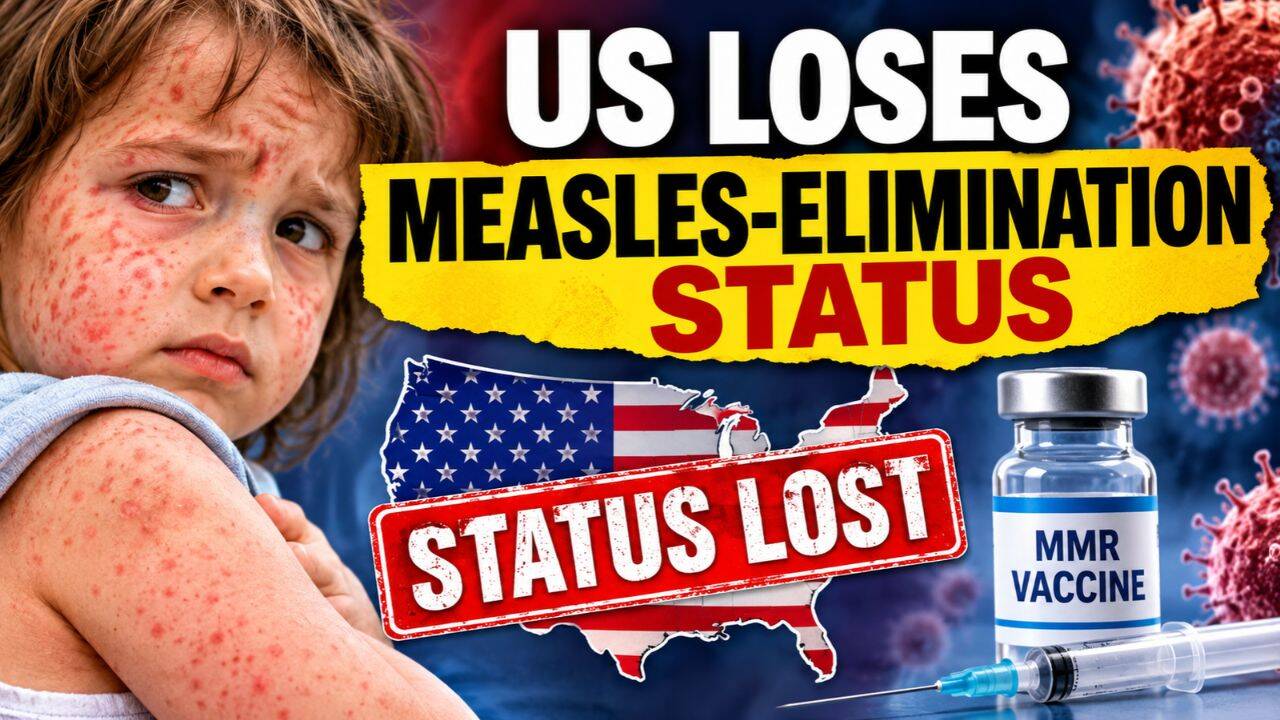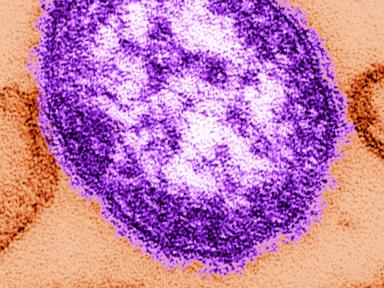
Headlines warning that babies are being born with measles sound terrifying. They should. Congenital measles is rare, dangerous, and deeply unsettling for any parent or clinician to confront.
Yet the standard news cycle treats congenital measles like a sudden mystery bolt from the blue. It is not. It is a downstream symptom of an immunity gap that public health messaging has spent years framing in the wrong order. If you liked this piece, you might want to read: this related article.
When doctors raise alarms about US babies born with measles, the lazy consensus points straight to a simple binary: parents who skip shots versus parents who follow the schedule. That framing is convenient for cable news and comment sections. It is also incomplete.
A newborn does not exist in a vacuum. A newborn's first-line defense against measles during the earliest months of life comes from maternal antibodies transferred across the placenta before birth. When those maternal antibodies are weak, absent, or short-lived, the window of vulnerability opens before the infant is old enough for routine childhood immunization. For another angle on this story, check out the latest coverage from World Health Organization.
The Lazy Consensus About Congenital Measles
Standard coverage of congenital measles tends to follow a predictable script. A case or small cluster appears during a broader outbreak. Reporters interview pediatricians and infectious disease specialists. The takeaway becomes: measles is back, and unvaccinated newborns are caught in the crossfire.
Nobody disagrees that measles is a serious viral illness or that infants face high stakes when exposed. The flaw lies in treating congenital infection as a standalone anomaly rather than a stress test of population-level immunity.
In clinical practice and public health surveillance, I have watched teams pour energy into emergency press statements while under-explaining how maternal protection actually works. People hear "immunity" and picture an ironclad shield that lasts a lifetime or passes effortlessly from mother to fetus. Biology is messier than that.
What Congenital Measles Actually Means
Clinicians use the term congenital measles when an infant acquires the virus before or at the time of birth from an infected mother. That is distinct from a baby catching measles weeks or months later at a grocery store, clinic waiting room, or daycare center.
True congenital cases require maternal infection around delivery or during pregnancy. Because measles spread across the United States has historically been driven by travel-related importations and pockets of under-immunization rather than continuous endemic transmission, congenital cases have remained uncommon compared with total outbreak counts.
Calling a rare event an emergency is easy. Explaining why the underlying conditions exist takes more work.
Why Maternal Antibodies Are Not a Blank Check
Many parents assume that if a mother was vaccinated years ago, her newborn automatically enters the world heavily protected against measles for a full year. That assumption overstates what passive maternal immunity can guarantee.
Antibody levels in adults vary depending on whether immunity came from prior wild infection or vaccination, how much time has passed, and how efficiently antibodies crossed the placenta late in pregnancy. Furthermore, maternally derived antibodies wane over the first months of life, which is precisely why routine infant vaccination is timed around the first birthday rather than the first week.
If a pregnant patient is susceptible to measles and becomes infected, the risk to the pregnancy and newborn rises sharply. Premature birth, low birth weight, severe respiratory or neurologic complications, and neonatal death are documented risks of maternal measles infection.
Focusing solely on infant schedules without examining maternal immunity leaves a glaring blind spot.
Asking the Wrong Questions About Babies and Measles
When people search for answers after reading about babies born with measles, their questions usually reveal a distorted mental model. They want a single villain or a single quick fix.
"Can a baby be born with measles if the mom was vaccinated?"
This question usually carries an unspoken accusation or a wave of panic. A fully vaccinated adult who maintains protective immunity is far less likely to contract measles in the first place than someone who is unvaccinated. Without maternal infection, congenital transmission does not happen.
That said, no medical intervention is 100 percent absolute at the individual level across every stage of life. Vaccine effectiveness for two doses of MMR (measles, mumps, and rubella) vaccine is very high, yet rare breakthrough infections can occur during high-exposure outbreaks or when individual immune response wanes.
The real issue is rarely a mysterious failure of a single dose in isolation. The real issue is community-wide susceptibility that lets the virus circulate long enough to reach pregnant people who lack sufficient protection.
"Why don't we just vaccinate newborns right after birth?"
It sounds intuitive. If babies are vulnerable, give the shot earlier.
In reality, timing vaccines is an exercise in immunological trade-offs, not guesswork. Maternal antibodies still circulating in a young infant's bloodstream can blunt or neutralize the immune response to a live-attenuated measles vaccine given too early. That interference is a classic reason routine primary doses are given later in infancy, when maternal antibodies have declined enough for the infant's own immune system to mount a durable response.
During outbreaks or high-risk travel, clinicians may use targeted guidance for infants starting at six months of age, understanding that an early dose does not replace the standard two-dose series starting at twelve months. Changing schedules on emotion rather than immune kinetics creates worse protection, not better.
"Is congenital measles going to sweep across US hospitals?"
Fear thrives on worst-case extrapolation. A scary headline about a baby born with measles makes readers picture maternity wards overrun with infected newborns.
Measles is extraordinarily contagious among susceptible people—classic epidemiology places its basic reproduction number roughly in the 12 to 18 range in fully susceptible populations. Yet hospital infection control, rapid isolation protocols, and high baseline immunity across much of the country still constrain widespread hospital transmission when facilities execute basic precautions properly.
Imagine a scenario where a regional health system sees three measles exposures in a month. If triage nurses catch rashes and fever at the entrance and route suspected cases straight into airborne isolation, secondary spread stays tiny. If a patient sits in a crowded general waiting room for two hours without masking or isolation, exposure spikes fast. The difference is operational discipline, not fate.
What Public Health Gets Wrong When It Panics
Public health communicators often treat nuance like a liability. They worry that explaining antibody waning, diagnostic timing, or maternal serostatus will sound complicated or give ammunition to skeptics.
I have seen health agencies spend tens of thousands of dollars on glossy graphics that repeat the same slogan while ignoring the exact questions anxious parents actually ask. When experts oversimplify, trust erodes the moment a real-world exception shows up.
Consider the timeline of maternal measles infection. If a pregnant woman contracts measles late in gestation and delivers shortly after rash onset, the infant may be born with active infection or develop rash within days of birth. If maternal infection happens earlier in pregnancy, risks include miscarriage, stillbirth, or preterm delivery.
Public health guidance from bodies like the Centers for Disease Control and Prevention and clinical organizations like the American College of Obstetricians and Gynecologists emphasizes pre-pregnancy immunity verification and postpartum vaccination because MMR vaccine cannot be given during pregnancy. That sequence matters. Once someone is already pregnant and non-immune, you cannot safely hand them an MMR shot until after delivery.
Treating pregnancy as the starting line for measles prevention is already too late.
The Trade-Offs of a Harder, More Honest Approach
Admitting the limits of passive immunity and the realities of outbreak mechanics carries its own risks. Nuance can be misused.
If you tell the public that maternal antibodies wane or that vaccine protection is not 100 percent absolute in every circumstance, bad-faith actors will twist those facts into claims that vaccines do not work. That is a real cost of candor.
There is also an operational trade-off for clinicians and health departments. Checking immunity before pregnancy, reviewing records at routine primary care visits, and maintaining strict airborne isolation readiness in clinics and delivery units take time, budget, and follow-through. Scare headlines are cheap. Routine preventive execution is hard.
Still, hiding behind slogans is a losing strategy. People spot half-truths quickly, especially parents trying to protect a newborn.
What Actually Works Instead of Hand-Wringing
If you care about preventing babies from being born with measles—or catching it in their first year—stop waiting for a breaking news alert to think about immunity.
- Verify immunity before pregnancy: Anyone planning a pregnancy should check immunization records or discuss measles immunity with a clinician well ahead of conception, since MMR is contraindicated during pregnancy.
- Vaccinate right after delivery if needed: Non-immune postpartum patients can receive MMR before leaving the hospital or at early postpartum visits, closing the gap for future pregnancies and reducing household risk around the newborn.
- Protect the cocoon around infants: Because newborns cannot complete their routine MMR series right away, household members, siblings, and caregivers who are up to date on measles vaccination act as a firewall around the baby.
- Treat fever plus rash as an urgent call, not a casual walk-in: If measles is circulating locally or you recently traveled, call ahead before entering an urgent care clinic or pediatrician's office so staff can prevent exposing infants in waiting areas.
- Demand clear risk context from health reporting: Look past dramatic case counts to ask three questions: Was maternal immunity absent, how did exposure happen, and what specific control measures were used?
Panic makes noise. Preparation prevents cases.
Close the immunity gap before pregnancy begins, keep the household vaccinated, and isolate suspected exposures before they ever reach a newborn.