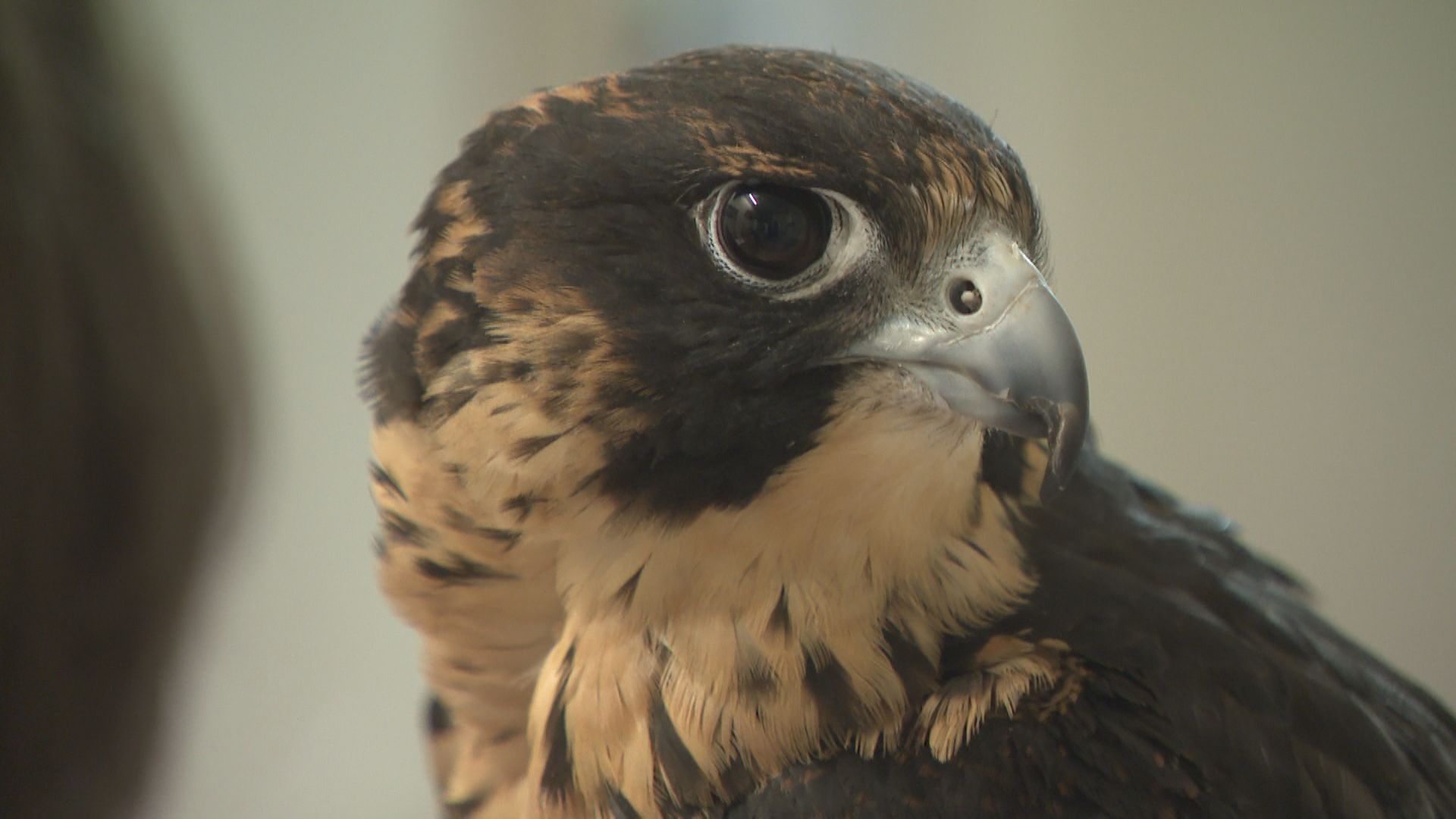
The standard narrative surrounding the peregrine falcon in Manitoba reads like a heartwarming Disney script. You have probably heard it a dozen times. Suburban birdwatchers praise the recovery of urban nesting pairs on downtown Winnipeg skyscrapers. Falconers wrap themselves in the cloak of heritage, claiming their ancient sport is a vital pillar of modern raptor conservation.
It is a comforting story. It is also fundamentally flawed. In similar updates, read about: Why Spain is falling back in love with the folding hand fan.
The lazy consensus in wildlife management celebrates the removal of the peregrine from the Canadian endangered species list as a total victory. The conventional wisdom insists that hacking programs, captive breeding, and urban nesting boxes saved the species, and that falconry keeps that legacy alive. But if you look past the press releases from wildlife federations, you find a uncomfortable truth.
Urban conservation is largely a vanity project that masks systemic ecosystem collapse, and modern falconry has almost nothing to do with saving wild birds. Cosmopolitan has also covered this important issue in great detail.
The Urban Nesting Myth
Every spring, local media runs a feature on the peregrines nesting on the Manitoba Legislative Building or the Radisson Hotel. The public tracks the eggs via webcam. When the chicks band, everyone applauds.
This is ecological theater.
Cities are ecological traps for apex predators. While concrete canyons mimic the cliff faces peregrines naturally inhabit, they present hazards that no wild population should regularly encounter. Glass skyscrapers kill hundreds of millions of birds annually across North America. Fledglings taking their first flights from a downtown ledge routinely smash into mirrored windows or plummet into heavy traffic.
More importantly, the prey base in a city is toxic. Urban peregrines feed heavily on rock pigeons. These pigeons live on a diet of street refuse and are vectors for trichomoniasis, a parasitic disease that destroys a raptor’s digestive tract. Furthermore, the bioaccumulation of second-generation anticoagulant rodenticides in urban pests means these city-dwelling falcons are consuming a steady diet of secondary poison.
Biologists who look at raw numbers say the population is stable. But they ignore population sinks. If a habitat requires a constant influx of artificial intervention, nesting platforms, and veterinary rescue to sustain itself, it is not a self-sustaining ecosystem. It is a zoo without walls.
We are pouring resources into keeping a handful of high-profile, highly visible pairs alive in Winnipeg for good public relations, while the vast boreal and parkland habitats where these birds belong are quietly degraded by monoculture farming and industrial expansion.
Falconry Is Sport, Not Salvation
Let us dismantle the second myth: the idea that the art of falconry is a cornerstone of raptor preservation in the province.
Falconers love to trace their lineage back thousands of years to Middle Eastern royalty and medieval Europe. They talk about the deep, mystical bond between man and bird. What they rarely admit is that modern falconry is a demanding, resource-intensive, highly exclusive blood sport.
It is not conservation.
True conservation focuses on populations, genetics, and habitats. Falconry focuses on the individual performance of a captive or conditioned bird. To suggest that flying a captive-bred peregrine at a stocked pheasant in a field outside Brandon helps wild Falco peregrinus populations is like arguing that owning a racing greyhound helps preserve the wild wolves of the Yukon.
Decades ago, during the height of the DDT crisis, falconers did play a role. Pioneering raptor propagators used falconry techniques to master captive breeding, which supplied birds for the early release programs. The United States and Canada owe a debt to those early innovators who helped prevent total extinction.
But that was fifty years ago. The crisis has changed, and the utility of captive breeding for peregrines has expired.
Today, wild peregrine populations have recovered to the point where capturing wild passagers (first-year migrating birds) is legally permitted in various jurisdictions under strict quotas. Yet, the falconry community often defaults to the argument that their hobby is necessary for the bird's survival to justify its existence to an increasingly skeptical, animal-welfare-conscious public.
Let us be brutally honest. A falconer keeps a bird to hunt. They spend thousands of dollars on telemetry equipment, custom hoods, giant scales, and specialized mews. They log countless hours training a bird to accept a lure and strike game on command. It is a masterclass in behavioral conditioning and an incredible human experience. But it does not clean up pesticide runoff, it does not stop loggers from clearing old-growth canopies, and it does not protect the wetlands where shorebirds—the peregrine's primary wild food source—stop during migration.
The Problem With "Heritage" Labels
Organizations like the Manitoba Falconers Association rightly point to their strict regulations. The province requires long apprenticeships, sponsor sign-offs, and rigorous facility inspections before you can possess a raptor. These rules are excellent for preventing casual animal abuse, but they do nothing for the wild landscape.
When the United Nations educational body (UNESCO) inscribed falconry on the Representative List of the Intangible Cultural Heritage of Humanity, it gave the sport an ideological shield. In Manitoba, this translated into an attitude that protecting the sport is synonymous with protecting the animal.
This confusion between cultural preservation and biological conservation distorts policy. When resource managers consult on wildlife regulations, hunting groups and falconry clubs get a seat at the table because they are viewed as stakeholders in the animal's survival.
But their primary interest is access to the resource. A falconer wants access to wild harvest quotas or the right to fly birds in provincial parks. A true conservationist should only care about the carrying capacity of the land and the integrity of the wild gene pool. These two motivations are fundamentally at odds, no matter how much shared rhetoric they use.
The Micro-Mechanics of Raptor Deconditioning
To understand why the crossover between sport and science is flawed, look at the mechanics of how a falconer's bird interacts with the world compared to a wild raptor.
A wild peregrine relies on extreme physical optimization. It is an animal that hunts at the absolute limit of biological capability, reaching speeds over 300 kilometers per hour in a vertical stoop. A wild bird that misses three kills in a row faces starvation. A wild bird with a minor feather injury or a mild case of bumblefoot is dead.
In contrast, a falconer’s bird exists in a cushioned reality:
- Weight Control: The handler manipulates the bird's daily food intake down to the tenth of a gram to keep it at its "flying weight"—hungry enough to hunt, but strong enough to return to the fist.
- Medical Intervention: Minor ailments that would kill a wild falcon are immediately treated with specialized antibiotics and veterinary care.
- Artificial Selection: Captive breeding lines often prioritize docility, color morphs, or size over the raw, brutal survival instincts required in the subarctic tundra.
When these captive-bred birds escape—and they do—or when they are intentionally released, they do not automatically become elite wild hunters. They often struggle to adapt to true wilderness conditions, or worse, they introduce domestic behavioral traits into the wild gene pool.
Shifting the Target
If we actually want to secure the future of the peregrine falcon in Manitoba, we have to stop focusing on the romantic images of a bird on a glove or a nest box on a grain elevator. We are asking the wrong questions. The question isn't "How do we get more peregrines into Manitoba?" The question must be "Why can't our current landscape support them without our constant supervision?"
The real threat to the peregrine today is not the poacher or the lack of nesting sites. It is the insidious, invisible destruction of the trophic web.
Neonicotinoid pesticides are wiping out insect populations across the Canadian prairies. Fewer insects mean fewer songbirds and shorebirds. Fewer shorebirds mean the peregrine loses its fuel supply during its grueling migration from the high Arctic down to South America. You can build a thousand nesting boxes on every tall structure from Winnipeg to Brandon, but if the surrounding wetlands are drained and the prey base is depleted, those boxes will remain empty tombs.
If you want to save the falcon, stop donating to urban raptor webcams. Stop romanticizing medieval hunting traditions. Force the province to enforce strict wetland preservation acts. Demand an immediate halt to the conversion of native grasslands into industrial agricultural fields. Fight the chemical runoff that thins eggshells just as effectively today as DDT did in the 1960s.
Everything else is just entertainment.