Medical charts don't capture the sound of a plastic isolation tent when the cooling fans shut down. They don't capture the smell of sweat, bleach, and blood baked by equatorial heat. When a hemorrhagic fever takes hold of a community, the clinical guidelines written in comfortable European boardrooms melt away.
Right now, frontline medical workers are dealing with an escalating health crisis that has broken past traditional containment lines. The official numbers tell one story, but the physicians in the dirt tell another. They're shouting that the response is failing. They're saying the containment strategies we rely on are fundamentally broken for the modern reality of these diseases. Meanwhile, you can read other developments here: The Anatomy of Assisted Dying Legislation: A Structural Analysis of the Terminally Ill Adults Bill.
Understanding why an Ebola outbreak accelerates past the point of control requires looking at the gap between public health theory and the brutal reality of field medicine. It isn't just a virus problem. It's a trust problem, an infrastructure problem, and a logistics disaster.
The failure of the sterile response model
Public health agencies love protocols. They arrive in a crisis zone with laminated checklists, heavy personal protective equipment (PPE), and strict isolation mandates. This approach makes sense on paper. You isolate the sick, trace the contacts, and bury the deceased safely. To understand the complete picture, check out the recent article by Psychology Today.
It fails in practice because it ignores human behavior.
Imagine a stranger arriving in your village wearing a hazmat suit that hides their face. They speak a different dialect. They take your feverish child away to a fenced-off tent, and three days later, they tell you the child is dead. You aren't allowed to see the body. You aren't allowed to perform traditional burial rites. To the community, the isolation center looks like a place where people go to die, not to get cured.
Frontline doctors quickly learn that the sterile, militarized response alienates the very people they need to save. When fear takes over, people hide their sick relatives. They treat them at home, in secret. This turns a single traceable case into dozens of silent transmission chains that public health trackers can't see until it is too late.
To make matters worse, international funding often arrives with bureaucratic strings attached. Money is allocated for specific high-tech equipment while basic necessities run out. A field clinic might have advanced diagnostic machines but lack enough clean plastic sheeting to separate suspect cases from confirmed ones.
When medicine meets local reality
The biology of Ebola is terrifying, but the sociology of the disease is what kills. Traditional funeral practices in many affected regions involve washing and touching the body of the deceased. Because the viral load is highest at the point of death, these rituals act as super-spreader events.
You can't just tell people to stop honoring their dead.
When international teams use force or harsh mandates to stop these practices, it backfires completely. Local populations begin to see health workers as a threat. In past outbreaks in the Democratic Republic of Congo and Guinea, this tension escalated into physical attacks on treatment centers. Doctors found themselves treating hemorrhagic fever while wearing stab-proof vests or working under armed guard.
Transmission Factors in a Spreading Outbreak:
1. High viral load in deceased patients during traditional washings
2. Community avoidance of isolation centers due to high mortality rumors
3. Delayed laboratory confirmation causing cross-contamination in triage
The key to turning the tide isn't more security. It's humility. The physicians who successfully slow down transmission are the ones who sit down with local elders, religious leaders, and traditional healers. They find ways to adapt safety protocols to local customs, like allowing family members to view the burial from a safe distance or letting a priest say prayers outside the red zone.
The math of a broken triage system
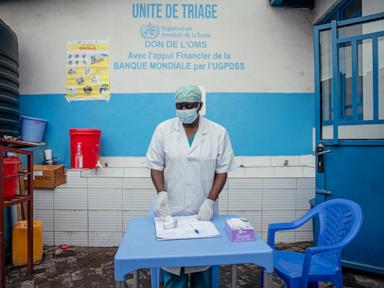
Triage is where the battle against a virus is won or lost. In a chaotic outbreak, patients arrive with a mix of symptoms. Malaria, typhoid, and Lassa fever all look exactly like early-stage Ebola. They all start with a headache, joint pain, and a sudden fever.
If your laboratory turn-around time is twenty-four hours, you have a massive problem.
You can't put a suspected malaria patient in the same ward as a confirmed Ebola patient; doing that is effectively a death sentence for the malaria patient if they don't actually have the virus. But you also don't have enough isolated beds to keep every single febrile patient in a private room for a day while you wait for PCR results.
This logistical bottleneck creates cross-contamination. Frontline clinicians face agonizing choices every morning. They have to decide who looks "sick enough" to risk putting in the isolation zone, relying on clinical intuition rather than hard data because the lab capacity isn't there.
Surviving the psychological toll of the red zone
We talk about the physical symptoms of hemorrhagic viruses, but we rarely talk about what happens to the minds of the people treating them. Working in a hot zone is a lesson in sensory deprivation and hyper-vigilance.
You are wrapped in three layers of latex, impermeable yellow suits, goggles, and respirators. The heat inside the suit quickly reaches over one hundred degrees Fahrenheit. Sweat pools in your boots. Your goggles fog up, making it hard to see the vein when you're trying to start an IV on a thrashing, dehydrated child.
You can only stay inside the suit for about forty-five to sixty minutes before heat exhaustion sets in and your decision-making degrades. Every move you make must be calculated. If you accidentally touch your bare face while de-gowning, or if a needle pierces your glove, you could be dead in two weeks.
The emotional weight is worse than the physical discomfort. You watch patients bleed internally, lose consciousness, and succumb to organ failure while you watch through a plastic window. You can't offer a comforting touch. You can't show them your face. You are a faceless specter in a yellow suit, offering fluids and hope through a layer of rubber.
Shifting the strategy from panic to preparation
We have to stop treating these outbreaks as sudden, unpredictable disasters that require a reactive, international rescue mission. The pattern repeats itself every few years, yet the global response mechanism remains stuck in a cycle of panic and neglect.
True containment relies on building permanent, localized capacity before the first case appears. That means investing in decentralized laboratories that can run diagnostics in hours, not days. It means training local nurses and community health workers who already have the trust of their neighbors, rather than flying in foreign experts who don't speak the language.
If you want to understand how to actually stop a spreading outbreak, look at the basics that frontline doctors keep begging for.
First, establish rapid diagnostic hubs at the district level. Reducing the time it takes to identify a case from days to under two hours prevents the triage bottlenecks that cause hospital-acquired transmission.
Second, redesign isolation centers to be transparent. Replace opaque fencing with clear plastic or open structures that allow families to see their loved ones inside. When the mystery is removed, the fear dissipates, and people stop hiding the sick.
Third, guarantee consistent supply chains for basic personal protective equipment and rehydration fluids. An outbreak spirals when local clinics run out of gloves and start reusing equipment, turning healthcare facilities into amplification points for the virus.
The doctors on the front line don't need more speeches or high-level global health summits. They need actionable infrastructure, local trust, and the basic tools to do their jobs without becoming casualties themselves. Until the global health apparatus changes its approach from top-down enforcement to community-led integration, we will keep seeing these outbreaks break containment and spin out of control.