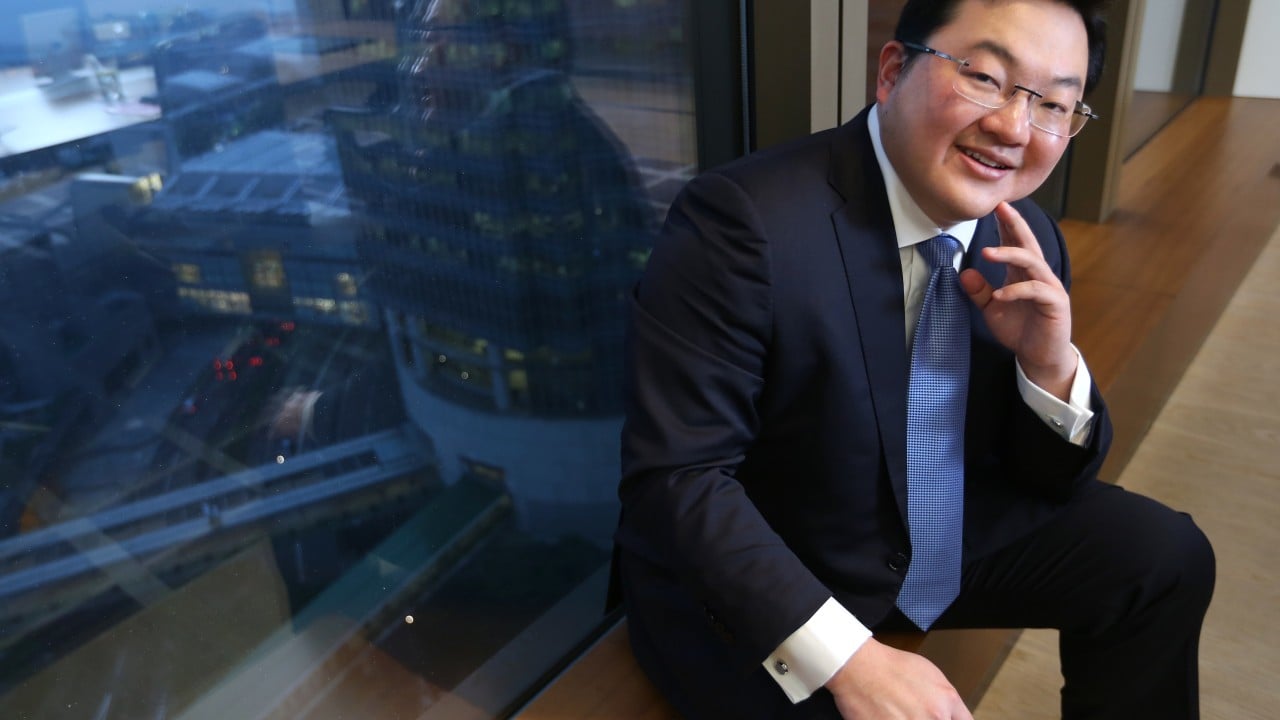
Prime Minister Anwar Ibrahim wants you to believe that Malaysia is a relentless hound, sniffing along the global trail for Low Taek Jho. The official narrative is beautiful, cinematic, and entirely performative. Anwar stands before microphones, chin thrust forward, declaring that no matter what happens in Washington—even if a United States presidential pardon clears the mastermind of the 1MDB disaster—Malaysia will never stop its hunt.
It is a masterclass in political theater. It is also an absolute lie.
The mainstream media laps this up as a story of a developing nation standing up for its sovereignty. They frame it as a righteous crusade against sovereign wealth fund looting. But anyone who understands the machinery of geopolitical leverage and Malaysian domestic survival knows the truth. Malaysia does not actually want Jho Low back. The performance of chasing him is infinitely more valuable to the current administration than his actual capture would ever be.
Anwar’s grand pronouncements are a smoke screen. They are designed to distract from uncomfortable domestic compromises, structural economic stagnation, and the brutal reality of international law: when superpowers decide to play chess with financial fugitives, mid-tier economies do not get to dictate the rules.
The Myth of the Independent Hunt
Let us dismantle the primary illusion right now. The idea that Malaysia can independently pursue, capture, and extradite Jho Low against the wishes of the world’s true superpowers is legally and logistically absurd.
For years, reports have placed Jho Low under loose house arrest or specialized protection within China, moving between Macau, Shanghai, and Beijing. Malaysia has an extradition treaty with China. Yet, despite years of bilateral handshakes, photo opportunities, and trade agreements, Jho Low remains untouched by local authorities there. Why? Because Jho Low is not just a thief; he is a vault of state secrets. He facilitated massive infrastructure deals under the Belt and Road Initiative, including the East Coast Rail Link and pipeline projects that served as conduits for inflating costs to pay off 1MDB debts.
If Anwar’s government wanted to push the issue, it would have to risk its deepest trading relationship. It will not.
Now look at the American angle. Rumors of a potential US executive disposition or pardon for Low have circulated through Washington’s lobbying corridors. If the US Department of Justice or the executive branch decides to cut a final deal with Low to liquidate his remaining global assets or settle outstanding intelligence anomalies, Malaysia possesses zero leverage to stop it.
To suggest that Kuala Lumpur can defy a US legal resolution or a Chinese security guarantee is a fantasy sold to voters who still believe international relations run on moral principles rather than raw power.
Why a Living Jho Low is a Political Liability
Consider the actual mechanics of what happens if Jho Low is put on a flight to Kuala Lumpur tomorrow, handcuffed and ready to talk.
He enters a courtroom. He enters a deposition room. What does he do? He starts naming names.
The 1MDB scandal was not executed by a lone genius in a vacuum. It required the active participation, systemic blindness, and financial lubrication of hundreds of individuals across the Malaysian political, bureaucratic, and banking establishments. Many of those individuals are not retired. Many of them did not go to jail with Najib Razak. They shifted allegiances. They funded new campaigns. They sit in corporate boardrooms and government agencies today.
Anwar’s current administration is not a revolutionary monolith; it is a fragile unity government. It exists because of a marriage of convenience with United Malays National Organisation (UMNO)—the very political party that presided over the creation and defense of 1MDB.
Imagine a scenario where Jho Low takes the stand and begins detailing exactly which current politicians, regional chiefs, and institutional figures received portions of the billions diverted from the fund. The political stability of the current government would crack instantly. A fugitive Jho Low is a useful symbol of past corruption that can be blamed for every fiscal deficit. A captured Jho Low is a live grenade tossed into the center of a volatile ruling coalition.
The Najib Contradiction
The hypocrisy of the "never-ending hunt" becomes glaringly obvious when contrasted with how the Malaysian state treats the criminals it has already caught.
While Anwar vows to chase Jho Low across the globe, his administration presided over a decisions by the Federal Territories Pardons Board that halved the prison sentence of former Prime Minister Najib Razak and slashed his fines by billions of ringgit. Najib, the man who held the absolute state authority to make 1MDB happen, received a massive institutional break. Meanwhile, the state domestic apparatus has consistently dropped or minimized charges against other high-profile figures linked to the old regime through "discharge not amounting to an acquittal" maneuvers.
The optics are irreconcilable. You cannot claim to be unyielding in your pursuit of justice internationally while simultaneously facilitating the soft landing of the main political beneficiary of that same crime domestically.
The strategy is clear: keep the public focused on the ghost in the wind so they do not look too closely at the deals being cut in the capital. Jho Low serves as the ultimate national scapegoat. As long as he is missing, he can be blamed for the country's debt, the weakness of the ringgit, and the slow pace of economic reform.
The Financial Math Explodes the Rhetoric
Let us look at the actual balance sheet of this pursuit. Malaysia’s asset recovery process has not been driven by brilliant investigative work out of Putrajaya. It has been almost entirely reliant on the US Department of Justice’s Kleptocracy Asset Recovery Initiative and settlements with international banking giants like Goldman Sachs.
The institutional capacity of Malaysia’s own enforcement agencies to trace, freeze, and repatriate sophisticated offshore funds independent of Western intelligence is severely limited. Millions of dollars are spent annually on task forces, international travel, intelligence coordination, and legal consultations to maintain the appearance of an active hunt.
What is the return on investment for this specific pursuit? Zero.
The assets that could be recovered have already been targeted by the US DOJ or settled through corporate payouts. Anything Jho Low has left is buried deep within jurisdictions that do not recognize Malaysian court orders. Continuing to fund a global manhunt for a man protected by geopolitical shields is not financial stewardship; it is an expensive exercise in public relations.
Stop Asking if He Will Be Caught
The public, fueled by sensationalist reporting and true-crime documentaries, keeps asking the wrong question: When will Malaysia finally catch Jho Low?
The question assumes that international justice is a straight line where the bad guy eventually gets caught if the police try hard enough. That is a naive view of global finance and sovereignty.
The correct question to ask is: What structural reforms are being delayed while we obsess over this single individual?
By keeping the national conversation anchored to a decade-old heist and the cinematic chase of a billionaire playboy, the underlying vulnerabilities that allowed 1MDB to happen remain unaddressed. The concentration of power in the office of the Prime Minister, the lack of independent oversight for state-owned enterprises, the politicization of the civil service, and the opaque nature of government procurement have not undergone the radical overhauls promised.
It is far easier to give a fiery speech about chasing a fugitive across the oceans than it is to dismantle the systemic patronage networks that dominate domestic commerce.
The Cold Reality
The hunt for Jho Low will continue indefinitely, precisely because it is designed never to succeed. It is a permanent campaign asset. It allows the leadership to look tough on corruption without having to prosecute the powerful interests right outside their office doors.
If the United States pardons him, or if China moves him to another secure location, Anwar will express righteous indignation, use it to stoke nationalist sentiment at home, and vow to press on. The headlines will write themselves. The public will cheer the defiance.
But do not confuse political survival tactics with the pursuit of justice. The file on Jho Low will remain open because closing it—either by catching him or admitting defeat—would require facing the realities of a compromised political system. The chase is the destination.
The final blow to this entire narrative is that the world has moved on. Wall Street paid its fines, global banks updated their compliance algorithms, and international partners have shifted their focus to new geopolitical crises. Malaysia remains trapped in a loop, singing a song of defiance to an empty theater, chasing a shadow it cannot afford to catch.