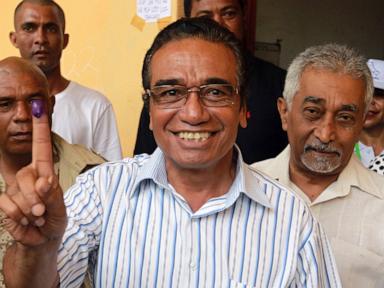
Francisco Guterres, the former guerrilla commander who climbed from a mountain foxhole to become East Timor’s president, has died at 71 in a Kuala Lumpur hospital. Widely known by his wartime moniker, Lu Olo, Guterres succumbed to an undisclosed illness after a lifetime defined by the relentless struggle for Southeast Asia's youngest sovereign nation. His passing on June 21, 2026, triggers a week of national mourning in Dili, yet it also marks the quiet closure of an era. The legendary "75 Generation" of resistance fighters is fast fading, leaving behind a nation still grappling with the fragile democracy they built from ashes.
To look at Guterres's trajectory is to map the entire, blood-soaked modern history of Timor-Leste. Born into deep poverty in the mountain village of Ossu in 1954, he joined the Revolutionary Front for an Independent East Timor (Fretilin) just as Portugal was abandoning its far-flung colony. What followed was a 24-year nightmare. Indonesia invaded in late 1975, initiating a brutal occupation that claimed the lives of roughly a third of the pre-war population through famine, disease, and outright slaughter. While others fled into exile or diplomatic sanctuaries abroad, Guterres stayed in the unforgiving jungle. He fought. He survived. By 1998, he was the general coordinator of the Council of Armed Resistance, effectively leading the remaining armed cadres against a vastly superior occupying army.
The Friction of Peace
Transitioning from a clandestine guerrilla command structure to an open parliamentary democracy is an architectural challenge few revolutionary movements survive intact. Guterres was tasked with exactly that. Following the United Nations-sponsored referendum in 1999 and the formal declaration of independence in 2002, he was elected the first speaker of the National Parliament.
It was during this period that the cracks in the revolutionary vanguard began to split the new nation apart. The transition was not smooth. In 2006, deep-seated regional rivalries between western and eastern factions within the military and police exploded into street violence, displacing over 100,000 citizens and bringing the country to the brink of civil war. Many within the political class laid the blame for the institutional failure at Guterres's doorstep, citing his rigid, party-first administrative style as Fretilin’s president.
This domestic friction cost him dearly at the ballot box. He ran for the presidency in 2007 and again in 2012, losing both times in the second round to independent or rival resistance figures, including the diplomatic icon José Ramos-Horta. These defeats underscored a growing domestic truth: the Timorese electorate respected the sacrifices of the jungle, but they feared the partisan entrenchment of the peace that followed.
The Compromise That Built a President
Guterres finally secured the presidency in 2017 on his third attempt, but victory required a deal that altered the country’s political alignment. He won only after forging an alliance with his long-time rival and fellow resistance titan, Xanana Gusmão, and Gusmão's party, the National Congress for Timorese Reconstruction (CNRT).
This union of convenience was designed to bring structural stability to a volatile parliament, but it quickly devolved into a bitter executive gridlock. As president, Guterres repeatedly blocked cabinet nominations put forward by Gusmão’s coalition, citing corruption allegations against specific ministers. The resulting political paralysis stalled economic policy and frustrated a population eager for development. The former guerrilla found that the absolute authority of the jungle path did not translate to the constitutional gray areas of the presidential palace.
Then came the global crisis of 2020. Guterres had prepared to step down as part of an engineered political transition that would allow Gusmão to resume executive control, but the arrival of the pandemic shifted his priorities. He rescinded his planned departure. He chose instead to dig in, launching an aggressive national vaccination campaign and enforcing strict public safety mandates. While the economic fallout was severe for a country reliant on dwindling oil revenues, Guterres received widespread international praise for keeping infection numbers remarkably low. It was perhaps his finest hour as a civilian administrator, relying on the same logistical discipline that kept his guerrilla units alive decades earlier.
The Setting of the Vanguard Sun
The political bill for those years of constitutional standoff was delivered in 2022. Guterres sought a second term but was thoroughly defeated in a landslide by José Ramos-Horta, who returned to active politics with the explicit backing of an aggrieved Gusmão. The peaceful transfer of power that followed was heralded as a victory for Timorese democracy, but it left Guterres on the sidelines of the state he helped birth.
With his death, the political landscape of Timor-Leste grows increasingly lonely. The nation remains dangerously dependent on a single asset: the Greater Sunrise oil and gas fields, whose revenues are projected to dry up within the decade unless complex maritime pipeline negotiations yield fruit. The young population, born after the Indonesian tanks rolled out, faces systemic underemployment and a crumbling infrastructure. They are increasingly disconnected from the foundational mythologies of the jungle resistance.
The passing of Lu Olo leaves the aging Ramos-Horta and Gusmão as the final gatekeepers of the state. The crucial question is no longer how these old soldiers fought, but whether the institutions they carved out can function once the last of the vanguard is gone. Guterres’s legacy is that of a man who refused to abandon his post, whether under a canopy of mortar fire or within the claustrophobic confines of statecraft. His nation now steps into a future where the memories of the mountains offer no protection against the economic realities of the modern Pacific.