The heat in Ouanaminthe does not just sit on your skin. It presses. On a Saturday that should have been defined by the mundane rhythm of cross-border commerce, the air was thick with the scent of exhaust, charcoal fires, and the salt of a thousand working bodies. People were moving. They were always moving. Between Haiti and the Dominican Republic, the bridge is more than concrete and steel; it is a vascular system, pumping the lifeblood of trade through a region where survival is a daily negotiation.
Then, the rhythm broke.
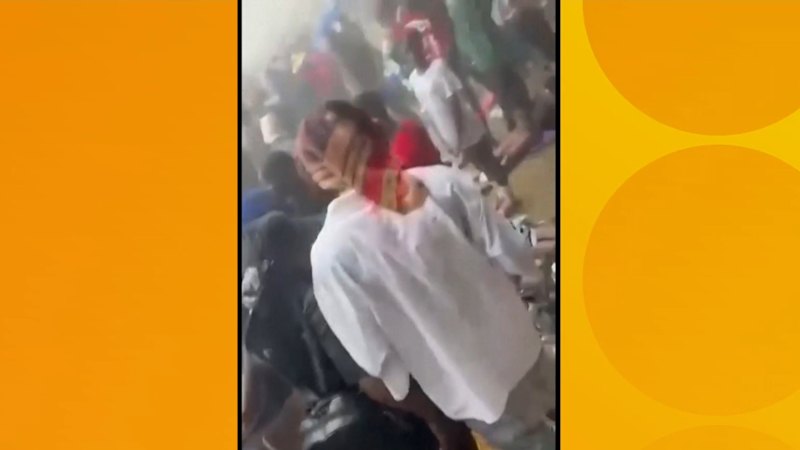
A scream. A stumble. The sound of a barricade yielding to a force it was never meant to hold. In an instant, the collective pursuit of a paycheck transformed into a desperate, primal scramble for oxygen and space. When the dust finally settled near the border entry, the tally of the fallen began. At least 30 lives were extinguished. Not by a natural disaster, or a burst of gunfire, but by the sheer, terrifying weight of human desperation concentrated into a narrow corridor.
The Anatomy of a Crowd
To understand how thirty people lose their lives in a space meant for passage, you have to look past the headlines and into the physics of a crush. It starts with a ripple. Imagine a single person at the front of a line tripping. In a normal setting, they get up, dust off their knees, and move on. But when a crowd reaches a certain density—roughly six people per square meter—individual agency vanishes. You are no longer a person. You are a molecule in a fluid, governed by the laws of pressure and flow.
The pressure becomes physical. It is a slow, relentless tightening of a vice. Victims of a stampede rarely die from being stepped on, though that happens in the chaos. Most die of compressive asphyxiation. They are standing up, surrounded by their neighbors, yet they cannot draw a breath because the collective ribcage of the crowd is being squeezed tighter than the lungs can expand. It is a silent, terrifying way to go.
Consider a hypothetical vendor named Jean. Jean isn't a statistic. He’s a man who woke up at 4:00 AM to haul a crate of citrus toward the border. He has done this a thousand times. He knows the guards, the smells, and the cracks in the pavement. But on this day, the gates opened late. The pressure behind him built as hundreds more arrived, each person driven by the fear that if they didn't cross now, they wouldn't cross at all. When the gates finally groaned open, the dam broke. Jean didn't fall because he was weak; he fell because the ground disappeared beneath a wave of shoulders and chests.
The Invisible Stakes of a Border
This tragedy didn't happen in a vacuum. It happened at the intersection of two nations with a history as jagged as the mountains dividing them. The border at Ouanaminthe is a pressure cooker. On one side, Haiti grapples with a systemic collapse of security and infrastructure. On the other, the Dominican Republic maintains a wary, often restrictive grip on its gates.
When you restrict movement in a place where movement equals survival, you create a lethal tension.
The bridge is a bottleneck. It is the only way through for those who cannot afford the luxury of a flight or the risk of a river crossing. When rumors of a closure spread, or when security forces tighten their protocols, the psychological pressure mirrors the physical one. People push because they have to. They push because staying behind means another day without a sale, another night without a meal. The "stampede" is merely the final, visible manifestation of a crisis that has been simmering for years.
The Architecture of Failure
We often blame the "mob mentality" for these events, as if a crowd is a singular, irrational beast. This is a convenient lie. It shifts the blame from the systems to the victims. In reality, crowd disasters are almost always failures of design and management.
If a hallway is too narrow for the volume of people using it, a disaster is mathematically inevitable. If there are no clear exit routes, or if the communication from authority figures is non-existent, panic is the only logical response. In Ouanaminthe, the infrastructure was never built to handle the sheer volume of a population in flight from economic ruin. The bridge became a funnel, and the funnel became a trap.
The tragedy is compounded by the lack of immediate medical infrastructure. In a high-resource environment, a crush is met with rapid triage, oxygen, and chest compressions. In a border town struggling with basic services, the fallen are often left where they lie while the survivors continue to scramble, driven by the very same fear that caused the disaster in the first place.
The Weight of a Number
Thirty.
It is a small number when compared to the casualties of war or the toll of a pandemic. But thirty is a catastrophic number when you realize each unit represents a family tree that has just been severed. It represents mothers who will not return with the flour and oil they went to buy. It represents young men whose only crime was being at the wrong point of a pressure wave.
The news cycle will move on. The "Haiti stampede" will be archived under the grim ledger of international briefs. But the bridge remains. The heat remains. The desperation that fueled the push has not dissipated; if anything, the fear of future tragedies will only make the next opening of the gate more frantic.
We look at these events and see chaos. We should see a mirror. We should see what happens when the basic human need for movement is constricted until it reaches a breaking point. It is a reminder that peace is not just the absence of conflict, but the presence of enough space to breathe.
The silence that follows a crush is the heaviest sound in the world. It is the sound of thirty hearts that stopped beating because there simply wasn't enough room for them to exist. As the sun sets over the Massacre River, the water continues to flow, indifferent to the bodies that briefly blocked its path, leaving behind a community that now knows exactly how much a few inches of standing room is worth.