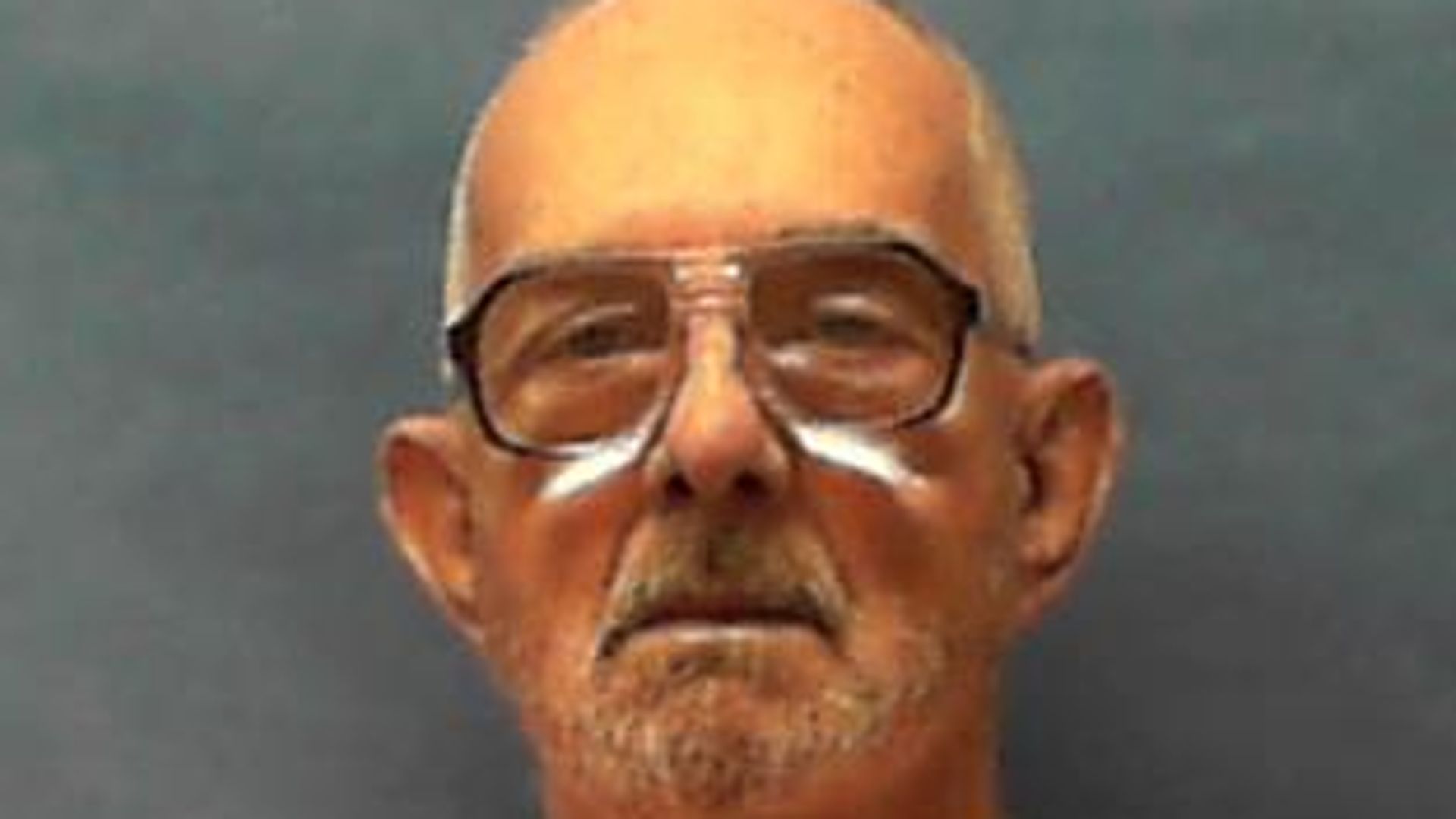
Florida has broken its own historical record by executing Dusty Ray Spencer, a 74-year-old inmate who spent more than three decades on death row for the 1992 murder of his wife, Karen. Pronounced dead at 6:10 p.m. at Florida State Prison near Starke, Spencer is officially the oldest person executed in the state since modern record-keeping began in 1924. This grim milestone highlights a systemic shift in the state's capital punishment apparatus under Governor Ron DeSantis. The state is operating a rapidly accelerating execution timeline that is forcing aging, infirm inmates toward the lethal injection table at an unprecedented velocity.
This execution marks the ninth time Florida has carried out a death sentence this year alone, building directly on a modern state record of 19 executions in 2025. This acceleration has transformed death row into what critics and advocates describe as a high-security nursing home. The trend shows no signs of slowing. Another 74-year-old inmate, Dennis Sochor, is already scheduled for execution on July 14 for a murder committed in 1982.
The Thirty Year Pathway to the Needle
To view Spencer simply as an elderly man facing the state's ultimate penalty ignores the brutal, calculated violence that put him on death row 34 years ago. The state’s case against him was built on a documented history of severe domestic terror.
In December 1991, Spencer was arrested for choking and threatening to kill his wife. While held in a local jail, he used the facility phones to call her, leaving a chilling promise that he would finish what he started upon his release. He fulfilled that promise in January 1992.
When Karen Spencer's teenage son tried to intervene during an initial attack, Spencer beat the boy with a clothes iron. A week later, the teenager discovered Spencer striking his mother in the head with a brick in their backyard. The boy attempted to defend his mother with a rifle, but the weapon misfired. Spencer threatened him with a knife, forcing the boy to flee for help. By the time law enforcement arrived at the Orange County home, Karen Spencer had been stabbed multiple times in the chest.
A jury convicted Spencer of first-degree murder, attempted murder, aggravated assault, and aggravated battery. A legal error regarding how the trial judge weighed mitigating factors forced a resentencing hearing in 1995, but the result remained the same. The death warrant stood.
The Operational Reality of Geriatric Executions
Executing a 74-year-old man presents specific operational challenges that complicate the clinical precision of the three-drug cocktail. Defense attorneys fought Spencer's execution up to the final hours, arguing that advanced liver disease and general physical decline meant the execution protocol would cause unconstitutional pain and suffering.
The defense argued that systemic illnesses can affect metabolic breakdown, potentially delaying the onset of the initial sedative and leaving the inmate conscious during the administration of the paralytic and the final cardiac-arrest agent. The U.S. Supreme Court denied the final stay without comment.
State officials reported no complications during the six o'clock procedure, though the mechanics of the process reveal the physical reality of putting an elderly body to death. After the lethal drugs began flowing into Spencer's arm, observers noted a period of labored breathing before he became still. The warden followed protocol by shaking the elderly inmate and shouting his name multiple times to ensure unconsciousness before a medical professional officially verified that his heart had stopped.
Political Will and the Post-Appeals Backlog
The sudden spike in executions is not accidental. It represents a deliberate, coordinated policy decision by the executive branch to clear a backlog of inmates who have exhausted their standard constitutional appeals.
Governors hold absolute discretion over when to sign a death warrant. For years, prior administrations allowed inmates to sit on death row for decades, wary of the political and legal scrutiny that accompanies active execution chambers. The current administration has discarded that hesitation. By overseeing 19 executions in 2025 and nine in the first half of 2026, the state has outpaced every other administration in Florida's modern history.
The legal mechanism driving this surge relies on the fact that these cases are old enough to have cleared the multi-layered state and federal appellate processes. When an inmate sits on death row for 30 to 40 years, every standard post-conviction motion has been argued, denied, and appealed. Once those avenues close, the inmate is entirely vulnerable to the political priorities of the sitting governor.
The Shifting Logistics of Death Row
The aging population on death row alters the nature of incarceration long before the execution date arrives. Inmates who enter the system in their 30s are now entering their 70s and 80s while awaiting their sentences. This shift forces the Florida Department of Corrections to manage chronic health conditions, cognitive decline, and mobility issues within maximum-security environments designed for young, volatile populations.
This trend is not unique to Florida, though the state's aggressive warrant-signing policy brings it into sharper focus. Across the United States, the average time between a capital conviction and execution has grown from roughly six years in the 1980s to more than twenty years today.
Opponents of capital punishment argue that executing individuals decades after their crimes serves little deterrent purpose, as the person being strapped to the gurney is functionally a completely different individual than the young person who committed the crime. Proponents counter that justice delayed is already justice denied to the victims' families, and that long sentences are merely proof of an overly indulgent legal system that gives murderers every possible opportunity to challenge their sentences.
The execution of Dusty Ray Spencer settles a 34-year-old debt to the state of Florida, but it settles it on the body of an old man whose long survival was an artifact of the very system that eventually killed him. With Dennis Sochor scheduled to follow in less than three weeks, Florida's death chamber has shifted from an occasional instrument of extreme punishment into a fast-moving production line targeting the oldest tier of its prison population.
The execution of Dusty Ray Spencer was reported by local and national news outlets detailing the timeline of the 1992 case and the state's recent execution trends. For an independent look at the arguments surrounding the acceleration of capital punishment in the state, see this Florida Death Row Report detailing the legal debates and the perspective of spiritual advisers on these geriatric executions.