In the quiet, pressurized rooms of Foggy Bottom, the air usually smells of expensive stationery and stale coffee. Behind these doors, the world is mapped out in neat lines of influence and tidy blocks of cooperation. But maps are paper. Real life is sand. When the United States set out to build a unified front against Iran—a grand coalition of partners designed to project strength across the Persian Gulf—the architects expected a steel structure. Instead, they are watching the mortar crumble before the first floor is even finished.
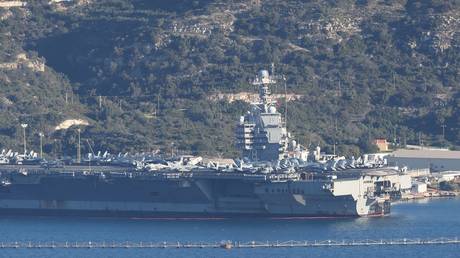
Consider the view from a patrol boat in the Strait of Hormuz. The sun is a physical weight. The water is a flat, deceptive blue. For a sailor stationed here, the abstract concept of a "multilateral maritime security initiative" isn't a bullet point in a briefing. It is the difference between a quiet night and a sudden, violent flash. This sailor represents the human cost of a plan that looks brilliant on a whiteboard in D.C. but feels increasingly like a phantom in the choppy waters of the Gulf.
The ambition was clear. Washington wanted to link together a chain of allies to police the waterways and deter Tehran. It sounded logical. It sounded necessary. But states are not blocks in a game of Tetris. They are entities with memories, fears, and a deep-seated instinct for self-preservation that often contradicts the desires of a superpower across the ocean.
The Friction of Fear
The fundamental problem isn't a lack of equipment or money. It is a lack of shared reality. When American diplomats fly into Riyadh or Abu Dhabi, they talk about regional stability as if it were a universal currency. But to a neighbor of Iran, stability has a different definition. For them, joining a high-profile, U.S.-led coalition is like walking into a crowded room and shouting a challenge at the biggest, angriest person there. If the person who encouraged you to shout eventually leaves the room, you are the one who has to deal with the consequences.
Recent reports suggest this initiative has hit a wall. It is a mess of conflicting priorities. Some partners are backing away. Others are demanding guarantees that the U.S. simply cannot—or will not—provide. There is a palpable sense of hesitation that no amount of diplomatic "outreach" can fix.
The numbers tell a story of stagnation. Despite months of high-level meetings, the list of committed participants remains remarkably thin. European allies, still stinging from the collapse of previous nuclear agreements, are wary of being pulled into a conflict they didn't start. Regional powers are hedging their bets. They watch the political swings in Washington with a mixture of exhaustion and anxiety. They ask themselves: If we commit to this now, will the next administration burn the map?
The Mirage of Unity
Imagine a dinner party where the host insists everyone agree on a single menu, but half the guests are on a diet, two have allergies, and one is secretly planning to open a competing restaurant. That is the current state of the coalition.
The "mess" described by insiders isn't just about logistical hiccups. It is a crisis of confidence. The United Arab Emirates, for instance, recently made waves by signaling a withdrawal from certain maritime coordination efforts. While the official statements were couched in the usual polite, diplomatic jargon, the subtext was a thunderclap. It was a clear signal that the perceived benefit of U.S. protection no longer outweighs the risk of being seen as a frontline provocateur.
Money and hardware are the easiest parts of any alliance to manage. You can buy ships. You can ship missiles. You can install radar systems that can see over the horizon. But you cannot buy the belief that your partner will stay in the fight when things get ugly. The U.S. is trying to build a 21st-century coalition using a 20th-century playbook, assuming that its sheer gravity will pull everyone else into orbit.
But the world has grown smaller, and the risks have grown more immediate. For a small Gulf nation, a single drone strike on a desalination plant or an oil terminal isn't a strategic setback; it is an existential catastrophe. They are looking for a shield, but they fear the U.S. is handing them a sword and then stepping back.
The Invisible Stakes
The stakes are not found in the text of a treaty. They are found in the global supply chain, in the price of gas at a pump in Ohio, and in the stability of a global economy that still breathes through the narrow straw of the Middle East. When a coalition fails to form, it doesn't just mean a few less ships on patrol. It means the "rules-based order" we talk about so often is being exposed as an optional suggestion.
If the U.S. cannot rally its traditional partners in a region where it has spent trillions of dollars and decades of blood, what does that say about its influence elsewhere? This isn't just about Iran. It is a stress test for the American era.
The friction also stems from a fundamental misunderstanding of the modern Middle East. The region is no longer a collection of client states waiting for instructions. It is a marketplace of power. If the American "product"—security through confrontation—isn't selling, these nations will look for other vendors. They will look toward Beijing, which offers trade without the baggage of military alliances. They will look toward Moscow. Or, most significantly, they will look toward Tehran to find a way to coexist, however uncomfortably.
The Weight of History
We have been here before. History is littered with the bones of grand coalitions that existed only on paper. The 1955 Baghdad Pact was supposed to be the "Great Wall" against Soviet influence in the Middle East. It collapsed within years because it ignored the local realities of Arab nationalism. Today's "mess" is a rhyming echo of that failure.
The planners in the Pentagon are brilliant people. They have data. They have satellite imagery. They have sophisticated models of Iranian fast-attack craft behavior. But models struggle to account for the human element of "face" and the deep-seated trauma of being caught between giants.
A hypothetical diplomat from a mid-sized Gulf state sits across from an American envoy. The envoy shows a chart of Iranian provocations. The diplomat nods. He knows. He lives ten miles from a coast that could be engulfed in flames in an hour. But then he looks at the American and thinks about the chaotic exit from Kabul. He thinks about the shifting red lines in Syria. He thinks about the domestic polarization in the U.S. that makes every treaty look like a temporary lease.
He doesn't sign.
The Cost of a Canceled Plan
What happens when the mess becomes the status quo?
We are entering a period of "every nation for itself." The failure to build a robust, unified coalition creates a power vacuum that is being filled by a chaotic mix of private security, local arrangements, and back-channel deals. This is the opposite of the "order" the U.S. sought to create. Instead of a single, powerful deterrent, we have a fragmented landscape of individual anxieties.
The "coalition of the willing" has become the "coalition of the hesitant." This isn't a failure of effort. It is a failure of empathy. The U.S. has struggled to see the world through the eyes of the people it expects to lead. It assumes its goals are their goals. It assumes its risks are their risks.
But for the sailor on that patrol boat, the view is different. He watches the horizon not for the arrival of a massive, multinational fleet, but for the smoke of a conflict that no one seems able to prevent and no one seems willing to truly stop.
The maps in Washington are being redrawn. Not by the architects, but by the sand and the wind. The grand coalition was supposed to be a fortress. Instead, it is a collection of lonely outposts, each one waiting to see who will blink first in the blinding heat of a summer that shows no sign of ending.
Down in the engine room of a destroyer, the hum of the turbines is the only constant. The sailors there don't read the memos from Axios or the cables from the State Department. They just monitor the gauges. They know that when the pressure gets too high and the cooling fails, the whole system can seize up in an instant. They are waiting for a signal that the rest of the world is actually behind them, but so far, all they hear is the hollow echo of a plan that never quite took hold.