The Feel-Good Trap
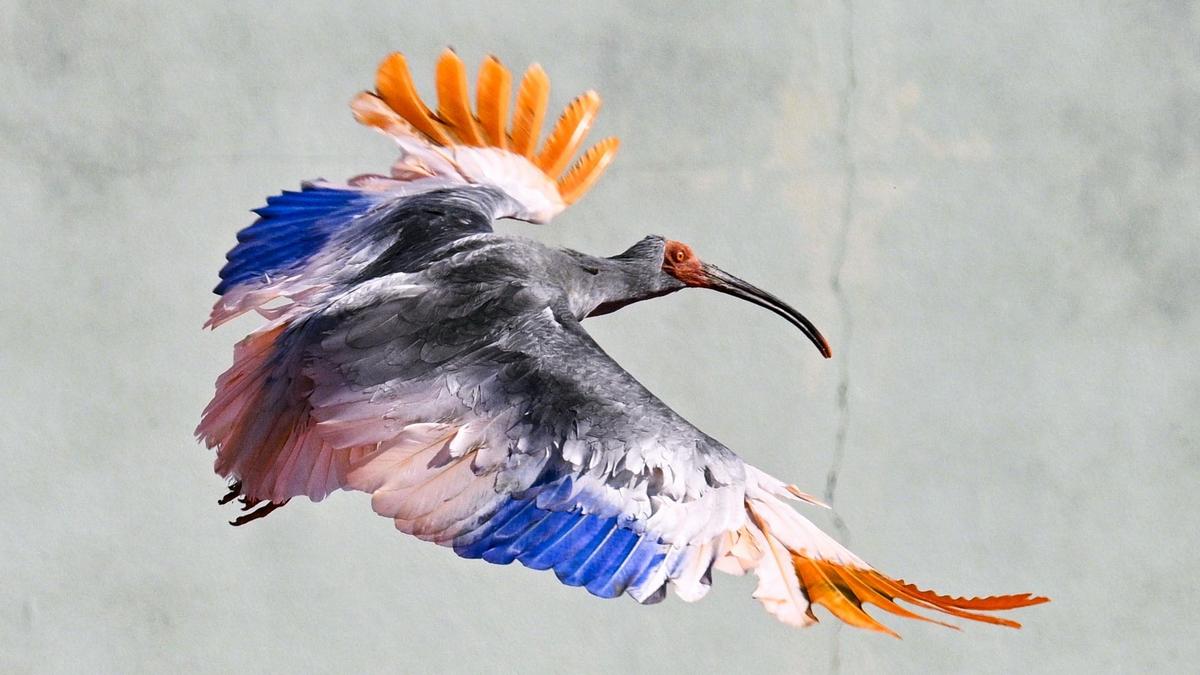
Japan is celebrating the release of eight crested ibises into the wild, hailing it as a triumphant resurrection of a species decades after its local extinction. The media is swooning. Conservationalists are weeping tears of joy.
It is a beautiful story. It is also an ecological farce. Read more on a connected subject: this related article.
We are pouring millions of dollars, thousands of research hours, and massive political capital into keeping a biological ghost on life support. The narrative tells you that releasing Nipponia nippon back into the skies of Ishikawa Prefecture is a victory for biodiversity. The reality? It is expensive eco-theater designed to make humans feel better about destruction, while doing absolutely nothing to fix the systemic issues of modern ecology.
I have spent years analyzing conservation budgets and environmental policy. I have seen governments throw fortunes at charismatic megafauna or photogenic birds just to score public relations points, while the unglamorous, foundational blocks of our ecosystems—insects, soil microbes, fungi—collapse without a single headline. Additional journalism by The Washington Post delves into related perspectives on the subject.
Releasing eight birds into a highly fragmented, chemically altered habitat is not conservation. It is a vanity project.
The Genetics of a Dead End
Let's address the elephant in the aviary: the absolute collapse of genetic diversity.
The native Japanese crested ibis went entirely extinct. The last wild bird, Kin, died in captivity in 2003. The birds being released today are descendants of a handful of Chinese ibises gifted to Japan.
When a population bottlenecks down to a single-digit number of individuals, you enter a genetic danger zone. Basic biology dictates that inbreeding depression inevitably takes hold. You get reduced reproductive success, compromised immune systems, and physical deformities.
[Original Diverse Population] ──> [Bottleneck: Few Birds] ──> [Inbred Population: High Vulnerability]
By multiplying clones of a fragile genetic strain, we aren't creating a self-sustaining wild population. We are building a monoculture with feathers. One highly aggressive strain of avian influenza could wipe out the entire reintroduction pool in a single weekend.
We are fighting against evolutionary reality. When a species loses its genetic toolkit to adapt to changing climates and mutating pathogens, trying to force it back into the wild isn't salvation. It's cruel.
Putting Wild Animals in a Digital Cage
The modern reintroduction paradigm relies on an absurd amount of human intervention. These eight ibises aren't flying free; they are living in a panopticon.
They are fitted with GPS trackers. They are monitored by satellites. When they fly too close to urban centers, teams deploy to track them. If they struggle to find food in Japan's heavily manicured, pesticide-laden rice paddies, humans step in with supplementary feeding stations.
"If a species requires constant human surveillance and artificial feeding to survive in the wild, it is not wild. It is just a zoo without walls."
This is the central paradox that the consensus completely misses. We destroy the natural wetlands, convert the marshes into concrete drainage channels, saturate the soil with neonicotinoids that kill off the loaches and frogs the ibises eat, and then wonder why the birds can't feed themselves.
Instead of fixing the habitat, we stick a high-tech tracking device on a bird and call it a day. It is an engineering solution to a biological crisis, and it fails to understand that an organism cannot be separated from its environment.
The Opportunity Cost of Charismatic Birds
Every dollar spent on an ibis is a dollar stolen from an ecosystem that actually has a chance of survival.
Conservation is a zero-sum game. Funding is scarce. Government grants are finite. When a high-profile, photogenic species captures the public imagination, it sucks all the oxygen out of the room.
| Project Type | Public Funding | Media Coverage | Ecological Return on Investment |
|---|---|---|---|
| Crested Ibis Reintroduction | Massive | High | Near Zero (Artificial Preservation) |
| Wetland Restructuring & Pesticide Bans | Minimal | Low | Extremely High (Benefits Thousands of Species) |
| Soil Microbiome Restoration | Virtually Nonexistent | None | Critical (Foundational to All Life) |
Look at the data from the International Union for Conservation of Nature (IUCN). The most critical drivers of biodiversity loss are habitat fragmentation and chemical pollution. Yet, we ignore the unsexy work of rewriting agricultural policy or banning toxic runoff because it doesn't make for a good photo opportunity.
Releasing eight birds gets a politician on the evening news. Banning a widely used pesticide gets that same politician targeted by agricultural lobbies. It is cowardice masquerading as environmental stewardship.
Dismantling the "People Also Ask" Delusion
Whenever these stories break, the same superficial questions dominate public discourse. The answers provided by mainstream outlets are fundamentally flawed because they ask the wrong things entirely.
Why did the crested ibis go extinct in Japan originally?
The standard answer blamed overhunting and loss of habitat during the Meiji and Showa eras. While true on the surface, this completely misses the structural shift in Japanese agriculture. The transition from traditional satoyama landscapes—a mosaic of mixed woods, swamps, and small-scale paddies—to industrialized, heavily mechanized, chemical-dependent farming is what sealed their fate. The bird didn't just lose its home; it lost its food supply to toxicity. Releasing birds today into that same toxic agricultural framework is throwing them into a meat grinder.
Can the crested ibis population truly recover?
Not in any meaningful, independent way. A population requires a Minimum Viable Population (MVP) size to avoid the vortex of extinction. For large birds, this number often reaches into the hundreds or thousands of genetically diverse individuals. With the current restricted gene pool and fragmented habitats across Japan, these birds will remain permanently dependent on human management, artificial breeding centers, and constant veterinary intervention.
Why should we care about saving a single species?
We shouldn't. That is the wrong question. Caring about a single flagship species is a flawed approach to ecology. We should care about the integrity of the trophic web. When you focus entirely on the apex or the symbol, you ignore the foundation. If you fix the habitat—if you clean the water, restore the wetlands, and eliminate the chemical load—hundreds of species will recover naturally without needing a single press release or GPS collar.
The Counter-Intuitive Path Forward
If we actually want to save what is left of the natural world, we must abandon the cult of the flagship species. We have to accept a brutal truth: some species, in our current geopolitical and climate reality, are functionally un-savable in the wild.
Am I saying we should let everything die? Absolutely not. I am saying we need to pivot to a strategy of radical habitat restoration over individual species management.
Imagine a scenario where the budget allocated for the crested ibis breeding facilities in Sado and Ishikawa was stripped away and redirected entirely toward buying out agricultural land. Imagine converting hundreds of hectares of commercial rice fields back into wild, unmanaged marshes.
If you build the wilderness, life fills the vacuum. It might not be the crested ibis. It might be a combination of grey herons, egrets, endangered dragonflies, and vital aquatic insects. But it would be real, self-sustaining, resilient life. It wouldn't need a battery change on a tracking collar every two years.
The downside to this approach is obvious: it lacks immediate gratification. You don't get a specific day where a cage door opens and a majestic bird takes flight for the cameras. It takes decades. It requires fighting powerful corporate interests. It demands that humans step back and cede control, rather than playing god with a syringe and a satellite tag.
Stop cheering for the release of eight doomed birds. Demand the restoration of the earth beneath them.