The frost arrives without permission in Kyiv. It creeps down the glass of apartment windows, etching white ferns across the panes, turning breath into visible smoke inside kitchens where the radiators have gone silent.
Consider a hypothetical engineer named Dmytro. For three decades, he has walked the concrete corridors of Ukraine's power network, reading the steady, rhythmic hum of turbines as a doctor reads a pulse. He knows the exact voltage that keeps a maternity ward warm, the precise frequency required to pump water up twenty stories of a residential block, the fragile, invisible web of wires linking a power plant in the east to a kitchen lightbulb in the west. Today, Dmytro wears his winter coat indoors. His fingers are stiff as he re-welds a shattered feeder line outside, repairing damage done by the latest nocturnal barrage. He does not curse. He works with a quiet, practiced urgency, knowing that behind him, millions of lives hang on the integrity of a single copper thread
The Darkest Winter And The Promise Kept Under Fire
news
The frost in Kyiv does not knock. It arrives in the dead of night, slipping through cracked windowpanes and settling over kitchen tables where families sit wrapped in woolen blankets, breathing in plumes of white vapor. Outside, the streetlights are dead. Inside, the silence is heavy, punctuated only by the distant, rhythmic thud of distant artillery and the quiet hum of a dying generator.
When you live in the path of a storm, you learn to measure time not in hours, but in warmth.
For months, the cold has been chosen as a weapon. Power grids do not fail by accident when transformers are systematically targeted by high-precision missiles. They shatter because infrastructure is a battlefield. Every substation blown apart is an intentional effort to drain the breath from a nation, to freeze out resistance, to make survival itself an exhausting, daily negotiation.
Yet, resilience has its own architecture.
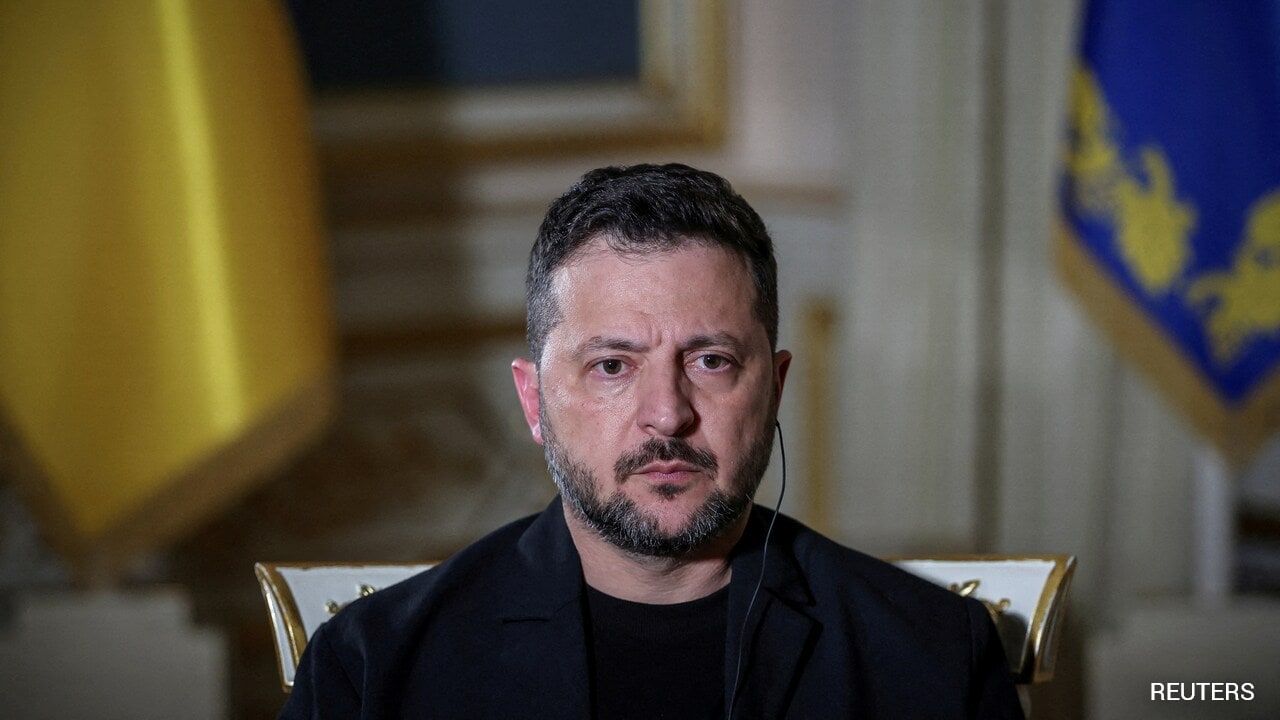
President Volodymyr Zelenskyy stood before reporters recently with a tired, flinty resolve etched into his features, drawing a sharp, unyielding line in the frozen mud. If the fragile, unwritten understanding of an energy ceasefire—a tacit agreement to spare the electrical veins pumping life into civilian homes—is broken again by Moscow, the response will be immediate. It will be symmetric. It will match the severity of the darkness being forced upon millions of innocent people.
Consider what happens when the lights go out permanently in a modern metropolis. The water pumps stop. The hospitals switch to emergency diesel that begins to run dangerously low. Elevators freeze mid-shaft. Traffic lights die, plunging icy intersections into a chaotic, silent ballet of headlights and skidding tires. This is not a political abstraction. It is a mother boiling snow on a camp stove in a stairwell. It is a surgeon operating by the flickering beam of a smartphone.
When Zelenskyy issues that warning, he is speaking for the invisible millions whose lives hang in the balance of these diplomatic chess moves. He is not just talking about megabits of power or high-voltage lines. He is talking about the fundamental right to exist without freezing in your own living room.
The strategy behind an energy truce is as fragile as thin spring ice. On paper, keeping power plants off the target list sounds like a humanitarian baseline. In reality, it is a constantly shifting calculus of deterrence. Trust is a scarce commodity when air raid sirens wail three times a day. Every missile intercepted by a Patriot battery is a gamble won; every missile that slips through is a hospital plunged into blackness.
History shows us that targeting civilian infrastructure during winter is an ancient siege tactic, updated for the twenty-first century with hypersonic precision. But history also shows that cold anger is a terrible thing to awaken in a population that has already decided it has nothing left to lose.
When the power fails, humanity does not vanish; it concentrates. Neighbors who barely nodded in the hallway now share thermoses of hot tea. Schools basement shelters transform into makeshift community centers where children draw pictures by flashlight. The sheer audacity of continuing to live, to teach, to bake bread, and to hold elections under the threat of annihilation is the true front line.
Zelenskyy's ultimatum is a recognition of this brutal reality. It tells the aggressor that destruction is no longer a one-way street. If the generators of Kyiv, Kharkiv, and Odesa are forced to silence, the cost will echo back across the border. It is a grim deterrent, born of necessity, forged in ice.
The wind howls against the window frames tonight. Somewhere in the eastern sectors, a technician in a heavy flak jacket and a hardhat climbs a shattered pylon in the freezing dark, wrenching live wires back together with numbing fingers, chasing a spark of light against the coming dawn.