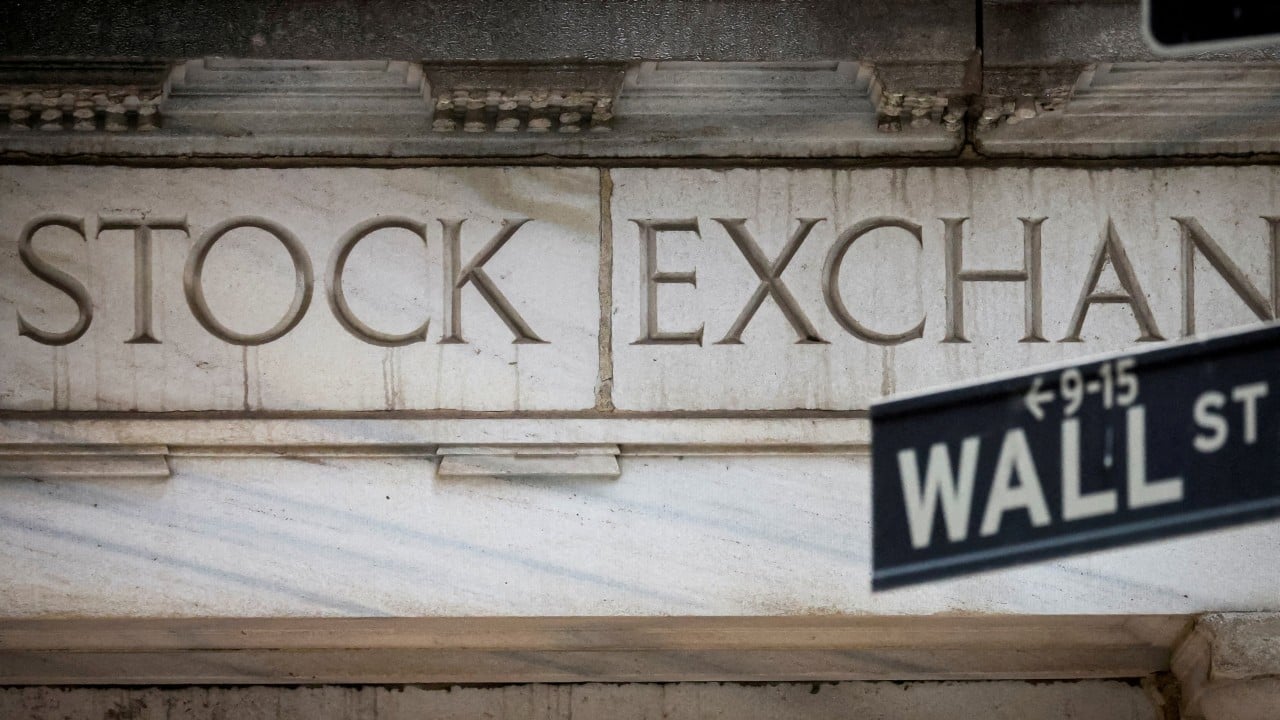
The air inside the trading floor usually smells of stale espresso and nervous sweat, but on Tuesday afternoon, it just felt cold.
Sarah Miller didn't look at the flashing red numbers on her terminal. She looked at her hands. They were shaking, just a little, the caffeine finally losing its war against adrenaline. For eighteen months, her job as a mid-level portfolio manager at a prominent Manhattan fund had been simple, almost boring. You bought anything with the letters "AI" attached to it, you went to lunch, and you watched the client dashboards turn a radiant, comforting green.
Then came the opening bell.
By noon, the tech-heavy Nasdaq was bleeding. By 3:00 PM, the slide had deepened into a full-scale rout, dragging the S&P 500 down with it. It wasn’t a flash crash. It wasn't a sudden, catastrophic hack or a declaration of war. It was something far more terrifying for Wall Street: a collective, quiet realization that the math simply didn’t add up.
For nearly two years, the stock market had been operating on pure faith. Investors had poured billions into companies promising to reinvent the human experience with artificial intelligence. But on this day, the quarterly earnings reports started arriving like uninvited dinner guests demanding to see the receipts. The revenue wasn't there. The infrastructure costs were astronomical.
The magic had run into a wall of brick-and-mortar reality.
The Cost of the Cloud
To understand why a few software companies can erase hundreds of billions of dollars in market value in a single afternoon, you have to look away from Manhattan. You have to travel to places like Council Bluffs, Iowa, or the flatlands of northern Virginia.
There, sitting in former cornfields, are giant, windowless concrete warehouses. They are data centers, the physical manifestation of the digital cloud. Inside them, tens of thousands of specialized computer chips—graphics processing units, or GPUs—are humming. They run so hot that they require millions of gallons of water just to keep from melting.
Every time a user asks an AI chatbot to write a recipe or generate a picture of a golden retriever wearing a space helmet, a tiny fraction of that machinery fires up. It is an incredibly expensive process. A traditional internet search costs a fraction of a penny in electrical power. An AI query can cost ten to thirty times that amount.
Consider a hypothetical company we will call NexusGroup. For the past year, NexusGroup’s stock price soared by 300 percent based on the promise of their new AI assistant. Analysts calculated the stock price as if every office worker in America would soon pay twenty dollars a month for the tool.
But when NexusGroup published its financial results, a dark truth emerged. While millions of people were using the free trial, almost no one was upgrading to the paid tier. Meanwhile, NexusGroup’s bill from the data center providers had doubled. They were spending five dollars in computing power to generate two dollars in actual revenue.
Multiply that dynamic across the entire corporate landscape, and you begin to see why Wall Street suddenly panicked. Investors looked at the massive capital expenditure—the sheer volume of money being spent on chips and servers—and asked a basic question: When do we get our money back?
The answer from the tech giants was vague. Soon, they said. Trust us.
Wall Street decided it was done with trusting.
The Ghost in the Valuation
The problem with a market built on a narrative is that narratives are fragile. They require constant feeding.
During the dot-com boom of the late 1990s, companies with no revenue were valued at billions simply because they had ".com" in their name. The belief was that "eyeballs" and web traffic would eventually magically transform into profit. We know how that story ended. The internet did change the world, absolutely, but ninety percent of the companies that promised to lead that revolution went bankrupt before the change arrived.
History isn't repeating itself exactly, but it is rhyming. The companies at the center of the current AI boom are not hollow shells; many are highly profitable tech titans with massive cash reserves. But their stock prices had been bid up to levels that assumed flawless, exponential growth for the next decade.
When a stock trades at fifty or sixty times its annual earnings, there is no room for error. A slight delay in a product launch, a minor shift in corporate spending, or a sudden rise in electricity costs can trigger an avalanche.
That is what Sarah Miller watched happen on her screen. The selling started with the chipmakers—the companies supplying the picks and shovels for the AI gold rush. If the software companies aren't making money from AI, they will stop buying chips. If they stop buying chips, the chipmakers' sky-high valuations evaporate.
By 2:30 PM, the contagion had spread to bank stocks, consumer goods, and manufacturing. When the tech sector catches a cold, the rest of the market goes into the intensive care unit. Margins were called. Algorithms, programmed to sell automatically when certain price thresholds are crossed, took over, accelerating the decline with cold, mathematical precision.
The Human Toll of the Red Numbers
It is easy to view a market slide as a victimless abstraction, a game played by wealthy people in tailored suits who can afford to lose. But the stock market is ultimately just a giant mirror reflecting human anxiety and collective future expectations.
Think of Robert, a fifty-eight-year-old high school history teacher in Ohio. He doesn't own individual tech stocks. He doesn't know what a GPU is, and he has never used an AI chatbot in his life. But his state pension fund is heavily invested in the S&P 500. When the index drops three percent in a single day, Robert’s hypothetical retirement date moves a few months further into the distance.
Think of the twenty-something software engineers in Silicon Valley who moved across the country six months ago, lured by stock options that looked like a ticket to generational wealth. Today, those options are "underwater," worth less than the price they were granted at, while the cost of their rent remains stubbornly high.
This wasn't just a correction of numbers; it was a correction of human expectations. The collective euphoria that had gripped the financial world since late 2022 was burning off, leaving behind the cold gray morning of reality. The realization was dawning that the timeline for AI transformation was going to be measured in decades, not quarters.
The Long Road to Utility
True technological revolutions are slow, messy, and deeply unsexy.
When the internal combustion engine was invented, it didn't instantly replace the horse. It took decades of building roads, establishing supply chains for gasoline, and rewriting traffic laws before the automobile transformed society. The initial investors in early car companies almost all lost their shirts. The wealth was made by the people who came later, build on the standardized infrastructure.
AI will likely follow the same path. The technology is real, and its potential to optimize logistics, discover new pharmaceuticals, and automate tedious tasks is undeniable. But the current business model—spending billions to train massive models that tell jokes or write emails—is fundamentally unsustainable at current energy and hardware costs.
The market slide was not a sign that AI is a fraud. It was a sign that the market had confused the starting line with the finish ribbon.
As the closing bell finally rang, a strange silence fell over Sarah’s office. The final tickers showed the worst single-day loss for tech stocks in over a year. The television screens on the wall showed commentators dissecting the carnage, their voices muted.
Sarah reached for her jacket. She walked out of the building and stepped onto the crowded sidewalk of midtown Manhattan. Around her, thousands of people were rushing toward subway stations, peering at their smartphones, completely unaware of the digital tremors that had just shaken the foundations of the global economy.
A man in front of her was using his thumb to scroll through a feed, his face illuminated by the pale glow of the screen. He was interacting with an algorithm that had been adjusted, refined, and monetized by the very forces that had just caused a panic three blocks away. He didn't care about the capital expenditures of data centers or the price-to-earnings ratio of chip manufacturers. He just wanted to know if his train was on time.
The math had caught up with the magic, but the world kept moving anyway, indifferent to the billions that had vanished into the ether, waiting for the reality to finally match the dream.


