The floor of the New York Stock Exchange is rarely quiet, but there is a specific kind of silence that precedes a panic. It is not the absence of sound; it is the absence of rhythm. It is the sound of ten thousand breaths held in unison, a collective pause as the world waits to see if the arteries of global commerce have finally hardened into a permanent clot.
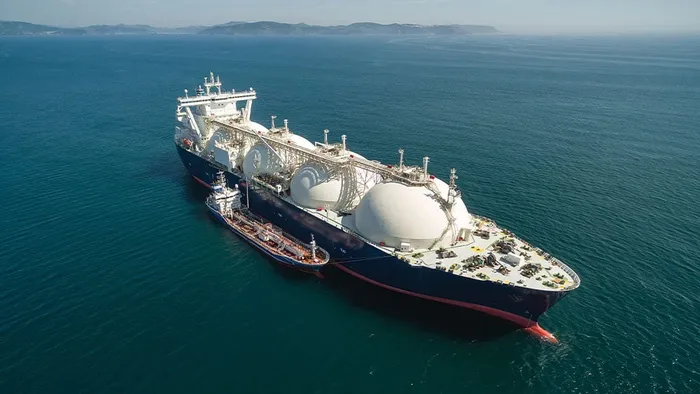
For days, the Strait of Hormuz—a narrow, jagged strip of blue water through which the lifeblood of the modern world flows—had been a chokehold. We watched the maps. We tracked the tankers. We saw the oil prices climb with a sickening, vertical momentum that signaled one thing: the party was over. For a deeper dive into this area, we suggest: this related article.
Then, the signal changed.
The Strait was open. Not partially. Not tentatively. Completely. For additional context on the matter, in-depth analysis can also be found at Forbes.
What followed was a 900-point explosion on the Dow Jones Industrial Average. On paper, it was a data point, a green arrow on a flickering screen. In reality, it was the sound of a trillion dollars of anxiety evaporating in a single afternoon.
The Ghost in the Machine
To understand why a few miles of water in the Middle East can make a retiree in Ohio lose sleep over their 401(k), you have to look past the ticker symbols.
Think of the global economy as a massive, intricate clock. Most of us only see the hands moving. We see the price of a gallon of gas or the cost of a plane ticket. But behind the face of that clock is a series of interconnected gears, and the largest, heaviest gear is oil. When that gear jams, the friction spreads instantly.
Consider a hypothetical logistics manager named Sarah. She oversees a fleet of trucks in the Midwest. For Sarah, the "tensions in the Strait" aren't a political talking point. They are a mathematical nightmare. When oil prices spike because a tanker might be seized, Sarah's fuel surcharges skyrocket. She has to tell her clients that shipping their goods will now cost 15% more. Those clients—the toy manufacturers, the grocery wholesalers, the pharmaceutical tech firms—then have to decide whether to eat that cost or pass it on to you.
Usually, they pass it on.
When the news broke that the Strait was "completely open," that friction vanished. The gear began to turn smoothly again. Crude oil prices, which had been bloated by a "war premium"—the extra dollars added simply because traders were scared—began to slide. It wasn't just a drop in price; it was a return to gravity.
The 900-Point Exhale
The Dow’s 900-point surge was not driven by some sudden discovery of new wealth. No one found a mountain of gold. No one invented a new technology that morning. Instead, the market reacted to the removal of a shadow.
Investing is, at its heart, an exercise in predicting the future. When the Strait of Hormuz was under threat, the future was a dark room filled with sharp edges. You don't run in a dark room; you shuffle. You keep your hands close to your chest. You sell your stocks and buy "safe" assets like gold or treasury bonds.
But when the lights flick back on, you run.
The sheer velocity of the 900-point rise tells us more about the depth of our fear than the strength of our fundamentals. It shows just how much capital had been sitting on the sidelines, trembling. Traders who had bet against the market—the "shorts"—were forced to cover their positions, adding even more fuel to the upward fire. It was a feedback loop of relief.
The Invisible Bridge
We often treat "The Market" as a cold, calculating machine, but it is actually the most emotional entity on the planet. It is a giant, communal nervous system.
When oil falls, the psychological relief is immediate. It’s the feeling of a heavy backpack being lifted off your shoulders after a ten-mile hike. Lower oil prices mean lower shipping costs, which mean lower inflation, which means the Federal Reserve might finally stop leaning so hard on interest rates.
It’s all connected. The water in the Strait of Hormuz acts as a bridge between the physical world of tankers and the abstract world of high-frequency trading. When that bridge is clear, the world feels smaller, safer, and more predictable.
But there is a lingering ghost in this story.
The volatility we witnessed—the swing from paralyzing dread to euphoric buying—reminds us of how fragile this entire construction really is. We are a civilization built on a foundation of "just-in-time" delivery and thin margins. We rely on the assumption that the narrow places of the world will stay open, that the people in power will choose commerce over conflict, and that the oil will keep flowing.
The Cost of Certainty
We like to think we are in control. We check our investment apps, we read the quarterly reports, and we make our little plans. Yet, our entire financial well-being can be dictated by a few miles of coastline half a world away.
The 900-point rise was a victory, certainly. It restored billions in value to pension funds and savings accounts. It signaled a temporary truce between chaos and order. But the intensity of the rally should also be a warning. It reveals a world that is profoundly on edge, a world where the difference between a bull market and a crash is a single naval directive or a whispered rumor in a distant capital.
As the trading bell rang to close the session, the screens were a sea of vibrant green. The tension had broken. Sarah, our hypothetical fleet manager, could look at her spreadsheets and see a path forward that didn't involve an emergency surcharge. The retiree in Ohio could stop checking the price of gold.
The crisis of the moment had passed. The lifeblood was moving again.
But as the sun sets over the NYSE, the silence returns—not the silence of panic, but the quiet, watchful stillness of a world that knows exactly how close it came to the edge, and how easily it could find itself there again tomorrow.
The tankers are moving. The numbers are up. For now, the world is breathing.