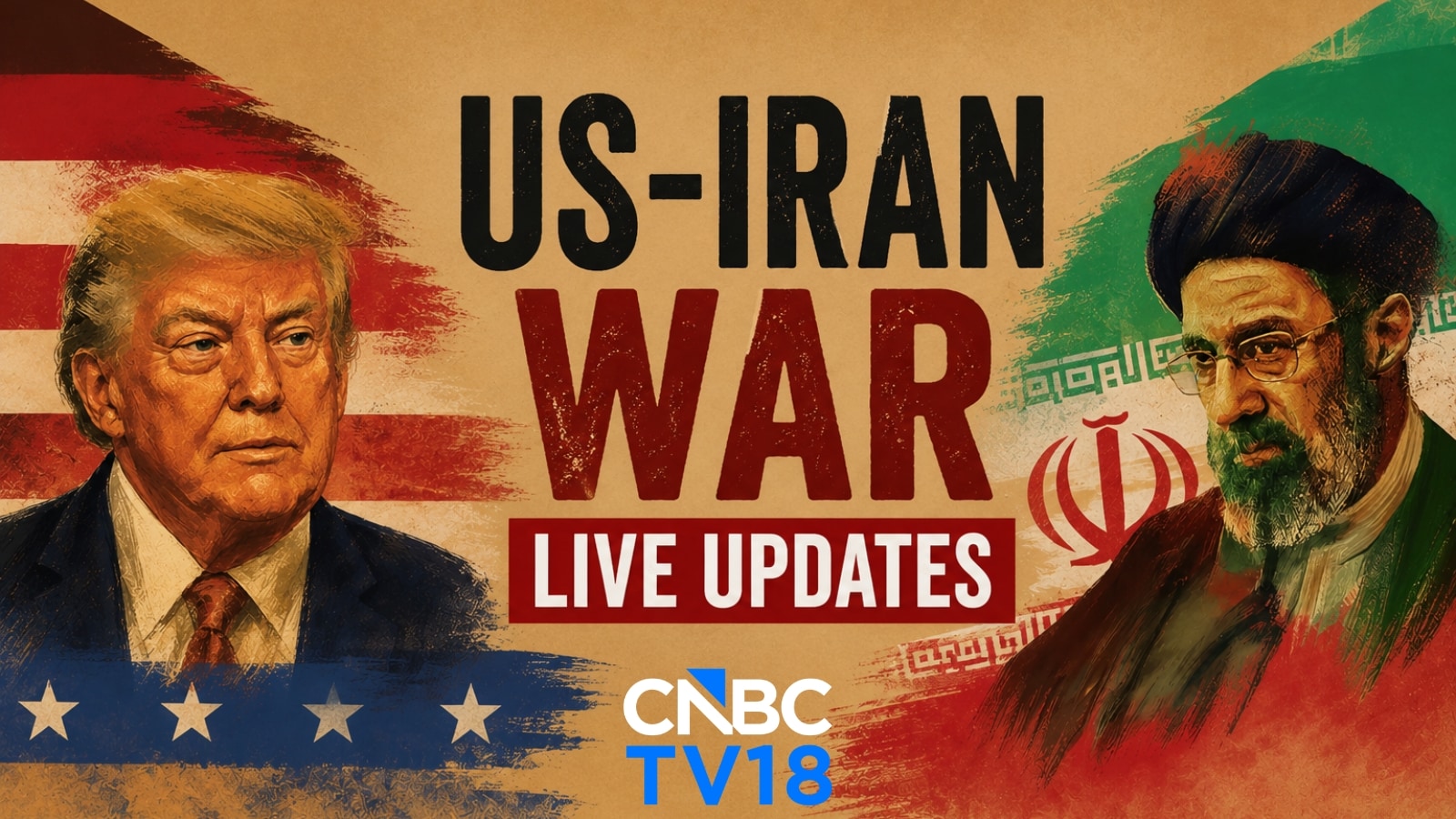
President Donald Trump’s November 9, 2026 declaration that the military conflict with Iran is "effectively over" following White House consultations with Qatari Prime Minister Sheikh Mohammed bin Abdulrahman bin Jassim Al Thani does not signify a formal cessation of hostilities. Instead, it marks a deliberate shift from kinetic bombardment to an asymmetric containment regime anchored by a naval blockade of the Strait of Hormuz and coercive diplomatic signaling. Standard wire reports treat the president's briefing room remarks and subsequent Truth Social posts as a straightforward pivot toward peace. That interpretation misses the structural mechanics of coercive diplomacy. By declaring the kinetic phase complete while maintaining economic strangulation and demanding permanent nuclear neutralization, Washington is attempting to lock in territorial and military gains achieved during Operation Epic Fury without incurring the domestic or economic costs of an open-ended occupation or renewed aerial campaign.
The Architecture of Coercive Termination
To understand why the administration characterizes an active naval blockade and stalled diplomatic track as an "effectively over" war, analysts must separate kinetic attrition from strategic coercion. Over the roughly nine months since joint US and Israeli forces initiated Operation Epic Fury, aerial strikes degraded Iranian command-and-control nodes, air defense networks, and missile production facilities—prompting Trump to assert that the Islamic Republic has been militarily "decapitated". Yet military degradation does not automatically produce political capitulation.
The administration's current posture rests on three distinct operational pillars:
- Kinetic Suspension as Cost Control: Resuming large-scale bombardment after the November 2026 US midterm elections carries diminishing marginal military returns alongside escalating macroeconomic risk. Having already neutralized high-value fixed targets, further airstrikes yield less strategic value per sortie while threatening global energy markets and alienating Gulf partners whose infrastructure remains vulnerable to retaliatory drone and missile salvos.
- Maritime Interdiction as Asymmetric Leverage: While aerial strikes have paused, the US military continues to enforce a naval blockade in the Strait of Hormuz. In strategic terms, this shifts the conflict from high-cost kinetic expenditure to low-cost economic attrition. Washington retains the ability to throttle Iranian commercial inflows and hydrocarbon exports indefinitely without deploying ground forces.
- Conditional Status Quo Enforcement: When Trump states that Washington is "just keeping it the status quo" and deems renewed strikes "quite unlikely" because Gulf states favor stability, he is establishing a conditional deterrent. The status quo is not peace; it is a suspended state of war in which Tehran faces immediate punitive escalation if it attempts to break the maritime cordon or reconstitute its nuclear infrastructure.
The Doha Intermediary Mechanism and Signaling Asymmetry
Standard news coverage frequently reduces Qatar’s role to that of a generic mediator facilitating "positive momentum". In practice, Doha operates as an indispensable backchannel buffer that manages signaling asymmetry between two states lacking formal diplomatic relations. Sheikh Mohammed bin Abdulrahman bin Jassim Al Thani’s November 9 meetings with Trump and Vice President JD Vance—followed by late-November engagements with Vance and Secretary of State Marco Rubio—highlight the structural necessity of Qatari mediation.
Doha's utility stems from three structural realities:
- Shared Hydrocarbon Vulnerability: Qatar shares the massive offshore North Dome/South Pars natural gas field with Iran. Any kinetic escalation in the Persian Gulf directly threatens Qatari liquefied natural gas exports and fiscal stability, giving Doha an acute incentive to prevent miscalculation.
- Credible Message Transmission: Because Washington and Tehran operate under severe domestic political constraints, direct public concessions are fatal to both leaderships. Qatar provides a deniable conduit through which red lines regarding the Strait of Hormuz blockade and nuclear verification can be transmitted without triggering immediate public backlash.
- Regional Consensus Aggregation: Gulf Cooperation Council states have absorbed the economic shockwaves and retaliatory missile risks of the nine-month conflict. When Trump cites Gulf preferences for maintaining the status quo, he is utilizing Doha’s diplomatic framing to justify a pause in US military operations to domestic audiences who might otherwise view a halt in bombing as incomplete victory.
However, public statements immediately following the November 9 White House meeting expose a sharp divergence in how each side defines the negotiating baseline. While Trump cited "positive momentum" and Sheikh Mohammed expressed gratitude for constructive discussions on advancing US-Iran talks, Iranian security council chief Mohsen Rezaei publicly dismissed reports of progress. Rezaei accused Washington of manufacturing narratives around "imaginary talks" and demanded US capitulation to Tehran's seven preconditions.
This contradiction is not merely rhetorical noise; it illustrates the core bargaining dilemma of war termination. Washington is attempting to translate battlefield dominance into a permanent nuclear settlement—ensuring Iran's nuclear program is permanently "defanged"—before lifting maritime restrictions. Tehran, conversely, refuses to negotiate under the duress of a naval blockade, viewing any concession made while its ports are interdicted as regime-threatening surrender.
Nuclear Latency Versus Physical Destruction
The central analytical flaw in declaring the war "militarily effectively over" lies in the distinction between destroying physical infrastructure and eliminating nuclear latency. Kinetic campaigns can collapse tunnel entrances, destroy centrifuge cascades, and assassinate senior commanders. They cannot erase indigenous scientific knowledge, covertly stockpiled fissile material, or dispersed manufacturing blueprints.
This creates an acute verification bottleneck:
- The Intelligence Deficit: Once aerial bombardment ceases and international inspectors remain absent or restricted, Washington loses real-time visibility into surviving underground facilities.
- The Breakout Incentive: Having suffered severe conventional military degradation, surviving elements within Iran's security apparatus face heightened incentives to pursue a covert nuclear deterrent as the ultimate guarantee against future decapitation strikes.
- The Enforcement Trap: If intelligence indicators suggest Iran is reconstituting enrichment capabilities in hardened sites, the White House faces a binary choice between accepting a nuclear-capable adversary or shattering its own "war is over" narrative by launching a new, potentially protracted military campaign.
Macroeconomic Transmission and Market Mispricing
Financial and energy markets routinely misinterpret executive declarations of conflict termination by conflating the cessation of airstrikes with the normalization of trade routes. In the current environment, the primary drag on regional economic output is not active bombardment, but the persistent maritime blockade of the Strait of Hormuz and the accompanying risk premiums on commercial shipping.
As long as the US Navy enforces interdiction protocols and Iranian officials threaten military action to break the cordon, war-risk insurance rates for tankers transiting the Persian Gulf remain structurally elevated. Supply chains do not reset based on White House press briefings; they reset when naval assets stand down and port clearance times return to pre-conflict baselines. Treating the November 9 statement as a signal of full regional normalization ignores the ongoing economic warfare occurring at sea.
Limitations of the Status Quo Strategy
Relying on an indefinite, uncodified ceasefire backed by a naval blockade carries severe operational vulnerabilities. First, maritime blockades are historically unstable over multi-month horizons. Every vessel boarded or turned back creates a tactical friction point where a localized clash between US naval forces and Islamic Revolutionary Guard Corps fast-attack craft can escalate rapidly into renewed theater-wide conflict.
Second, diplomatic ambiguity erodes coalition discipline. As weeks pass without a formal framework, commercial pressure mounts on European and Asian importers to seek waivers or circumvent US maritime restrictions, weakening the economic leverage Washington relies upon to force Tehran to the negotiating table. Third, internal political dynamics in Tehran—particularly following leadership losses—create command-and-control fragmentation, increasing the risk that rogue or decentralized military units initiate unauthorized strikes against Gulf energy infrastructure or US bases.
Strategic Forecast and Positioning
The conflict has not ended; it has transitioned into a brittle phase of coercive stalemate. Neither Washington nor Tehran possesses a viable path to impose its maximalist terms without incurring unacceptable costs. Consequently, the most probable trajectory over the next 90 to 180 days is an unstable equilibrium characterized by continued Qatari shuttle diplomacy, sporadic maritime incidents in the Persian Gulf, and persistent covert intelligence operations targeting Iran's residual nuclear supply chain.
Decision-makers across defense, energy, and sovereign risk sectors must anchor their planning to operational indicators rather than executive rhetoric. Specifically, monitor three hard metrics to detect a genuine shift from coercive stalemate to durable settlement:
- Naval Posture Modifications: A measurable reduction in US carrier strike group deployments and interdiction patrols in the Strait of Hormuz, signaling a willingness to trade blockade leverage for diplomatic concessions.
- Verification Access Protocols: Formal Iranian agreement to grant International Atomic Energy Agency inspectors unrestricted access to surviving nuclear sites and fissile material inventories.
- Escrow and Sanctions Relief Mechanisms: The establishment of Qatari-managed financial channels facilitating limited humanitarian or hydrocarbon transactions as a confidence-building precursor to direct talks.
Until at least two of these three structural indicators materialize, treat the "effectively over" designation strictly as a tactical pause in kinetic operations rather than a resolution of the underlying strategic conflict.
For further context on how regional diplomats and security analysts are evaluating the stalled negotiations and ongoing maritime blockade following the White House talks, see Al Jazeera's report on Trump's remarks.