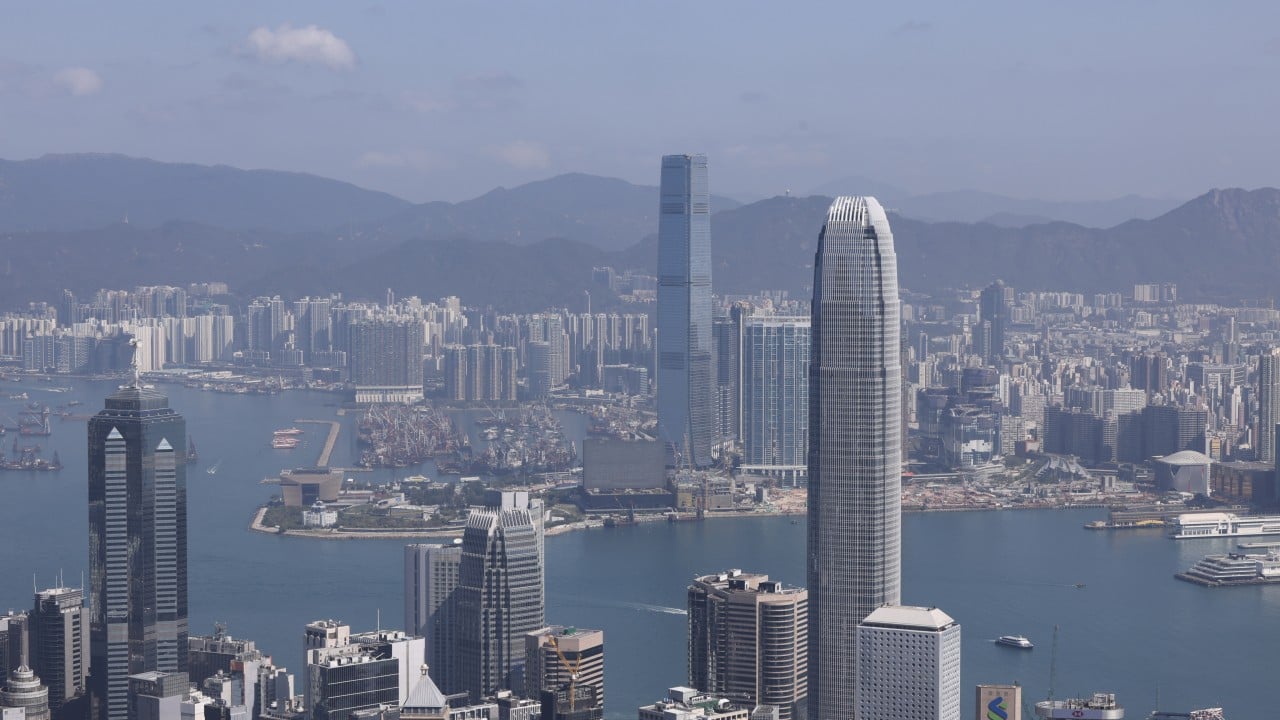
The glass-and-steel dominance of Hong Kong’s Central district has long been a global barometer for commercial real estate health. But a quieter, more desperate struggle is unfolding in the secondary districts like Sheung Wan, Wanchai, and North Point. Here, the "Grade B" and "Grade C" office towers—the backbone of the city’s small-business ecosystem—are facing a vacancy crisis that no amount of rent-cutting can fix. Small-scale landlords, many of whom have held these properties through decades of booms and busts, are now abandoning the office model entirely. They are gutting cubicles and ripping out server wires to make room for bunk beds and communal kitchens. This is not a creative evolution. It is a survival tactic born of a market where office demand has hit a structural dead end.
For the first time in modern history, Hong Kong’s vacancy rate for commercial space is hovering at record highs, with over 13 million square feet sitting empty. Small landlords are the hardest hit. Unlike the corporate giants like Hongkong Land or Swire Properties, these individual owners lack the deep pockets to wait out a five-year market slump. They are pivoting to student hostels and flexible co-working spaces because the traditional long-term corporate lease is effectively dead for the smaller player.
The Mirage of the Post Pandemic Recovery
The assumption that workers would simply return to the office and restore the status quo was the first mistake. While Hong Kong’s commute times are short and its apartments are notoriously cramped—factors that should favor office work—the underlying economic shift has been more profound. Multinationals are downsizing, moving to "hub-and-spoke" models, or exiting the city for Singapore. This creates a trickle-down disaster. When a major bank leaves a Grade A tower, the mid-sized law firm that served them moves into the vacancy at a discount. The small accounting firm that occupied the Grade B space then moves up, leaving the smallest landlords at the bottom of the food chain with nothing but empty floors and rising maintenance fees.
These landlords are now staring at a reality where their assets are liabilities. Converting to a student hostel or a co-working hub is an expensive, bureaucratic nightmare involving strict building codes, fire safety regulations, and zoning changes. Yet, it is increasingly the only way to generate cash flow.
The Student Hostel Gold Rush
The most aggressive pivot is toward the education sector. With the Hong Kong government aiming to double the quota for non-local students at public universities, the city is facing a chronic shortage of beds. Small office buildings located near university clusters or major transit lines are being reimagined as "co-living" spaces specifically for mainland Chinese students.
The math is simple but brutal. A 2,000-square-foot office floor in a secondary building might struggle to command $30 per square foot in the current market, and finding a tenant could take six months. Divide that same floor into eight high-end "study suites" with shared facilities, and the effective yield can jump significantly. Students, or rather their parents, are willing to pay a premium for security and proximity to campus in a way that struggling startups simply cannot.
However, this isn't a plug-and-play solution. Transforming an office into a residence requires a change of use permit from the Buildings Department. You have to deal with plumbing for individual bathrooms, ventilation requirements that office windows weren't designed for, and the "Daylight Rule" which dictates how much natural light a sleeping quarters must receive. Many owners find that the cost of these renovations—often reaching millions of dollars—eats into their projected profits for the first five years.
Co working as a Holding Pattern
For those who can’t afford a full residential conversion, co-working is the fallback. But the co-working market in Hong Kong is already oversaturated. The era of WeWork-style "community managers" and free beer is over. What remains is a cutthroat commodity market where landlords are essentially acting as short-term operators.
By offering daily desks or monthly hot-desks, landlords are trying to capture the "slashie" economy—freelancers and small e-commerce entrepreneurs who don't want a three-year commitment. The problem is that co-working requires active management. A landlord who used to collect one check a month must now manage cleaning crews, high-speed internet outages, and a revolving door of tenants who might disappear at any moment. It is a high-effort, low-margin business that many aging landlords are ill-equipped to handle.
The Hidden Cost of the Pivot
There is a broader risk to this shift that the market is ignoring. As these small office buildings disappear, the "entry-level" commercial space for local businesses vanishes with them. Historically, Hong Kong’s entrepreneurial spirit was fueled by the availability of cheap, gritty office spaces where a two-person team could start a trading company or a design boutique. By converting these spaces into student housing, the city is effectively trading its commercial future for a temporary housing solution.
We are seeing a permanent shrinking of the commercial footprint. Once a building is converted to residential or specialized hostel use, it rarely goes back. The infrastructure changes are too deep. This creates a "missing middle" in the property market. If the economy rebounds, small businesses will find themselves priced out of the Grade A spaces and unable to find the humble Grade C spots that once lined the streets of Wanchai.
Financial Pressure and the Interest Rate Trap
The catalyst for this sudden urgency is the interest rate environment. Many of these small landlords are leveraged. When rates were near zero, an empty floor was a nuisance. Now, with mortgage payments spiked, an empty floor is a slow-motion foreclosure.
Banks are also becoming less patient. A vacant office building is a "non-performing" asset in the eyes of a credit committee. By converting to a hostel or co-working space, the landlord can show "active" income, even if the margins are slim. It keeps the bank at bay. It is a defensive play, not an offensive one.
The Regulatory Logjam
The government’s role in this transition has been reactive at best. While there are talks of "streamlining" the conversion process, the reality on the ground is a thicket of red tape. A landlord trying to convert an old industrial or office building into a hostel must navigate the Home Affairs Department’s hotel and guesthouse licensing, which is notoriously stringent.
If the city truly wants to solve its office vacancy problem and its student housing shortage simultaneously, it needs a radical overhaul of zoning laws. As it stands, the pivot is only available to those with the capital to fight the bureaucracy. The smallest owners, those who own a single floor in a split-title building, are stuck. They cannot convert their floor if the rest of the building remains commercial. They are the "zombie" landlords of the New Hong Kong—holding onto assets that the market no longer wants, unable to change, and waiting for a recovery that looks more like a mirage every day.
The shift we are seeing isn't a sign of a healthy, adapting market. It is the sound of a structural floor collapsing. Landlords aren't choosing to enter the hospitality business because they have a passion for it; they are doing it because the office market has left them behind. The future of Hong Kong’s skyline might look the same from the outside, but inside, the desks are being replaced by beds, and the corporate ambition is being replaced by the simple need to stay solvent.
Check the fire-safety certification and the "Change of Use" filing before signing a lease on any "converted" space.