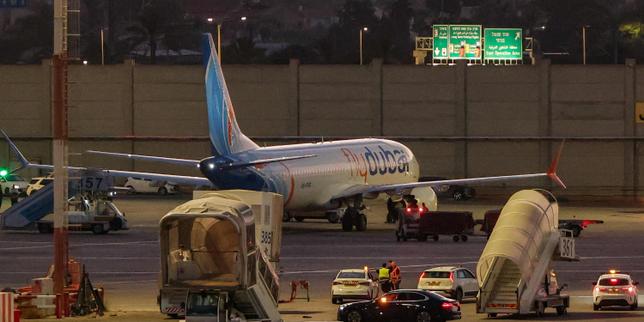
In modern aviation safety analysis, public media coverage of sudden altitude loss events frequently conflates sensationalized flight path visualizations with actual aerodynamic and mechanical failure mechanisms. When digital flight tracking data visualizes a rapid descent or abrupt altitude deviation, the immediate public reaction focuses on the perceived terror of the trajectory rather than the systematic parameters governing aircraft control systems, spatial orientation, and pilot response loops. Deconstructing an incident involving a transport-category aircraft requires separating raw positional data from telemetry realities, examining how flight control laws interact with environmental factors, and evaluating the engineering redundancies designed to mitigate catastrophic outcomes.
The Taxonomy of Altitude Deviations
An abrupt altitude loss, often characterized colloquially as a dive, is rarely an unprompted trajectory change. Modern commercial airliners operate within complex envelopes governed by flight management computers, electronic flight instrument systems, and automated flight control systems. When an anomaly occurs, it typically stems from one of three primary vectors: sensor input corruption, environmental phenomena such as severe wind shear or wake turbulence, or transient anomalies within the flight control logic.
The primary challenge in interpreting public flight path graphics lies in the interpolation methods used by consumer-facing flight tracking platforms. These services aggregate data transponded via Automatic Dependent Surveillance-Broadcast signals. ADS-B transmissions broadcast aircraft position, altitude, and velocity at discrete intervals, but the path between these points is interpolated. A momentary drop in transponder reliability or an erroneous altitude reporting packet can create the visual illusion of an extreme vertical excursion even when the aircraft's actual inertial reference system experienced a stable, controlled correction.
To quantify the severity of any vertical profile anomaly, analysts must examine vertical speed vectors, load factor changes, and control surface deflection data extracted from the flight data recorder. Without these variables, a visual flight path animation serves merely as a qualitative indicator of spatial displacement over time, stripping away the critical context of airspeed, angle of attack, and engine thrust states.
System Architecture and Control Laws
Transport aircraft equipped with computerized flight control systems operate under distinct control laws that govern stability augmentation and flight envelope protection. In the case of narrowbody twin-engine airliners like the Boeing 737 MAX, the integration of automated augmentation systems introduces specific operational interactions between the flight crew and the aircraft's pitch authority.
When an uncommanded pitch down or rapid altitude deviation is initiated, the sequence of events follows a strict timeline dictated by human-machine interface limits and system response times.
- Trigger Phase: An initial stimulus disrupts normal flight parameters, whether through erroneous angle of attack sensor data, asymmetric thrust, or localized atmospheric disturbances.
- System Response Phase: Automated stabilization systems or autopilot functions react based on programmed algorithms, potentially introducing control surface movements designed to restore nominal flight attitude.
- Crew Recognition and Intervention Phase: Flight crew members identify the deviation through primary flight displays, cross-reference instrument indications, and execute established emergency or non-normal checklists to override automated inputs and manually command pitch recovery.
The velocity of this sequence leaves narrow margins for error. In high-altitude cruise configurations, the margin between low-speed buffet boundaries and high-speed Mach tuck is compressed. A sudden altitude loss executed to regain optimal airspeed or escape adverse weather requires precise energy management. Converting potential energy into kinetic energy through a descent is a standard aerodynamic maneuver, but when executed rapidly without explicit pilot intent, it represents a breakdown of normal operational predictability.
The Cost Function of Human Factors in Crisis Management
The efficacy of flight crew response during an unexpected trajectory excursion depends heavily on cognitive load management and sensory integration. Pilots rely on vestibular, visual, and instrumental cues to maintain spatial orientation. When sudden turbulence or rapid attitude changes induce vestibular illusions, the reliance on flight instruments becomes paramount.
The cognitive cost function in these scenarios involves balancing immediate kinetic recovery against system diagnostics. Pilots cannot afford prolonged diagnostic loops when altitude is decaying rapidly; the immediate imperative is positive control recovery. This necessitates robust training regimens focused on upset recovery techniques, manual reversion procedures, and the immediate decoupling of automated systems when anomalous behavior is detected.
Furthermore, communication protocols within the flight deck dictate that one pilot maintains aircraft control while the other manages navigation and systems status. A breakdown in this task-sharing framework during a rapid descent exacerbates the risk of over-control or conflicting inputs, highlighting the necessity of structured cockpit resource management.
Regulatory Oversight and Structural Verification
Following significant incidents involving flight control anomalies, regulatory bodies such as the Federal Aviation Administration and the European Union Aviation Safety Agency enforce rigorous re-evaluations of system software, sensor redundancy, and training requirements. The certification process for modern fly-by-wire and hybrid control systems relies on fault-tree analysis and probabilistic risk assessment to ensure that single-point failures cannot propagate into catastrophic outcomes.
When a systemic vulnerability is identified, remediation strategies typically encompass software updates to refine control law thresholds, hardware modifications to enhance sensor diversity, and mandatory simulator training updates to ensure flight crews recognize and mitigate specific failure modes instantly.
Systemic safety in commercial aviation is not achieved through the elimination of risk, but through the continuous reduction of failure probability and the enhancement of system resilience. Publicly available flight path visualizations provide a starting point for public awareness, but true safety assessments require rigorous metallurgical, telemetric, and operational analysis conducted by certified accident investigation boards.
To prevent future anomalies from escalating into critical emergencies, operators must prioritize continuous sensor health monitoring, enhance real-time telemetry streaming to ground-based engineering support teams, and refine simulator scenarios to mirror complex multi-system interaction failures. The ultimate metric of safety remains the continuous, predictable execution of the flight envelope under all operating conditions.