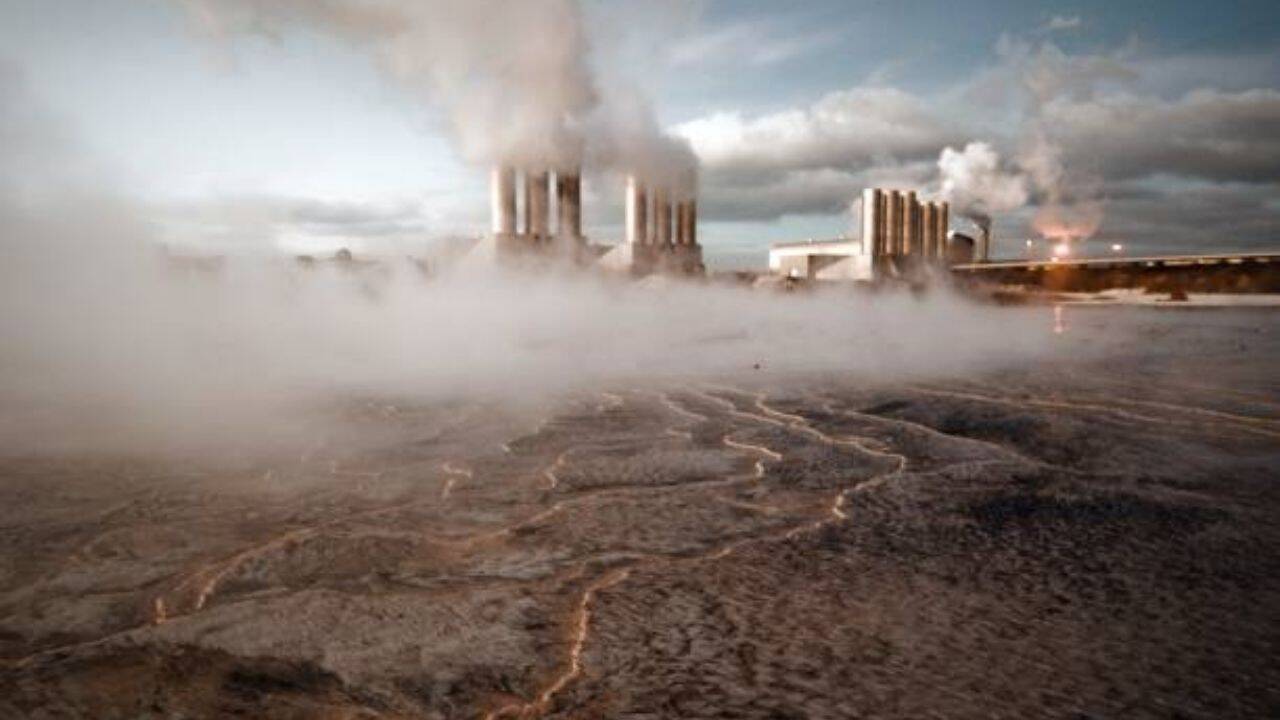
For decades, the energy industry treated the Earth's crust below five kilometers as an unpayable debt. Traditional mechanical drill bits, forged from tungsten carbide and industrial diamonds, simply surrender when they encounter basement granite heated beyond 400 degrees Celsius. Teeth shear off. Bearings weld themselves shut. Mud systems boil away into caustic vapor long before they can cool the assembly.
Then came the announcement of a massive financial influx into a sector long dismissed as a pipe dream. Quaise Energy, an MIT spinoff developing microwave-directed energy drilling, closed a $180 million Series B funding round, bringing its total backing to $280 million. The syndicate includes heavy hitters like Prelude Ventures, Japanese energy giants JERA and Idemitsu Kosan, and crucially, Nabors Industries, one of the largest land drilling contractors on the planet. Their target is Project Obsidian in Oregon, an ambitious attempt to construct the world’s first commercial superhot geothermal plant by vaporizing rock rather than scraping it.
The premise sounds revolutionary, almost science fictional. Yet beneath the press releases and venture capital enthusiasm lies an engineering gauntlet that has broken better minds and deeper pockets over the last half-century.
The Physics of Contactless Boreholes
To understand why this funding round matters, you have to look past the dollar figures and examine the physics. Traditional drilling relies on brute-force mechanical friction. You spin a heavy string of steel pipe miles long, press a bit against the formation, and crush the rock.
At five kilometers down, mechanical drilling fails because of thermal softening. High temperatures alter the crystal structure of quartz and feldspar, causing granite to behave less like a brittle solid and more like a viscous plastic. Instead of fracturing neatly under a rotating cutter, the rock yields and smears.
Millimeter-wave drilling sidesteps this physical limitation entirely. Developed from fusion research at the MIT Plasma Science and Fusion Center, the system uses a gyrotron—a high-power microwave generator—to beam electromagnetic energy down a waveguide. This beam does not cut the rock; it melts and vaporizes it on contact. The resulting gases are swept out of the borehole by circulating fluids or gases, leaving behind a vitrified, glass-lined wall that requires no steel casing for structural stability.
A gyrotron cares nothing for the hardness of the formation. Whether it encounters cold sedimentary layers or molten-adjacent basement rock at 500 degrees Celsius, the electromagnetic absorption rate remains high enough to drive phase change.
The Obsidian Calculus
Project Obsidian aims to tap into high-grade geothermal anomalies south of Oregon's Newberry volcano, where a favorable thermal gradient brings extreme heat closer to the surface than it sits beneath standard continental crust. While normal locations require digging deep into stable, cold shields, places with high geothermal gradients offer a shortcut.
Yet locating a plant near a volcanic zone is a calculated compromise. Volcanic geology is notoriously fractured, unpredictable, and corrosive. Supercritical water—water pushed past its critical point of 374 degrees Celsius and 22 megapascals—is a universal solvent. It carries up to ten times the energy density of normal steam, making a single superhot well capable of replacing multiple conventional gas or geothermal wells.
However, supercritical fluids also dissolve surrounding minerals and transport them upward, where pressure drops cause rapid mineral precipitation. This phenomenon, known as scaling, can choke surface piping systems within weeks if geochemical mitigation protocols fail. The engineering challenge shifts immediately from drilling the hole to surviving the fluid output.
The Oil and Gas Lifeline
The inclusion of Nabors Industries in this funding round tells the real story of how this technology might actually scale. Startups rarely possess the operational muscle to manage heavy logistics in remote, forested wilderness like the Deschutes National Forest. Nabors brings land rigs, automated pipe-handling systems, and decades of institutional knowledge in wellbore design.
The transition strategy relies on a hybrid approach. A conventional rig handles the upper, low-temperature sedimentary layers using standard rotary techniques because microwaves are inefficient in soft, shallow, water-saturated topsoil. Once the operation reaches the hard basement granite, the conventional rig swaps its bit assembly for the microwave waveguide and gyrotron package.
This marriage of oilfield infrastructure and advanced directed energy bridges a cultural divide. The petroleum sector possesses the exact assets required to build a geothermal renaissance—iron, pipe, telemetry, and roughnecks—but lacks the green mandate. Clean energy startups have the climate mandate and the breakthrough physics, but lack the logistical supply chains.
The Unspoken Hurdles
Despite the capital infusion, skeptics within the geothermal community point to historical precedents that counsel patience. In the 1970s and 1980s, the United States Department of Energy funded the Fenton Hill project in Newmew Mexico, attempting to engineer enhanced geothermal systems in hot dry rock. That project ultimately stalled due to massive water losses through subsurface fractures and the sheer cost of maintaining circulation loops in abrasive, high-temperature environments.
Scaling millimeter-wave technology from a 100-meter test trench in Central Texas to a five-kilometer commercial production well in Oregon introduces scale-dependent variables that computer models cannot fully predict. Waveguide attenuation over long distances, high-frequency power losses, and the precise management of plasma plumes inside a closed, pressurized borehole at depth remain engineering unknowns.
Furthermore, regulatory friction in public lands near national monuments guarantees lengthy environmental reviews and potential litigation from conservation groups concerned about hydrological disruption. Capital buys hardware, but it cannot purchase swift administrative approvals in sensitive ecosystems.
If Project Obsidian succeeds, it decouples geothermal energy from geography entirely, turning a niche regional power source into a globally scalable baseload option that could rival nuclear fission without the waste profile. If it falters, it will join a long line of noble thermodynamic crusades defeated by the sheer stubbornness of the Earth's crust. The drill bit is dead, but the deep earth has not yet surrendered its secrets.