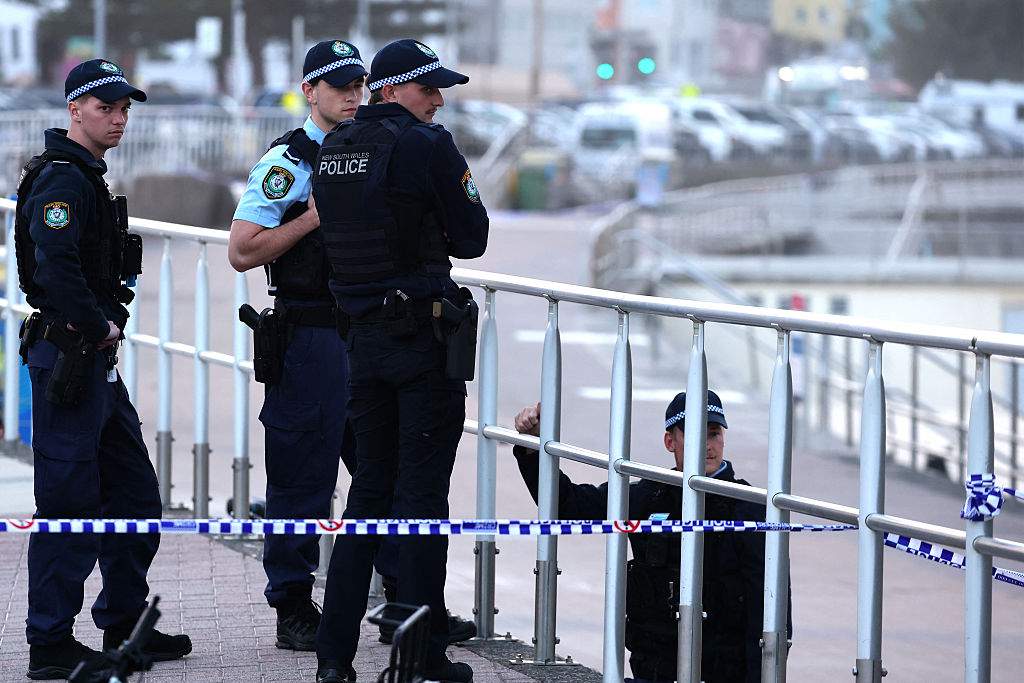
Nearly a year after a mass shooting at Bondi Beach shattered one of Australia’s most recognizable public spaces, an elderly Holocaust survivor wounded in the attack has died from complications linked to his injuries. The death transforms an already grim crime scene into a delayed homicide investigation and exposes a massive blind spot in how modern societies measure the true human cost of mass violence.
When gunfire erupts in a crowded coastal suburb, the public ledger of casualties is usually closed within forty-eight hours. News cycles move on. Memorials are erected, politicians offer statements about resilience, and police task forces file preliminary charges. Yet for victims who survive the initial trauma—particularly elderly individuals whose bodies already carry the physical weight of decades—the real battle often begins months after the yellow police tape comes down.
The Medical Reality of Delayed Gunfire Fatalities
To understand why a gunshot victim dies nearly twelve months after an assault, you have to look beyond the initial emergency room triage. Modern trauma surgery is remarkably efficient at keeping people alive during the "golden hour" immediately following a shooting. Surgeons can clamp severed arteries, resect damaged bowel tissue, and stabilize catastrophic blood loss with a speed that would have been unthinkable thirty years ago.
Survival on the operating table, however, is not the same thing as recovery. High-velocity projectiles do not merely punch clean holes through tissue; they create temporary cavitation waves that bruise organs, shatter bone into microscopic fragments, and introduce deep-seated bacterial contamination.
In an older patient, the physiological reserve required to heal from these secondary injuries is severely limited. A single bullet wound to the torso or extremities frequently triggers a cascade of systemic failures. Extended hospital stays lead to muscle wasting, hospital-acquired infections, blood clots, and severe pneumonia. When a Holocaust survivor—someone who already endured the extreme nutritional and psychological deprivation of mid-century Europe—suffers ballistic trauma in their eighties or nineties, their immune system is pushed past its breaking point.
Sepsis and organ failure are the silent killers in these scenarios. A patient may be discharged to a rehabilitation facility, listed in stable condition, and quietly forgotten by the broader public, all while fighting chronic infections that antibiotics can no longer contain. When their heart finally stops eleven months later, the death certificate may list respiratory failure or cardiac arrest, masking the reality that a bullet fired nearly a year prior pulled the trigger.
How the Legal System Handles Late-Stage Deaths
From a prosecutorial standpoint, a death occurring months after an attack triggers an immediate, complex shift in legal strategy. Under common law jurisdictions in Australia, the historic "year and a day" rule—which once barred murder charges if a victim survived longer than 366 days after an assault—has long been abolished. Today, prosecutors can upgrade attempted murder or grievous bodily harm charges to murder regardless of how much time has passed, provided they can establish a direct causal link.
Establishing that link is rarely straightforward. Defense attorneys routinely argue that an elderly victim’s death was the result of pre-existing medical conditions, advanced age, or negligent post-operative care rather than the original gunshot wound.
Forensic pathologists must therefore conduct exhaustive autopsies to prove medical causation. They have to trace an unbroken chain of physiological events from the moment the projectile entered the body to the exact mechanism of death. If a victim developed a fatal blood clot because a shattered pelvis left them bedridden, the law generally views the shooter as legally responsible. If the victim died of an unrelated stroke while recovering, the murder charge becomes much harder to sustain.
This legal limbo places an immense burden on grieving families. Instead of finding closure at a sentencing hearing, relatives are forced to endure prolonged coronial inquests, re-opened police investigations, and renewed media scrutiny just as they are attempting to bury their loved ones.
The Unique Weight of Surviving Twice
There is a specific, agonizing irony in surviving the systematic extermination campaigns of the 1940s only to be gunned down in a peaceful Australian beachside community decades later. Australia, and Sydney in particular, absorbed one of the highest per-capita populations of Holocaust survivors outside of Israel after World War II. For thousands of European Jews, the coastline of New South Wales represented permanent sanctuary—a place where state-sponsored terror and sectarian violence could never reach them.
When violence breaches that sanctuary, the psychological damage extends far beyond the immediate victims. Researchers studying intergenerational trauma have long noted that aging survivors often experience a resurgence of post-traumatic stress symptoms late in life, particularly when confronted with physical vulnerability, hospitalization, or public hostility.
Being shot in a public attack forces a survivor to relive the helplessness of their youth in their final months of life. Hospital rooms, intravenous lines, and the loss of bodily autonomy can trigger severe psychological distress, which in turn suppresses immune function and accelerates physical decline. The mind and the body do not separate trauma into neat clinical categories.
Security Failures and the Illusion of Safe Spaces
Bondi Beach is not a hardened military target or a high-security government building. It is an open, sprawling public promenade designed for leisure, tourism, and community life. That openness is precisely what makes coastal hubs and public squares so difficult to secure without turning them into armed fortresses.
Following high-profile attacks in Australia—from the 1996 Port Arthur massacre that reshaped national gun laws to more recent knife and firearm assaults in Sydney—law enforcement agencies have leaned heavily on rapid-response tactical units and expanded surveillance networks. Bollards have been installed along pedestrian walkways. CCTV cameras monitor major intersections. Police patrols have become more visible during major public gatherings.
Yet physical infrastructure cannot neutralize every threat, particularly when attackers target soft spaces with little warning. Australia maintains some of the strictest firearm regulations in the developed world, requiring rigorous background checks, genuine reasons for ownership, and mandatory waiting periods. Despite these barriers, illegal firearms continue to circulate through organized crime networks, and individuals intent on mass harm still find ways to acquire lethal weapons or exploit gaps in mental health monitoring.
The uncomfortable truth that security officials rarely state publicly is that absolute safety in an open society is a myth. Policing strategies can reduce response times from ten minutes to three, and intelligence agencies can disrupt coordinated plots, but a lone actor or small group can still inflict catastrophic damage before the first siren is heard.
The Blind Spot in Victim Compensation and Long-Term Care
While headlines focus on the criminal investigation, survivors who linger between life and death face a bureaucratic labyrinth that is poorly equipped to handle prolonged recovery. State-run victim compensation schemes are typically designed around predictable timelines. They cover immediate funeral expenses, short-term counseling, and a capped amount for lost wages or pain and suffering.
They are notoriously inadequate for catastrophic, multi-year medical care. When a victim requires round-the-clock nursing, specialized wound care, home modifications, and complex pharmaceutical regimens for a year before passing away, families often find themselves fighting insurance adjusters and government caseworkers while simultaneously managing hospice care.
The financial and emotional exhaustion of this prolonged caregiving phase is almost entirely invisible to the public. By the time a delayed fatality makes the news again—reduced to a brief wire story noting that the death toll has risen by one—the victim’s family has already spent months navigating a fragmented healthcare and legal system alone.
Rewriting the Record of a Massacre
When a mass casualty event occurs, history tends to freeze the narrative at the moment the shooting stops. The official toll becomes a static number repeated in anniversaries and Wikipedia entries. Adding a name to that list nearly a year later disrupts that neat historical packaging.
It forces authorities to amend indictments, compels journalists to revisit a story they thought was finished, and reminds the public that bullet wounds do not operate on a news cycle. A man who escaped the darkest chapter of modern European history spent his final twelve months fighting a quiet, agonizing war in a Sydney hospital bed—a casualty whose name was simply written into the ledger late.