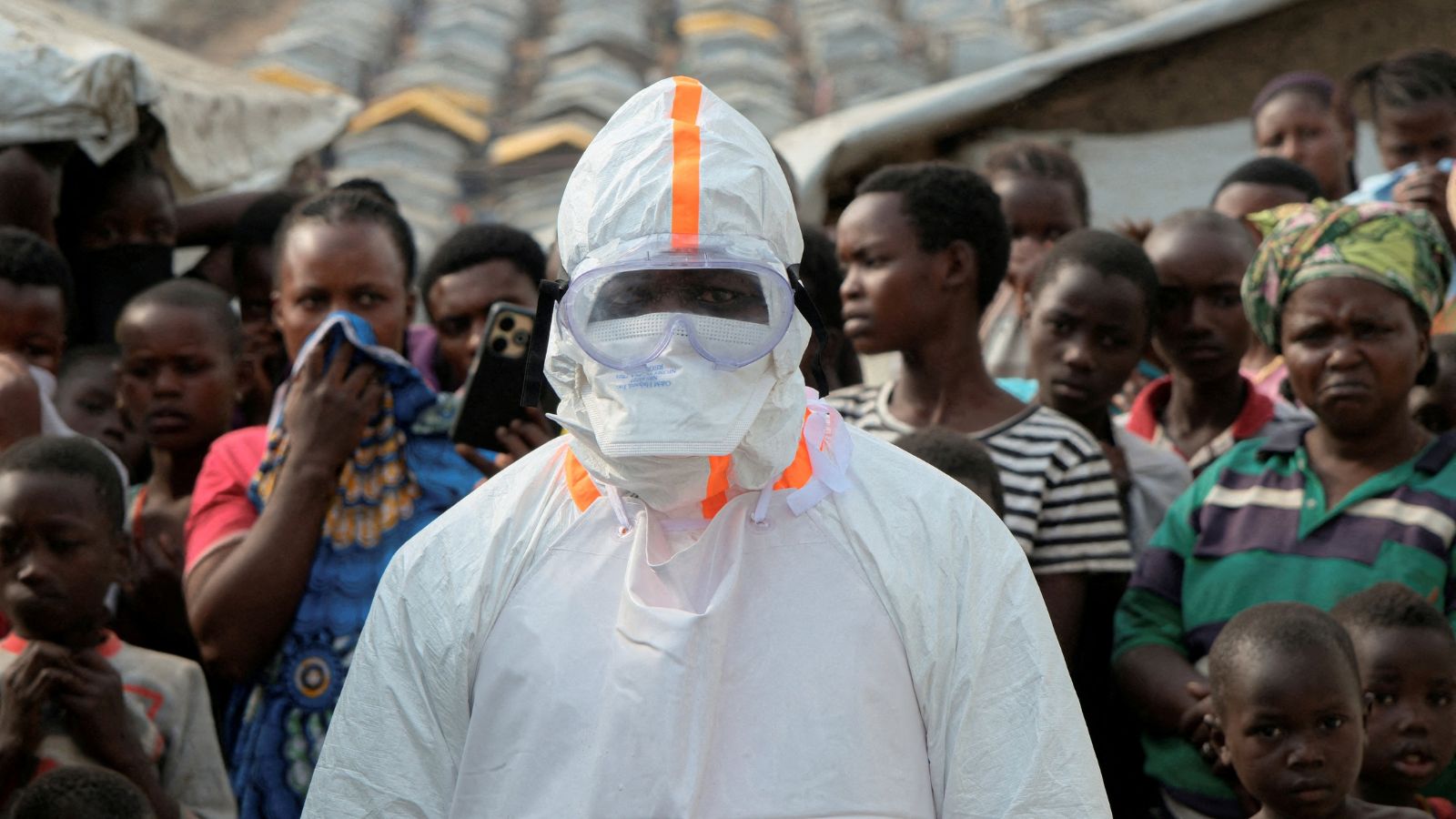
The announcement by the Africa Centres for Disease Control and Prevention to deploy the Zaire Ebola vaccine against an active outbreak driven by the Bundibugyo strain in the Democratic Republic of Congo marks a high-stakes turning point in modern epidemic management. With over 1,800 fatalities recorded from nearly 4,000 confirmed cases since May, public health authorities are no longer waiting for bespoke, strain-matched immunizations to clear the glacial pipeline of clinical trials. Instead, they are betting on cross-reactive immunity. It is a pragmatic strategy born of absolute necessity, executed across five restless provinces in the eastern and northeastern sectors of the DRC.
Cross-border contagion dynamics and mineral-rich conflict zones have historically turned these regions into epidemiological flashpoints. Yet the fundamental problem driving this current emergency is biological mismatch.
The Science of Strain Mismatch
Orthoeobolaviruses are notoriously unforgiving. The species that causes Ebola disease is divided into distinct variants, with the Zaire ebolavirus species historically standing out as the most lethal, yet ironically possessing the most advanced counter-measures. Conversely, the Bundibugyo variant—the culprit behind the current disaster in the DRC—has long lacked an approved, shelf-ready vaccine.
When an outbreak scales vertically at an unprecedented rate, epidemiologists face a stark operational chasm. Designing, testing, and manufacturing a pathogen-specific vaccine takes years, even under expedited emergency pathways. Clinical trials for a dedicated Bundibugyo vaccine are currently crawling through early phases internationally, with results months or years away from deployment scale.
The Africa CDC's solution involves stretching an existing tool past its original design specifications.
[Target Pathogen: Bundibugyo Strain]
       vs.
[Deployed Defense: Zaire-Tailored Ervebo / Therapeutics]
       =
[Calculated Cross-Reactive Immunity Strategy]
Jean Kaseya, director general of the agency, pointed to observational data indicating that while recipients of the Zaire-targeted vaccine may still manifest mild symptoms, the intervention has demonstrated a profound zero-death threshold among vaccinated cohorts in prior observational contexts. Protection does not necessarily mean absolute sterilization of the virus; rather, it represents a biological buffer that converts a catastrophic, fatal hemorrhagic fever into a survivable immune battle.
Logistics in the Combat Zone
Deploying medical countermeasures across North Kivu and Ituri is an exercise in structural friction. These territories are fractured by longstanding armed insurgencies, fractured infrastructure, and profound community distrust born of decades of neglected institutional support.
Cold-chain maintenance remains an ongoing nightmare. The Zaire vaccine options often require ultra-low temperature storage networks that strain the limits of rural health posts. Transporting sensitive biologicals across active conflict lines requires delicate negotiations with local militias, state actors, and international logistics coordinators.
Compounding the vaccine strategy, public health officials are leaning heavily on therapeutic expansion—specifically remdesivir. The therapeutic playbook draws direct inspiration from Uganda's recent, successful containment model. Ugandan health ministries managed to suppress a parallel spillover event, holding their case fatality rate down significantly through aggressive early administration of therapeutics. Replicating that success in the chaotic theater of eastern Congo requires moving beyond static treatment centers into nimble, mobile diagnostic units that can confirm cases within an hour at border crossings and transit hubs.
The Regulatory Precipice
The decision to cross-apply a vaccine outside its licensed indication forces regulatory bodies into uncomfortable territory. Standard medical governance is built on meticulous, slow-motion certainty. Emergency outbreak response demands immediate action under conditions of radical uncertainty.
When death tolls climb by the dozen daily, regulatory caution transforms from a safeguard into an impediment. The Africa CDC is effectively rewriting the operational handbook on compassionate-use emergency deployment, prioritizing real-world survival outcomes over rigid, single-strain regulatory orthodoxy.
Skeptics will note that cross-protection remains an imperfect shield. Immune responses stimulated by a Zaire-targeted vector may not offer the sterilizing immunity that a matched vaccine would provide. Viral clearance could be slower, and breakthrough infections, while milder, still present ongoing transmission risks within densely populated displacement camps and mining settlements.
Yet waiting for perfection is a luxury reserved for stable environments. In the densely populated valleys of the Kivus, the virus moves faster than the bioreactors can brew a custom antigen. The Zaire rollout is an imperfect firewall, but as the bodies pile up against the constraints of traditional medical timelines, it is the only wall available.