Imagine standing in the quiet, echo-filled corridors of the Apostolic Palace. The air is cool, smelling faintly of ancient stone and beeswax candles. You are carrying the weight of a superpower on your shoulders. Your boss, the President of the United States, has just publicly accused the man you are about to meet of endangering over a billion souls.
This is the reality for Secretary of State Marco Rubio.
A practicing Catholic, Rubio must navigate a diplomatic tightrope. His destination: a private audience with Pope Leo XIV, the first American-born pontiff. His mission: to mend a fractured relationship. But before Rubio could even board his flight to Rome, Donald Trump lit a match and tossed it directly onto the altar of Vatican diplomacy.
When Rome Collides with Washington
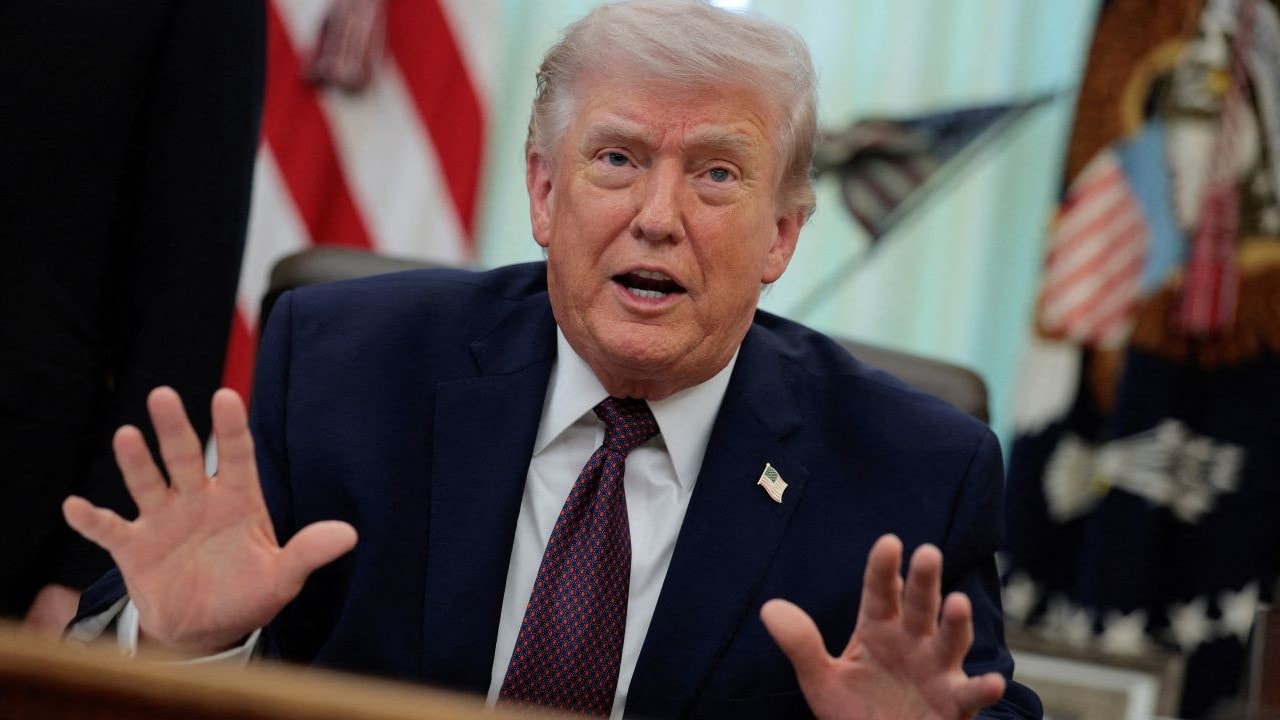
The trouble didn't start yesterday. The tension between the White House and the Holy See has been simmering for months. It boiled over during an interview with conservative radio host Hugh Hewitt. Trump targeted the Pope, claiming that Leo would "rather talk about the fact that it’s OK for Iran to have a nuclear weapon."
"I think he's endangering a lot of Catholics and a lot of people," Trump declared.
It was a staggering accusation. The Vatican has spent decades advocating for global nuclear disarmament. For the head of the Catholic Church, a nuclear weapon is not a bargaining chip; it is an affront to creation.
But Trump’s rhetoric has a way of bypassing established history. In his view, the Pope’s vocal opposition to the U.S.-Israel war in Iran, and his pleas to spare civilian lives, are equivalent to endorsing a nuclear-armed Tehran.
The Pope, currently staying at the papal summer residence of Castel Gandolfo, did not stay silent. On a quiet Tuesday morning, standing outside the residence, Leo addressed the press. His voice was calm, but his message was sharp.
"Should anyone want to criticize me for proclaiming the Gospel, they should do so with the truth," Leo said. "For years the Church has spoken out against all nuclear weapons, so there's no doubt about it, there."
The Human Cost of a Holy War
This is not just a battle of press releases. It is a deeply personal conflict that reverberates from the halls of Rome to the voting booths of America.
Consider a hypothetical voter: Clara, a lifelong Catholic living in suburban Pennsylvania. She voted for Trump because of his economic policies, but she attends Mass every Sunday. She views the Pope not as a foreign politician, but as the Vicar of Christ on Earth. When Trump attacks the Pope, Clara is forced to choose between her political identity and her spiritual home.
She is not alone. A recent Washington Post-ABC News-Ipsos poll revealed that nearly six in ten Americans had a negative reaction to Trump's claims about the Pope. For a president facing upcoming midterm elections, alienating Catholic voters is a dangerous gamble.
Yet, Trump’s attacks have only grown more personal. Last month, he labeled the Chicago-born pontiff "weak on crime" and "terrible on foreign policy." This was in response to Leo's criticism of the administration’s immigration and deportation policies.
The online escalation reached surreal heights. Trump shared—and later deleted—an AI-generated image depicting himself in a Jesus-like form. When questioned, he claimed he thought the image was of him acting as a doctor. The Vatican, understandably, was not amused.
The Man in the Middle
Now, consider Marco Rubio.
He is a man of deep faith, a Cuban-American who has spent his career balancing his loyalty to his country with his loyalty to his church. He has been sent to Rome to fix a mess he didn't create.
In public, Rubio is doing what he always does: translating Trump's blunt-force trauma into diplomatic prose. Speaking to reporters at the White House, Rubio tried to soften the blow. He argued that Trump’s anger simply stems from a deep frustration that anyone would tolerate the idea of a nuclear Iran.
"I think most people cannot understand why anyone would think that it's a good idea for Iran to ever have a nuclear weapon," Rubio said.
It was a valiant effort to shift the spotlight, but the spotlight remains firmly on the rift. When Rubio sits down with Pope Leo at 11:30 a.m. on Thursday, the half-hour meeting will be thick with unspoken tension. They are scheduled to discuss humanitarian aid in Cuba and religious freedom, but the ghost of Trump’s tweets will be sitting at the table.
The diplomatic fallout is already spreading. Italian Prime Minister Giorgia Meloni, usually a staunch ally of the American administration, took exception to Trump's attacks on the Pope. In response, Trump lashed out at her, turning his ire toward Italy and other NATO allies. Italian Foreign Minister Antonio Tajani went so far as to call Trump's remarks "neither acceptable nor helpful to the cause of peace."
The Unseen Stakes
Why does this matter?
In a world fractured by conflict, the Vatican remains one of the few global institutions capable of quiet, back-channel mediation. From the Cold War to the reopening of Cuba, the Holy See has often brokered peace when secular governments could not talk to one another.
By burning this bridge, the White House risks isolating itself from a vital diplomatic ally.
When the doors of the Apostolic Palace close on Thursday, Rubio will not just be speaking for the United States. He will be trying to salvage a relationship built over centuries, threatened by a news cycle that moves too fast to care about grace, history, or the quiet weight of the soul.