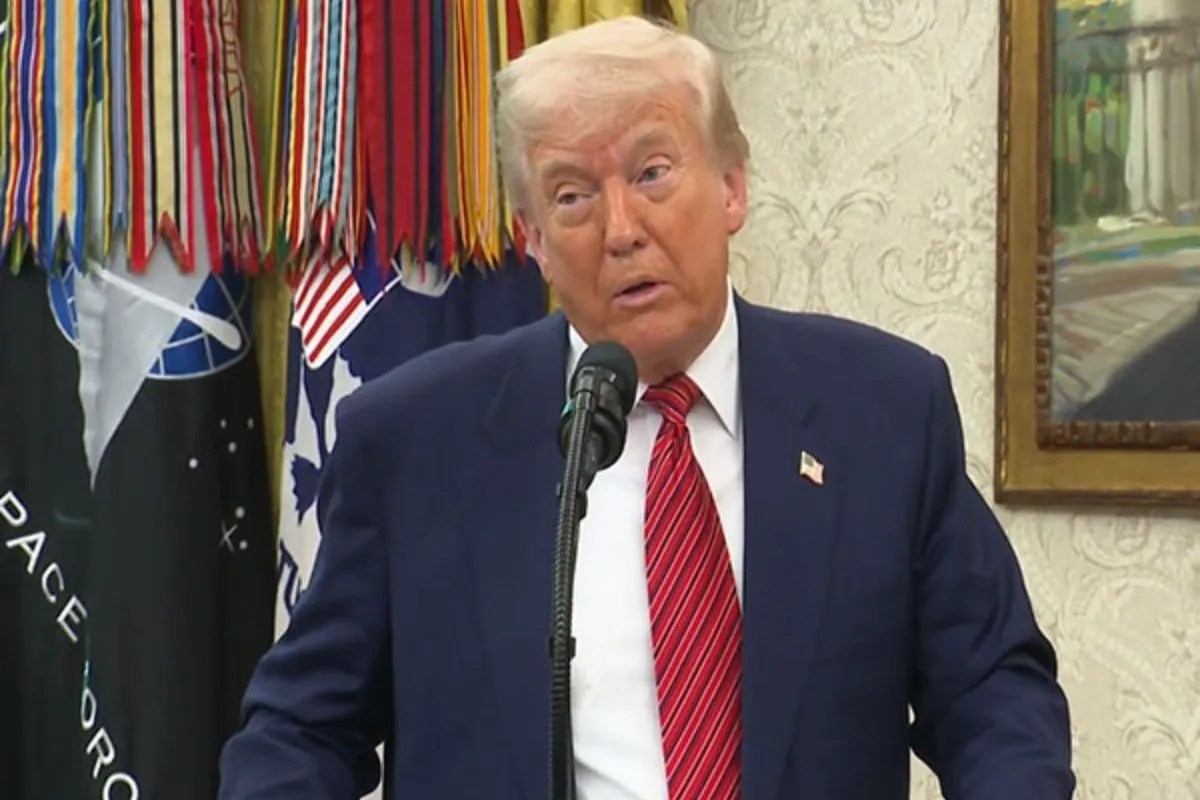
Foreign policy assertions made by high-profile political figures frequently rely on aggregated numerical milestones to project administrative efficacy. Evaluating claims regarding the resolution of multiple international disputes requires analyzing the structural mechanics of crisis management, sovereign incentives, and the limits of external mediation. Executive rhetoric concerning diplomatic interventions across eight distinct geopolitical flashpoints—ranging from South Asia to the Middle East—demonstrates a recurring pattern of attributing complex, structural cessations of hostilities directly to single-office negotiation strategies.
Deconstructing this administrative ledger necessitates examining the friction points between public diplomatic claims and the empirical reality of protracted state-level conflicts. Diplomatic interventions generally operate across three distinct tiers: structural arbitration, temporary tactical ceasefires, and deterrence-based stalemate management. Examining how these tiers apply across multiple regional flashpoints clarifies the mechanics of modern statecraft.
The Taxonomy of State-Level Friction
Disputes such as those between India and Pakistan or Israel and Iran are rooted in foundational territorial, ideological, and security dilemmas that span decades or centuries. External mediation in these environments typically encounters structural barriers that routine bilateral talks fail to dissolve.
Territorial and Sovereignty Disputes
Conflicts involving contested borders, such as those between India and Pakistan, Armenia and Azerbaijan, or Cambodia and Thailand, are characterized by zero-sum calculations. In these scenarios, domestic political survival depends on maintaining an unyielding posture regarding territorial integrity. When an external actor claims to "settle" such a conflict, the intervention usually manifests as an enforced cooling-off period or a temporary cessation of active kinetic exchanges rather than a permanent resolution of the underlying sovereignty claims. The structural reality remains unchanged: the incentive architecture that generated the initial escalation persists beneath the surface calm.
Proxy and Hegemonic Rivalries
In theatres defined by ideological or regional hegemony, such as the friction between Israel and Iran or regional proxy matrices in the Middle East and Africa, bilateral compromise is heavily constrained by security competition. External leverage in these environments relies heavily on economic coercion, secondary sanctions, or credible security guarantees provided to allied states. Assertions of having resolved these tensions often confuse the suppression of open warfare with the transformation of regional security architecture. Deterrence manages symptoms; it rarely alters the root causes of systemic hostility.
The Economics of Diplomatic Credit Attribution
In modern political communication, the distance between tactical de-escalation and strategic resolution is frequently compressed for maximum narrative impact. When executive offices evaluate their own foreign policy portfolios, several recurring variables influence how international events are categorized:
- The Speed-to-Resolution Bias: Short-term border skirmishes or brief escalatory cycles that burn out organically are frequently framed as triumphs of active personal diplomacy.
- The Deterrence Fallacy: Maintaining a posture of strategic ambiguity or imposing maximum-pressure economic sanctions is often equated with a permanent settlement of hostilities, even when the adversary continues long-term strategic competition through asymmetric means.
- Domestic Narrative Utility: International diplomatic claims are optimized for domestic political consumption, where nuanced diplomatic failures are difficult to quantify, but numerical milestones provide clear talking points for public evaluation.
Structural Limits of Executive Mediation
The assertion that an individual leader can systematically resolve complex geopolitical conflicts ignores the institutional and historical weight governing sovereign states. Realist international relations theory suggests that enduring peace requires a fundamental shift in the distribution of power or a shared interest in institutionalized stability. When external pressure is applied primarily through transactional deal-making or punitive economic measures, compliance is often temporary. Once the mediating pressure diminishes or leadership changes within the disputing nations, state actors typically revert to historical security postures.
Evaluating the validity of large-scale diplomatic claims requires separating operational de-escalation from structural resolution. While targeted diplomatic interventions can successfully interrupt active escalation cycles and prevent immediate humanitarian catastrophes, they rarely alter the structural imperatives that drive sovereign states toward conflict. Permanent stability relies on institutional frameworks, regional security architectures, and verified compliance mechanisms that outlast any single administration's tenure.


