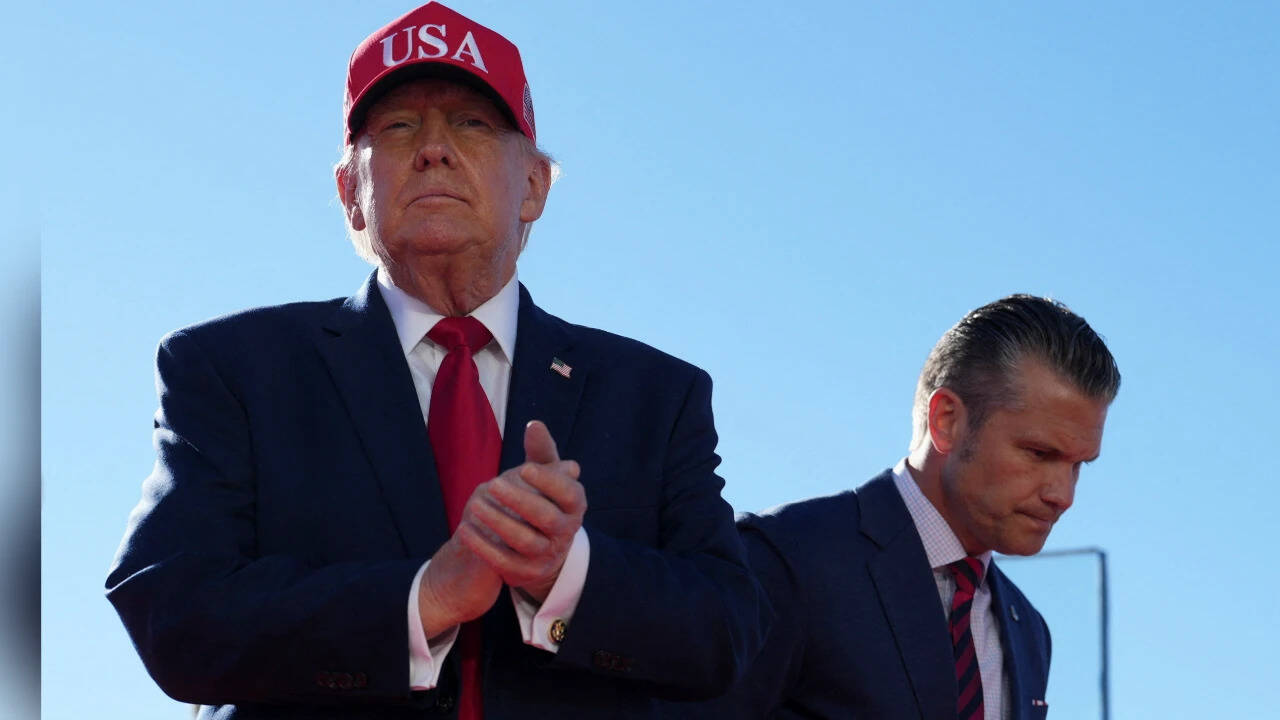
Donald Trump isn't backing down. While critics on Capitol Hill push impeachment talk against Defense Secretary Pete Hegseth, the president has stepped directly into the line of fire to defend his Pentagon chief, declaring that Hegseth "won two wars."
It's a bold claim. And if you've followed Washington politics for more than five minutes, you know this kind of public loyalty from the White House usually signals a major political street fight.
Right now, the battle over Pete Hegseth's tenure at the Department of Defense is dominating political coverage. Instead of distancing himself from a embattled cabinet official—a move plenty of past presidents have made when heat gets too intense—Trump is doubling down. He's framing the opposition's impeachment effort not as legitimate oversight, but as a partisan attack on a leader who delivered military results.
Let's break down what's actually happening, why Trump used that specific "two wars" line, and what an impeachment push against a cabinet secretary really looks like in practice.
The Reality Behind the "He Won Two Wars" Defense
When Donald Trump steps up to a microphone and says a cabinet member "won two wars," he's not writing an academic military history. He's setting a political narrative.
In Washington, perception often matters more than policy briefs. By crediting Pete Hegseth with major military victories, Trump is trying to reframe the entire debate around the Pentagon. If the public sees Hegseth as a wartime winner, congressional efforts to remove him start looking petty or purely political.
Honestly, this is classic Trump communication strategy. You don't play defense on the opposition's terms. You attack with a simple, memorable phrase that supporters can repeat easily.
Critics immediately pushed back on the characterization, arguing about what constitutes "winning" a conflict and questioning the administration's broader foreign policy record. Supporters, meanwhile, point to decisive military operations and a shift away from prolonged, open-ended engagements as proof that the administration's approach works.
The phrase sticks because it's punchy. Five words. Clear message.
Why Critics Are Pushing for Hegseth's Impeachment
Impeachment talk in Congress isn't new, but targeting a sitting Defense Secretary raises the stakes dramatically. Lawmakers leading the charge against Hegseth argue that his leadership, policy decisions, and handling of Pentagon operations warrant formal congressional action.
Here's what's fueling the push from opponents:
- Disputes over military operations and oversight: Lawmakers on key committees have clashed with the Pentagon over transparency, reporting protocols, and the execution of specific military directives.
- Policy reversals at the Department of Defense: Hegseth entered the Pentagon with a mandate to overhaul institutional culture and leadership structures, moves that triggered intense resistance from political opponents and former defense officials.
- Accountability demands: Proponents of impeachment argue that standard congressional hearings haven't produced the answers or course corrections they want, making formal impeachment articles their next leverage point.
It's worth keeping perspective here. Introducing articles of impeachment is one thing. Actually removing a cabinet official from office is another beast entirely.
How Cabinet Impeachment Actually Works in Congress
If you're wondering whether Pete Hegseth is actually going to be removed from the Pentagon anytime soon, look at the math. The U.S. Constitution allows Congress to impeach and remove "all civil Officers of the United States," which includes cabinet secretaries.
The process mirrors presidential impeachment:
- House Investigation and Articles: A member of the House introduces impeachment articles, which typically go to the House Judiciary Committee for review and potential markup.
- Simple Majority Vote in the House: To formally impeach Hegseth, a simple majority of the House of Representatives must vote in favor of at least one article.
- Senate Trial and Conviction: Once impeached by the House, the case moves to the Senate. Removing an official requires a two-thirds supermajority vote—67 senators if all 100 are present.
That two-thirds threshold in the Senate is an enormous hurdle. Historically, cabinet impeachments are extraordinarily rare. In fact, only one cabinet secretary in American history—Secretary of War William Belknap in 1876—has ever been impeached by the House, and he resigned just before the vote took place.
Even when the House successfully passes impeachment articles against a cabinet member, getting 67 senators to agree on removal in a polarized Congress is nearly impossible unless there's massive bipartisan consensus. Right now, that consensus simply doesn't exist.
What Trump's Rallying Cry Means for Capitol Hill
So why does Trump's public defense matter so much if Senate conviction is a long shot? Because politics isn't just about the final vote—it's about keeping your coalition intact.
When a president openly praises a cabinet secretary and credits him with winning wars, it sends an unmistakable message to lawmakers in his own party: Don't flinch.
Any member of Congress thinking about breaking ranks or lending bipartisan credibility to the impeachment push knows they'll be directly contradicting the president. That kind of political pressure keeps party discipline tight. It turns a potential vulnerability into a loyalty test.
At the same time, Trump's defense energizes his base. Supporters who might not follow the granular details of Pentagon committee hearings immediately understand the broad strokes. To them, Hegseth is an outsider shaking up the defense establishment, and Washington politicians are trying to punish him for it.
The Bigger Picture for the Pentagon
Beyond the daily headlines and cable news panels, an impeachment battle creates real friction inside the Department of Defense. Senior officials end up spending hours preparing for congressional inquiries, reviewing legal strategies, and managing communications instead of focusing purely on global security challenges.
Yet Hegseth shows zero signs of stepping aside, and the White House has made it clear he isn't going anywhere.
If you want to track where this story goes next, watch two things closely: whether House leadership actually brings impeachment articles to the floor for a full vote, and whether any moderate lawmakers cross party lines. Until those numbers shift, the impeachment push remains primarily a political battle—and Donald Trump has already planted his flag firmly in Pete Hegseth's corner.