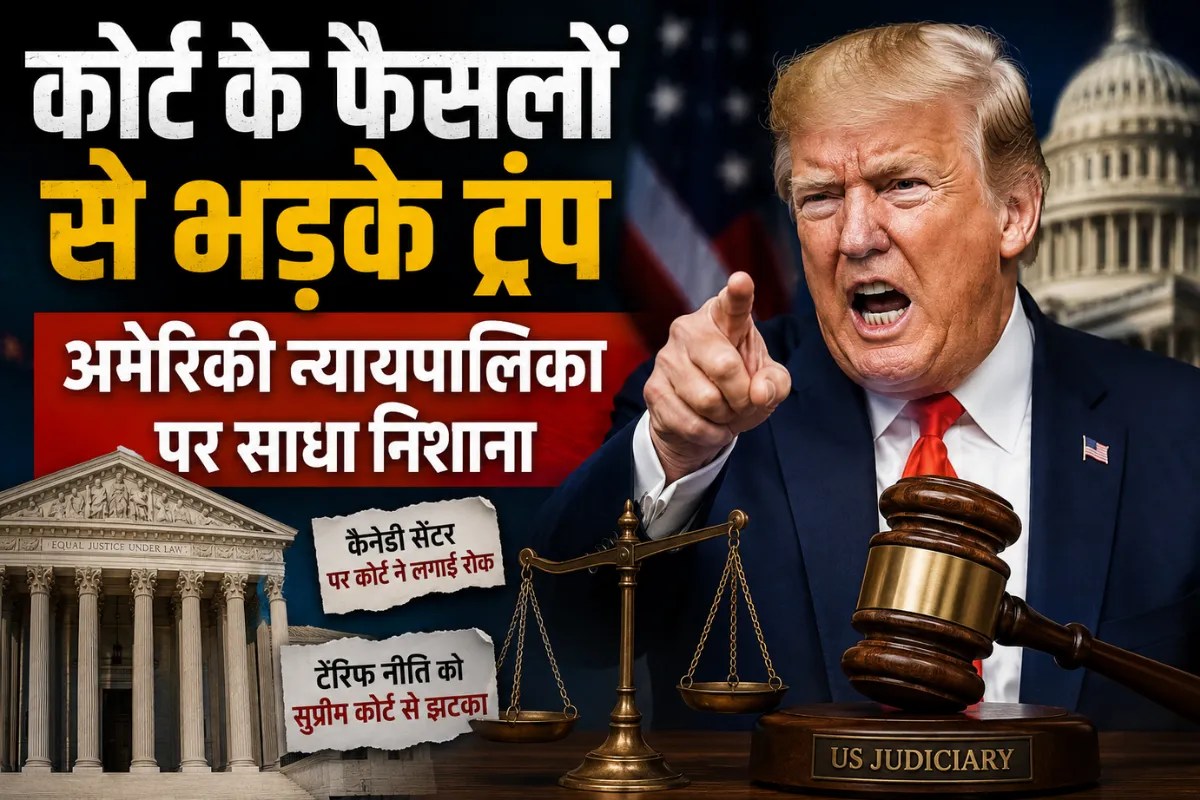
Donald Trump’s recent declaration that the judicial system is fixed follows a predictable pattern of political survival. Facing back-to-back legal defeats that threaten both his financial empire and his political freedom, Trump has accelerated his campaign to dismantle public trust in the courts. This is not just a standard political temper tantrum. It is a deliberate, highly calculated strategy designed to transform legal losses into political capital. By framing the judiciary as a partisan weapon, Trump ensures that every ruling against him looks like proof of a conspiracy to his base.
The strategy works because it exploits existing fractures in the American public's faith in institutional objectivity. When a court rules against him, the details of the law matter far less than the overarching narrative of persecution.
The Strategic Anatomy of Judical Delegitimization
Legal setbacks are usually devastating for a political figure. For Trump, they serve as fuel. The mechanics of this process are straightforward but devastatingly effective.
First, the court's decision is stripped of its legal context. It does not matter if a ruling is based on decades of statutory precedent or clear evidentiary findings. The public is told only that a biased judge or a corrupt prosecutor orchestrated the outcome. This instantly shifts the battleground from a court of law, where facts dictate results, to the court of public opinion, where emotion and tribal loyalty reign supreme.
Second, the attack is personalized. Trump rarely criticizes a abstract legal theory. Instead, he names individual judges, clerks, and prosecutors. This tactics puts a human face on the alleged conspiracy, making the grievance tangible for his followers. It also creates a chilling effect across the legal ecosystem, as court personnel face unprecedented security threats simply for performing their constitutional duties.
Finally, the loss is converted into a fundraising tool. Within minutes of a major court setback, fundraising emails hit millions of inboxes. The message is always the same: they are coming after you, and I am just standing in the way. Millions of dollars pour into his campaign coffers, effectively turning legal losses into cash-flow victories.
The Systemic Danger of the Fixed Court Narrative
The long-term consequence of this rhetoric extends far beyond the political fortunes of a single individual. The entire American democratic experiment relies on a shared agreement that the judiciary operates above the partisan fray. Once that belief evaporates, the stability of the state itself comes into question.
+-----------------------------------+-----------------------------------+
| Traditional Legal Process         | The Delegitimization Strategy     |
+-----------------------------------+-----------------------------------+
| Decisions based on precedent     | Decisions blamed on bias          |
| Appeals handled within courts     | Appeals fought in the media       |
| Rulings accepted as final         | Rulings labeled as "fixed"        |
| Focus on evidence and facts       | Focus on grievances and anger     |
+-----------------------------------+-----------------------------------+
When citizens believe the courts are rigged, they stop looking to peaceful legal channels to resolve disputes. The alternative to the rule of law is not a better legal system. It is chaos. If a ruling by a federal judge or a state supreme court is viewed merely as the decree of a political enemy, then compliance becomes optional in the minds of the disaffected.
We are already seeing the cracks in the foundation. Compliance with subpoenas is treated as a negotiation rather than a mandate. Gag orders are routinely violated to test the resolve of judges who are hesitant to jail a major political candidate. The institutional guardrails are holding, but they are groaning under the immense, sustained pressure of a non-stop rhetorical assault.
Why the Traditional Legal Defense is Failing
The judiciary is fundamentally unsuited to fight a public relations war. Judges speak through their written opinions. These documents are often dry, technical, and running dozens of pages long. They do not compete well against a thirty-second social media video or an all-caps post on a boutique digital platform.
The system assumes that participants possess a baseline level of respect for institutional norms. When a litigant decides to throw those norms away, the court's primary weapon—contempt citations and financial sanctions—often backfires. For a billionaire politician, a $10,000 fine is a rounding error. More than that, it is a badge of honor to show his supporters.
The legal system operates on a timeline of months and years. The modern news cycle moves in minutes. This asymmetry allows the narrative of a fixed court to solidify in the minds of the public long before an appellate court can review the case and issue a clarifying opinion. By the time the legal truth catches up, the political lie has already traveled around the world and raised five million dollars.
The Counter Argument That Misses the Mark
Critics of the former president often argue that the solution is simple: apply the law aggressively and without exception. Jail him for contempt. Enforce every fine to the maximum. Treat him exactly like any other citizen.
This view, while comforting to proponents of the rule of law, ignores the grim political reality.
                       ┌────────────────────────┐
                       │  Court Issues Ruling   │
                       └───────────┬────────────┘
                                   │
                    ┌──────────────┴──────────────┐
                    ▼                             ▼
       ┌────────────────────────┐    ┌────────────────────────┐
       │   Legal Establishment  │    │     Trump Campaign      │
       │   Expects Compliance   │    │  Claims Political Bias │
       └────────────────────────┘    └────────────┬───────────┘
                                                  │
                                                  ▼
                                     ┌────────────────────────┐
                                     │ Base Mobilizes & Funds │
                                     └────────────────────────┘
If a judge takes the unprecedented step of putting a former president and current candidate behind bars for a pre-trial gag order violation, it plays directly into the persecution narrative. It creates a political martyr. The resulting civil unrest and further erosion of institutional trust could cause more damage to the fabric of the nation than the original rhetorical attacks.
This is the trap. The judiciary is forced to choose between appearing weak by letting violations slide, or appearing partisan by enforcing the law with a severity that critics will label as politically motivated. There is no clean, elegant move on this chessboard.
The Weaponization of Real Institutional Flaws
The rhetoric of a fixed court would not resonate so deeply if the American judicial system were flawless. The tragedy of the current crisis is that it weaponizes legitimate public anxieties about the legal system to serve a personal agenda.
The public knows that justice is not blind. It is expensive. A wealthy defendant can hire an army of top-tier defense attorneys, consultants, and investigators to delay proceedings, file endless motions, and wear down the opposition. A poor defendant gets a public defender with a crushing caseload and a few minutes to discuss a plea deal.
Furthermore, the process of selecting judges has become overtly politicized over the last three decades. Supreme Court confirmation hearings are now multi-million-dollar media spectacles. State judges campaign for office using partisan donor money. When the public sees judges selected through a raw political process, it becomes terrifyingly easy to convince them that the rulings coming out of those courts are similarly political.
Trump did not create these systemic flaws. He merely recognized them, amplified them, and turned them to his advantage. He points at real vulnerabilities in the system and uses them to justify a total rejection of legal accountability.
The Corporate and Institutional Complicity
The media ecosystem bears significant responsibility for the speed with which the fixed system narrative spreads. Outlets across the political spectrum benefit from the drama of a collapsed legal system. Ratings spike when a trial is covered like a sporting event, complete with scoreboards, commentary panels, and predictions about which side is winning the day.
This commodification of justice reduces complex constitutional questions to simple narrative arcs of winning and losing. It trains the audience to view court rulings through the lens of political fandom. If your team wins, the judge is a hero. If your team loses, the judge is corrupt.
Major tech platforms use algorithms designed to maximize engagement, which invariably means prioritizing outrage. A measured explanation of legal standing or federal jurisdiction does not trend. A furious denunciation of a corrupt magistrate does. The digital infrastructure of the modern world is perfectly optimized to spread the erosion of trust at scale.
The Path to Reclaiming Judicial Legitimacy
Fixing this crisis requires looking past the immediate political theater and addressing the structural vulnerabilities that make the rhetoric effective. The judiciary must adapt to an era of total information warfare without sacrificing its core commitment to neutrality.
Courts must become radically more transparent. The ban on cameras in federal courtrooms is an outdated relic that protects institutional secrecy at the expense of public understanding. When the public cannot see the evidence presented and the demeanor of the participants with their own eyes, they are forced to rely on partisan filters to tell them what happened. Allowing direct, unedited access to proceedings is the single most effective antidote to distortion.
Judges must also write with the public in mind. Alongside the formal, precedent-heavy legal opinion, courts should issue clear, accessible executive summaries that explain the ruling in plain language. This preempts the spin doctors and provides journalists with immediate, accurate frameworks to report the news.
Finally, the legal profession must clean its own house. The weaponization of frivolous lawsuits to delay proceedings and subvert democratic processes must face real, swift consequences from state bar associations. Lawyers who use the courts to launch political campaigns rather than litigate legitimate legal questions should find themselves facing disbarment, not television contracts.
The threat to the court system is not that a single politician will successfully defy a ruling. The threat is that millions of citizens will look at a courthouse and see nothing more than a political theater. Once that illusion becomes permanent, the law loses its power, and power becomes the only law.


