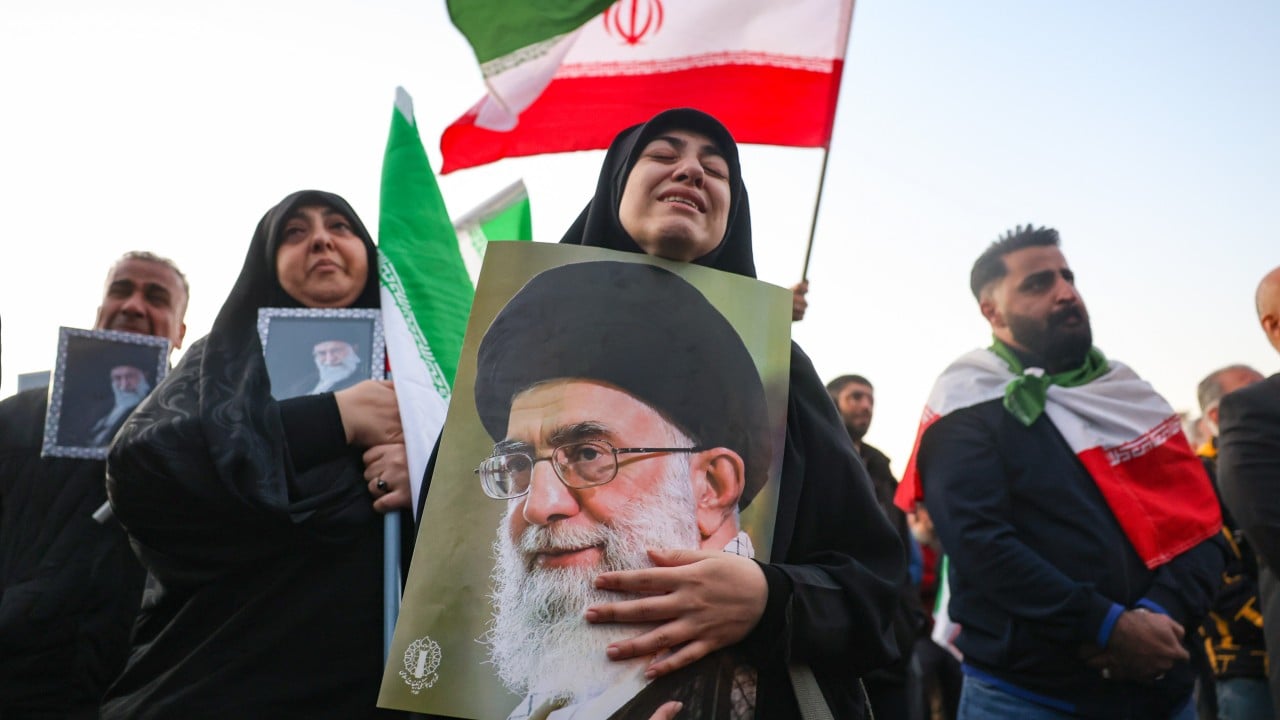
The air in Tehran does not just carry the scent of diesel and jasmine; it carries the weight of history. For decades, one man’s silhouette defined the horizon of Iranian power. Ali Khamenei was more than a Supreme Leader. He was the anchor of a specific, defiant identity. Now, that anchor has slipped. The news of his passing rippled through the Grand Bazaar not as a sudden shock, but as a long-awaited exhale.
While the world watches the funeral processions and speculates on the internal friction of the Assembly of Experts, a different kind of calculation is happening four thousand miles to the east. In the high-walled compounds of Zhongnanhai, the mourning is pragmatic. Beijing does not deal in the currency of grief. It deals in the currency of endurance.
To understand why the relationship between China and Iran survives the death of a patriarch, you have to stop looking at the maps and start looking at the mechanics of survival.
The Merchant and the Fortress
Imagine a merchant named Chen. He works for a state-owned enterprise in Shanghai, tasked with securing the energy needs of a city that never sleeps. To Chen, Iran is not a revolutionary cause or a theological puzzle. It is a massive, underground gas station that the rest of the world has tried to board up.
For years, Western sanctions aimed to isolate Iran, to turn it into a pariah. But isolation is a vacuum, and nature—especially economic nature—abhors a vacuum. China stepped into that void not out of ideological sympathy, but because of a simple, cold reality: China needs what Iran has, and Iran needs what China knows.
This isn't a marriage of love. It is a marriage of necessity. When the doors of the global banking system slammed shut on Tehran, Beijing left a window open. They built a "closed-loop" economy. Iran sends the oil; China sends the infrastructure, the surveillance technology, and the consumer goods. No dollars required. No Western oversight necessary.
The death of a leader does not change the fact that China is Iran's largest trading partner. It does not change the fact that Iran sits on the world’s second-largest gas reserves and fourth-largest oil reserves. These are the hard, geological truths that outlive any cleric.
The Architecture of Dependency
Consider the "Comprehensive Strategic Partnership" signed in 2021. It was a twenty-five-year roadmap, a promise of 400 billion dollars in investment. Critics called it a sell-out of Iranian sovereignty. Supporters called it a lifeline.
But look closer at what that money buys. It isn't just about paving roads. It’s about integrating Iran into a digital and physical ecosystem that orbits Beijing. From the fiber-optic cables running beneath the Zagros Mountains to the ports on the Persian Gulf, the hardware of modern Iran is increasingly "Made in China."
This creates a peculiar kind of inertia. If you are a new leader in Tehran, whether you are a hardliner or a pragmatic conservative, you wake up in a house built by China. You use a phone network maintained by Chinese engineers. Your military's technological edge is sharpened by Chinese cooperation.
You don't walk away from that. You can't.
The stakes for Beijing are equally high. Iran is a critical node in the Belt and Road Initiative. It is the bridge between Central Asia and the Middle East. If Iran destabilizes, the bridge collapses. China’s primary interest isn't who leads the Friday prayers in Tehran; it’s that the person leading them keeps the oil flowing and the borders quiet.
The Myth of the Great Pivot
There is a common misconception that Iran might use this transition to "pivot" back toward the West. It’s an alluring narrative. The idea that with the old guard gone, a younger, more globalized generation will tear down the banners and welcome back Western oil majors.
It ignores the scar tissue of the last twenty years.
For the Iranian establishment, the West is a fickle partner. They remember the nuclear deal—the JCPOA—and how quickly it was shredded by a change in American administration. They saw their assets frozen and their economy strangled overnight.
China, by contrast, is predictable. Beijing doesn’t lecture Tehran on human rights. It doesn't care about the internal morality of the Islamic Republic. It only cares about stability and contracts. For a regime in transition, predictability is more valuable than gold.
The transition period after Khamenei’s death is a time of extreme vulnerability. The last thing a new Iranian leader wants is to gamble on the shifting winds of Washington politics. They will double down on the partner who stayed when everyone else left.
The Silent Presence in the Room
During the secret meetings to decide the succession, there is a ghost in the room. It isn't just the memory of the departed Leader. It is the influence of the "East."
The Islamic Revolutionary Guard Corps (IRGC), the real muscle behind the throne, has spent the last decade deeply embedding itself in the Chinese economic model. The IRGC controls vast swaths of the Iranian economy. They are the ones managing the construction projects, the telecommunications, and the smuggling routes that bypass sanctions.
For the IRGC, China is the guarantor of their institutional wealth. Any successor who suggests distancing Iran from Beijing would be threatening the bottom line of the most powerful men in the country.
Money is a powerful stabilizer.
The IRGC knows that China provides them with something the West never will: a way to be a regional power without having to liberalize. They see the "China Model"—authoritarian capitalism—as the blueprint for their own survival. They want the high-speed rail and the facial recognition software without the messy baggage of a free press or competitive elections.
Beyond the Oil Wells
If we only talk about oil, we miss the psychological component of this alliance. There is a shared grievance that binds these two civilizations. Both see themselves as ancient empires that were humiliated by Western colonialism. Both feel they are being unfairly contained by a US-led order.
This "anti-hegemonic" bond is the emotional glue of the relationship. When Chinese state media covers Iran, they don't focus on the theology. They focus on "sovereignty" and "interference." They frame Iran as a fellow traveler on the road to a multipolar world.
This narrative is incredibly seductive to an Iranian leadership that feels besieged. It provides them with a sense of belonging to something larger than a pariah state. They aren't just a sanctioned nation; they are a vital part of the new Silk Road.
The Risk of the Long Game
Nothing is without friction. The Iranian public is not universally enamored with this "Look to the East" policy. Go to any cafe in North Tehran, and you will hear grumbles about the quality of Chinese goods or the fear that the country is being turned into a Chinese colony.
There is a deep-seated Persian pride that bridles at being a junior partner to anyone.
However, in the immediate aftermath of Khamenei’s death, public opinion is a secondary concern for the elite. Their priority is "Nezam"—the system. And the system is currently fueled by Chinese demand.
The real danger for Iran isn't that China will leave. It's that China will become too dominant. A relationship built on desperation is rarely equal. If Iran has nowhere else to go, Beijing can dictate the terms of every barrel of oil and every kilometer of rail.
The Unbroken Line
As the new Supreme Leader eventually takes his seat, the world will look for signs of change. They will analyze his first speeches and his choice of advisors. They will look for a softening of rhetoric or a shift in regional proxy wars.
But the most important signal will be the one that stays the same.
The tankers will continue to leave Kharg Island, heading for the refineries of Shandong. The technicians from Shenzhen will continue to install 5G towers in the suburbs of Isfahan. The "Silk Road" will continue to harden into a permanent fixture of the Middle Eastern landscape.
Khamenei’s death marks the end of an era for Iran’s soul, but it does not change the trajectory of its stomach. The geopolitical gravity that pulls Tehran toward Beijing is too strong to be broken by a single funeral.
The shadow of the Peacock Throne has grown long, and it is now cast firmly toward the East. The man is gone, but the machinery of the alliance is humming louder than ever. It is a quiet, relentless pulse—the sound of an empire securing its future, one contract at a time, while the rest of the world waits for a change that isn't coming.


