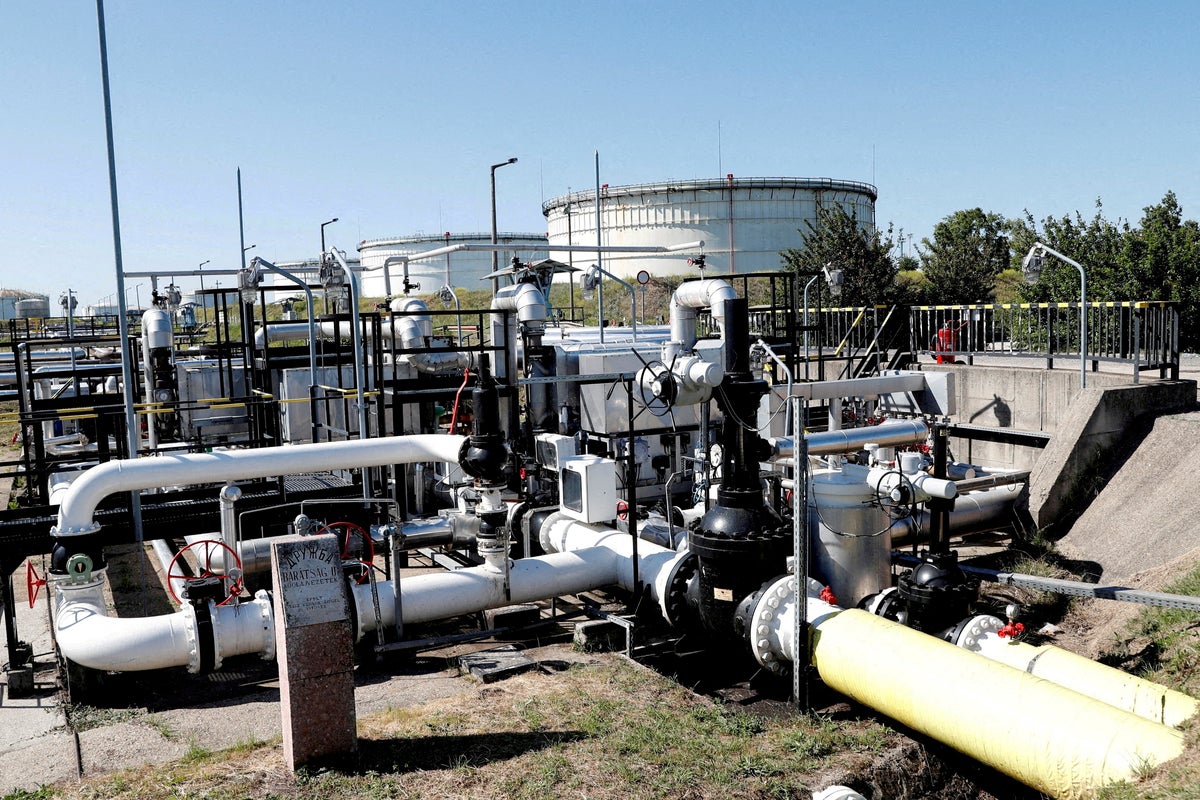
Germany just learned a brutal lesson in energy geography. For over a year, Berlin operated under the comforting belief that it had successfully replaced Russian crude with Kazakh oil, effectively "sanitizing" the massive PCK Schwedt refinery by feeding it barrels from the Central Asian steppe. This week, that illusion shattered.
The Kremlin has effectively pulled the plug on the transit of Kazakh Export Blend Crude Oil (KEBCO) through the Druzhba pipeline. While officials in Astana and Moscow dance around "technical constraints" and "infrastructure repairs," the reality on the ground is stark. Starting May 1, the flow of Kazakh crude to Germany through Russian territory drops to zero. If you liked this piece, you might want to read: this related article.
The volumes involved are not just numbers on a spreadsheet. Kazakhstan had planned to ship 2.5 million tons of oil to Germany in 2026. Instead, those barrels are being redirected to Russian ports like Ust-Luga and the Caspian Pipeline Consortium (CPC) terminal. In short, the oil meant to keep German cars running is now being pumped into the very Russian export infrastructure that Europe has spent two years trying to bypass.
The Geography of Vulnerability
The fundamental flaw in the Germany-Kazakhstan energy pact was always the map. To reach the PCK Schwedt refinery, Kazakh oil must travel through the Atyrau-Samara pipeline, merge into the Russian Transneft system, and traverse thousands of miles of Russian soil before crossing into Belarus and Poland. For another perspective on this story, check out the latest coverage from Reuters Business.
Berlin gambled that as long as the molecules weren't Russian, the route was safe. They were wrong. By relying on the Druzhba—a pipeline literally named "Friendship" during the Soviet era—Germany handed Moscow a remote-controlled kill switch for its energy security.
The Russian side claims the suspension is due to a lack of technical capacity, subtly pointing toward recent drone strikes on energy hubs. It is a convenient excuse. Whether the pipes are actually damaged or the "repairs" are a geopolitical fiction, the result is identical. Moscow has demonstrated that "non-sanctioned" oil is only non-sanctioned as long as it serves Russian interests.
The Schwedt Crisis Returns
The PCK Schwedt refinery is the beating heart of East German industry. It supplies nearly 90% of the fuel used in Berlin and the surrounding Brandenburg region. When Germany seized control of the refinery from Rosneft in 2022, the Kazakh deal was heralded as the permanent solution to the loss of Russian Urals.
Without the 1.2 million to 2.5 million tons of Kazakh crude per year, Schwedt is forced back into a desperate scramble.
- The Rostock Pipeline: Germany has invested in upgrading the line from the port of Rostock, but it lacks the diameter to fully replace the Druzhba’s capacity.
- The Polish Connection: Supplies via the port of Gdansk are possible, but they require deep political coordination with Warsaw, which has its own complex demands regarding the ownership of German refineries formerly held by Russians.
The redirection of Kazakh oil to Ust-Luga is a masterstroke of irony. Kazakhstan is not "losing" money; it is simply selling its oil elsewhere. But for Germany, the cost of logistics is about to skyrocket as it hunts for seaborne replacements in an already tight market.
The KEBCO Paradox
To understand why this move is so damaging, you have to look at the chemistry. The Schwedt refinery was built by Soviet engineers specifically to process the heavy, sour grades of oil found in the Urals. Kazakh KEBCO is a near-identical match.
When Germany buys oil from Norway or West Africa to fill the gap, it isn't a simple swap. These lighter, sweeter crudes often require the refinery to run at lower efficiency or undergo expensive technical adjustments. By cutting the Kazakh flow, Russia isn't just stopping oil; it is attacking the operational DNA of German infrastructure.
The Diverted Flow: May 2026 Projections
| Original Destination | New Route | Volume (Metric Tons) |
|---|---|---|
| Schwedt (Germany) | Ust-Luga (Baltic Sea) | 100,000 |
| Schwedt (Germany) | CPC Terminal (Black Sea) | 160,000 |
Astana’s Quiet Pivot
Kazakhstan finds itself in an impossible position. On one hand, President Tokayev has sought to distance his country from the fallout of the Ukraine conflict, rebranding its oil as KEBCO to avoid Western sanctions. On the other, Kazakhstan is landlocked and utterly dependent on Russian pipes for 80% of its exports.
Astana’s Energy Ministry has confirmed the redirection with a tone of resigned pragmatism. They have "agreed with shippers" to move the oil to Russian ports because, quite simply, there is no other place for it to go. The Trans-Caspian International Transport Route (the so-called Middle Corridor) exists, but it lacks the scale to handle millions of tons of crude overnight.
By allowing the oil to be redirected to Ust-Luga, Kazakhstan maintains its revenue but abandons its strategic promise to Berlin. This is not a choice; it is survival.
The Price of Middle-Man Diplomacy
The German government’s "trusteeship" of Rosneft’s assets was always a legal tightrope. Russia has watched as Berlin used Russian-built infrastructure and Russian-built refineries to process Kazakh oil that looks and smells like Russian oil. Moscow has finally decided that the transit fees collected by Transneft are worth less than the political leverage of a cold German winter or a fuel price spike in Berlin.
This move effectively ends the era of "laundering" energy security through third-party nations using Russian transit. If Germany wants energy independence, it can no longer afford to let the route to its gas stations pass through the Kremlin’s backyard. The infrastructure of the past has become the cage of the present.
The flow has stopped. The pipes are quiet. And for the engineers at Schwedt, the long, expensive search for a truly independent source of oil begins again, this time without the illusion of a Russian-controlled shortcut.


